UPSSSC PET Candidates Face Difficulties Over Distant Examination Centres
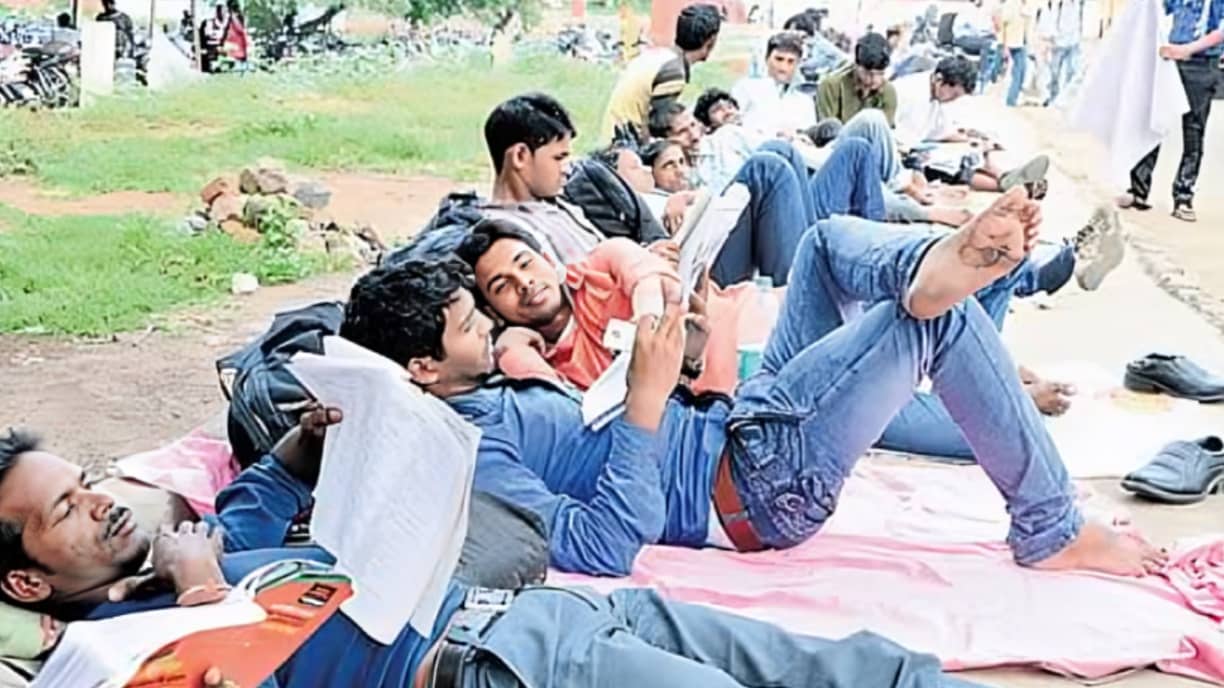
Candidates appearing for the Uttar Pradesh Subordinate Services Selection Commission's (UPSSSC) Preliminary Eligibility Test (PET) on October 30, 2026, reported difficulties after being allotted examination centres located hundreds of kilometres away from their hometowns. Several aspirants who reached Bareilly described exhausting journeys, overcrowded trains, increased travel expenses and difficulties finding affordable accommodation before the examination.
For candidates who had spent months preparing for the competitive examination, reaching the examination venue became an additional challenge. According to accounts reported by news agencies, some aspirants travelled distances of approximately 300 to 500 kilometres to reach their allotted centres. The long journeys reportedly caused physical exhaustion and mental stress, affecting candidates' ability to prepare and appear for the examination comfortably.
Candidates Describe Long and Difficult Journeys
Several candidates who reached Bareilly shared their experiences of travelling across Uttar Pradesh to attend the examination.
Sunil Parashari, an MBA student from Barabanki, questioned why candidates appearing for recruitment examinations had to travel such long distances. He compared the arrangement with polling stations during elections, which are generally organised closer to voters' residential areas.
Anupam Shukla from Sultanpur said he had travelled nearly 450 kilometres to reach Bareilly. He pointed out that such lengthy journeys could affect candidates' preparation and leave them exhausted before the examination.
Pushpa Raje from Hardoi was among the candidates waiting at Bareilly Junction railway station. She called for examination centres to be allotted in candidates' home districts or neighbouring districts. According to her, the additional travel expenses could place a significant financial burden on candidates from economically weaker and middle-income families.
Overcrowded Trains and Accommodation Problems
The difficulties were not limited to the distance between candidates' homes and examination centres. Overcrowded trains and the rising cost of accommodation also added to their problems.
Some candidates said they struggled to find sufficient space while travelling on trains. Manoj Kumar from Ayodhya described the rush during the examination period, saying that passengers had difficulty finding even standing space. Candidates travelling with general-class tickets reportedly faced additional difficulties because of the heavy passenger rush.
Accommodation was another concern. Many candidates said staying in hotels or lodges was beyond their financial capacity. As a result, some had to spend the night at railway stations before continuing their journey to the examination centres.
Madhu Shivhare, a nursing course graduate from Delhi, said her PET examination centre was allotted in Budaun. After travelling through overcrowded trains, she reached Bareilly and spent the night on the floor of Bareilly Junction railway station before proceeding towards her examination venue.
Her experience reflected the difficulties faced by candidates who had limited financial resources and were required to travel long distances for the examination.
Some Candidates Say They Have Missed Earlier Examinations
The issue of distant examination centres has also raised concerns about candidates losing examination opportunities because of travel difficulties.
Ashish from Azamgarh said that during an earlier Railway Junior Engineer examination, he had been allotted a centre in Agra, nearly 500 kilometres from his residence. He said he could not reach the examination venue in time and consequently missed that examination.
Pradeep Kumar, a mechanical engineering student from Rae Bareli, also expressed frustration over being allotted an examination centre in Agra for the earlier Railway Junior Engineer examination. He said the distance prevented him from appearing for the test.
These accounts have renewed questions about how examination centres are allotted and whether travel distance and accessibility receive sufficient consideration during the process.
Why Are Candidates Being Allotted Distant Centres?
Questions over distant centre allocation had surfaced even before the October 30 examination. Earlier reports quoted UPSSSC Chairman Satya Narayan Sabat as explaining that the allocation process was computer-based and depended on the number of candidates and the availability of examination centres.
According to the explanation reported earlier, several districts in eastern Uttar Pradesh, including Jaunpur, Varanasi, Azamgarh and Ballia, have a high number of applicants but comparatively limited examination-centre availability. Western Uttar Pradesh, on the other hand, has more available centres. This difference in candidate numbers and infrastructure was cited as one reason for allotting centres in other districts.
The commission's reported explanation also referred to the use of an automated system for centre allocation and examination management. However, candidates' experiences have brought the practical difficulties of travelling long distances back into focus.
Bareilly Administration Makes Examination Arrangements
Meanwhile, the Bareilly district administration said arrangements had been made to conduct the examination peacefully and fairly.
Avinash Tripathi, Additional District Magistrate (City) and the examination nodal officer, said that 62,024 candidates were registered to appear at 23 examination centres in Bareilly. He also stated that security arrangements had been made to ensure transparent and malpractice-free conduct of the examination.
While district-level arrangements were in place, candidates continued to raise concerns about the distance between their homes and allotted examination venues.
Candidates Seek More Accessible Examination Centres
Aspirants have urged the examination authorities to consider candidates' residential districts and nearby locations while allotting examination centres. They say that reducing unnecessary travel would help candidates avoid additional expenses, physical exhaustion and the risk of missing examinations because of transport difficulties.
For many applicants, competitive examinations represent an important opportunity to secure government employment. The PET is a qualifying examination used in the recruitment process for several Group C government posts in Uttar Pradesh. Candidates therefore argue that access to the examination venue is an important part of ensuring that applicants can participate without facing avoidable travel-related difficulties.
The issue has once again brought attention to the challenges involved in conducting large-scale recruitment examinations across a geographically extensive state. While examination authorities must manage candidate numbers, centre availability and security requirements, aspirants are asking for greater consideration of travel distance and accessibility when examination centres are allotted.