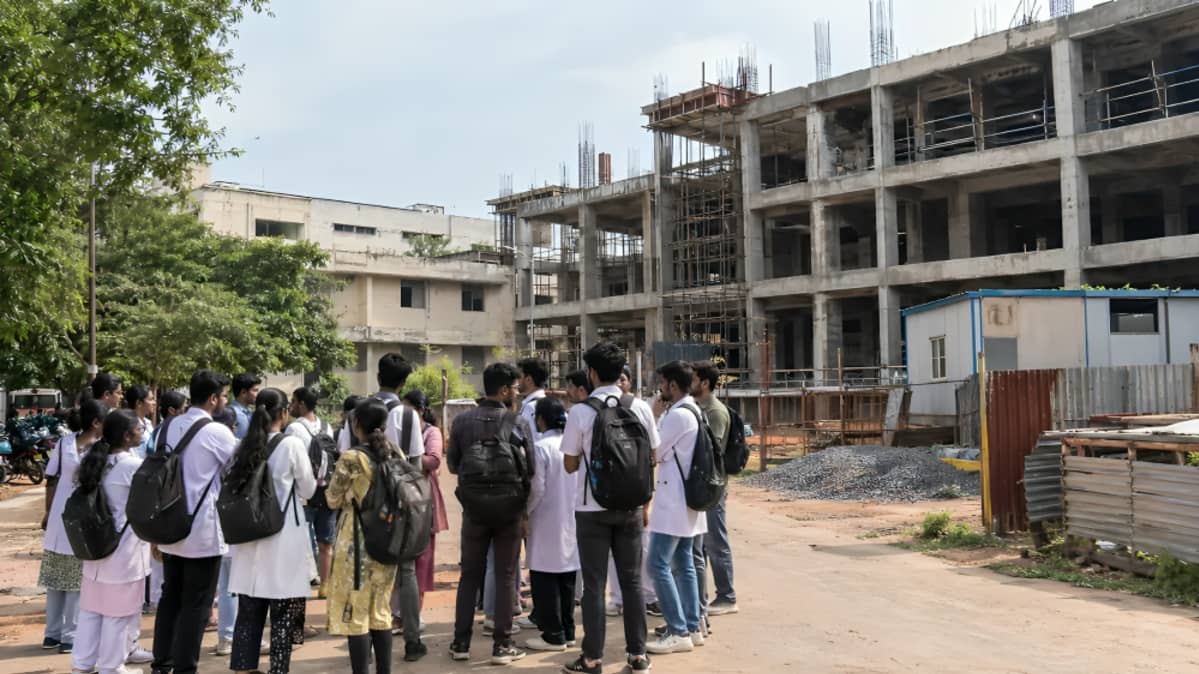
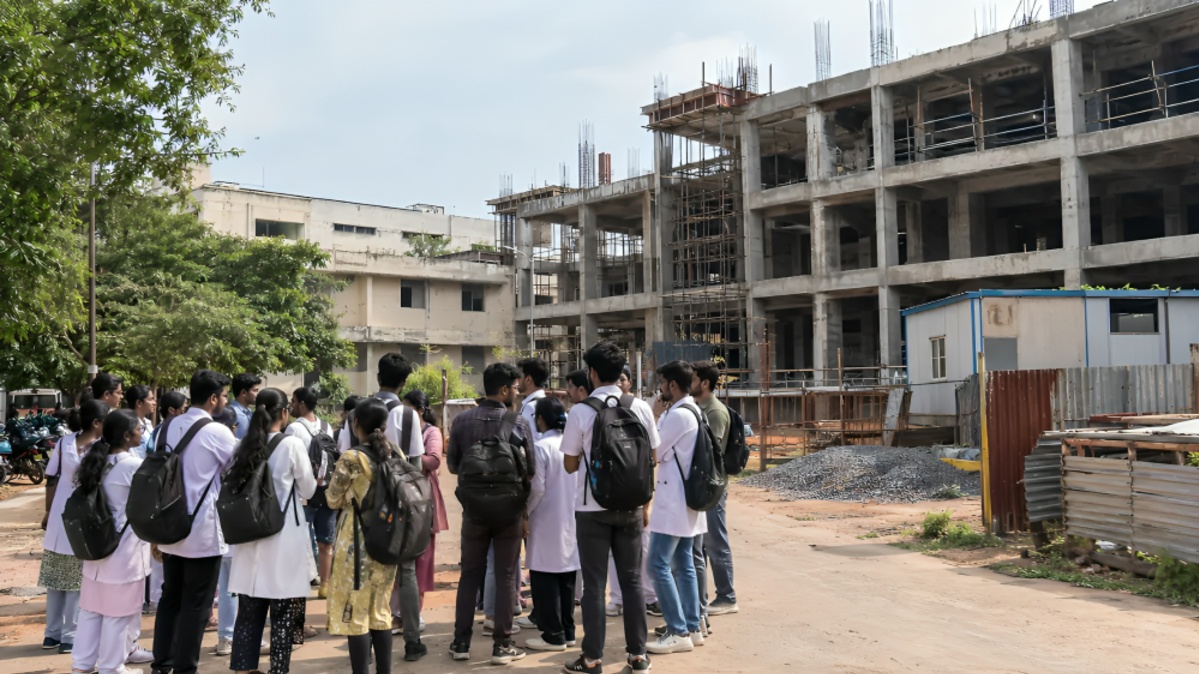
Medical students at Government Medical College Jagtial in Telangana have begun an indefinite peaceful protest over what they describe as prolonged delays in campus infrastructure and inadequate basic facilities. The protest began on October 7, 2026, with students seeking time bound action from the authorities on their demands.
The students have raised concerns about the continued use of temporary structures for academic activities, delays in the construction of permanent college and hostel buildings, overcrowded accommodation, limited laboratory facilities and the absence of dedicated college transport. The Federation of All India Medical Association has extended support to the protesting students and called for action on the issues raised by them.
According to the students, the foundation stone for the permanent college building was laid nearly four years ago. However, they say that the permanent campus has not yet been completed and that academic activities continue to take place in temporary facilities.
The students have claimed that the existing academic infrastructure is insufficient for the number of medical batches currently studying at the college. They said that students from multiple batches are required to use three makeshift lecture halls and three laboratories. The students have sought completion of a permanent academic block with adequate lecture halls and library facilities.
Hostel accommodation is another major concern raised by the students. They have alleged that students are living in congested conditions, with reports indicating that six to eight students may be accommodated in some rooms. Female students have also raised concerns about the availability of adequate reading room facilities because of limited space.
The students have demanded that furnished hostel buildings be completed and handed over by the end of October 2026. They have sought accommodation capable of serving at least 75 percent of students, interns and resident doctors, along with internet enabled reading rooms.
The absence of dedicated college transport is another issue at the centre of the protest. Students say the college does not have adequate buses to facilitate travel to locations required for practical and community based medical training.
According to the students, the lack of transport has affected their participation in the Family Adoption Programme, Rural and Urban Health Training Centre postings and community medical camps. They claim that students have been unable to participate in these activities for the past three years.
The students have described these training activities as important components of medical education and have raised concerns about whether the current arrangements meet the requirements applicable to medical colleges. These are allegations made by the students, and the concerns have not been independently established in the available reports as formal findings by the National Medical Commission.
The National Medical Commission is the statutory regulator for medical education and medical practice in India. Its stated mission includes improving access to quality and affordable medical education and ensuring the availability of adequate medical professionals across the country.
FAIMA has backed the GMC Jagtial students and raised questions about the infrastructure available at the institution. The organisation said medical students should have access to appropriate classrooms, laboratories, hostels and other basic facilities required for quality medical education.
FAIMA has also questioned how several batches of students could have been admitted while students continue to report concerns about permanent buildings, laboratories, accommodation and transport. The organisation has called for the authorities to address the students' concerns at the earliest.
The students have said they have approached several authorities over the past two and a half years regarding the infrastructure concerns. Their representations reportedly included the Jagtial MLA, the district administration, the Roads and Buildings Department and the contractors associated with the construction project.
According to the students, repeated representations and assurances have not resulted in the completion of the facilities they are seeking. They have therefore decided to begin an indefinite protest while stating that their action will remain peaceful and disciplined.
The students have presented a set of specific demands as part of their protest. One of their main demands is the completion and handover of furnished hostel buildings by the end of October 2026.
They have also requested completion of the permanent academic block by the end of December 2026. The students want the building to include at least four functional gallery style lecture theatres and a central library with sufficient reading room capacity.
Another demand is the development of fully equipped and properly separated laboratories for different departments. Students say the current laboratory arrangements are inadequate for the number of students using the facilities.
They have also called for immediate deployment of dedicated college buses so that mandatory field based training and community health activities can resume. In addition, the students have sought improvements to internal roads, drainage systems and sports facilities on the campus.
The infrastructure concerns come at an important stage in the academic development of the medical college. Multiple batches of MBBS students are already studying at the institution, while another batch is expected to begin shortly. Students say the existing temporary arrangements will become increasingly difficult to manage as the number of students increases.
The issue of adequate infrastructure is particularly important in medical education because students require a combination of classroom teaching, laboratory work, clinical exposure and community based training. Any disruption or limitation in these areas can affect the practical learning experience of students.
The students' concerns about field postings are therefore an important part of their protest. They say that without dedicated transport, reaching designated health centres and other field locations has been difficult. They have argued that a reliable transport system is necessary for students to complete the required components of their training.
The hostel situation has also emerged as a significant issue. Medical education involves long hours of academic work, laboratory sessions and clinical training, making adequate residential and study facilities important for students. The students have specifically sought better accommodation and internet enabled reading rooms as part of their demands.
For final year students, the concerns have added significance because they are approaching university examinations. The students have said that inadequate academic and residential facilities are creating difficulties at a time when they need suitable conditions for preparation.
The students have nevertheless stated that the protest is intended to remain peaceful. Their stated objective is to secure basic educational and residential facilities and obtain a clear timeline for the completion of pending infrastructure.
FAIMA's involvement has brought additional attention to the issue. The organisation's support indicates that the concerns raised by the students are being discussed beyond the college itself. FAIMA has urged the relevant authorities to take action and ensure that medical students receive appropriate facilities.
The National Medical Commission's role is also relevant because it regulates standards for medical education institutions. The NMC provides regulatory oversight for medical colleges and maintains information concerning recognised medical education institutions and academic requirements.
However, claims regarding specific NMC violations should be distinguished from the students' allegations. The current reports state that the students believe the absence of transport has affected mandatory training requirements and that their infrastructure demands are linked to NMC standards. A formal regulatory finding would require confirmation from the NMC or the relevant authorities.
The immediate focus is therefore on whether the authorities respond to the students' demands and provide a clear timeline for completing the permanent campus and other facilities.
If the proposed deadlines are met, students could receive improved hostel accommodation by the end of October and a permanent academic block by the end of December. The students are also seeking the immediate introduction of college transport and improvements to laboratories and other campus facilities.
The protest highlights a wider issue in medical education concerning the need to ensure that infrastructure keeps pace with the number of students admitted to a medical institution. Permanent classrooms, laboratories, hostels, libraries, transport and other facilities are important components of the learning environment for medical students.
For students at GMC Jagtial, the central concern is that the institution should provide the facilities required for academic learning, practical training and residential needs. They have argued that these requirements cannot be postponed indefinitely while new batches continue to be admitted.
The authorities now face the task of responding to the students' demands and addressing the reported infrastructure delays. The students have said they will continue their indefinite protest while seeking action on the issues they have raised.
Overall, GMC Jagtial medical students have begun an indefinite peaceful protest over delayed permanent infrastructure, hostel conditions, laboratory capacity and the lack of dedicated transport. FAIMA has extended support and urged authorities to address the concerns. The students have submitted specific timelines for hostel and academic building completion and have called for improved facilities needed for medical education and field training.