JNU PhD Reservation Row Deepens as Students' Body Announces Indefinite Sit-In
The reservation controversy surrounding Jawaharlal Nehru University's (JNU) 2026–27 PhD admissions has intensified, with a student organisation continuing an indefinite sit-in over alleged discrepancies in the allocation of seats for Scheduled Caste (SC) and Scheduled Tribe (ST) candidates.
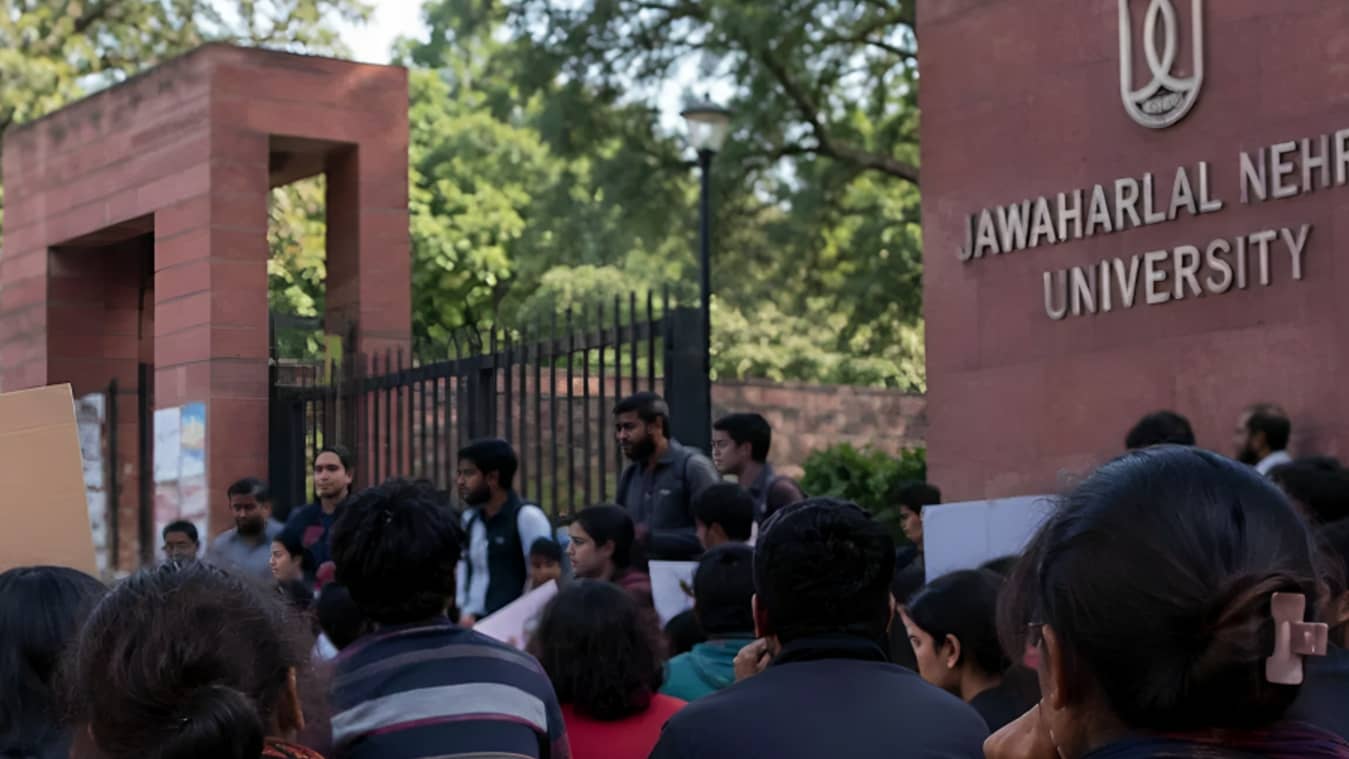
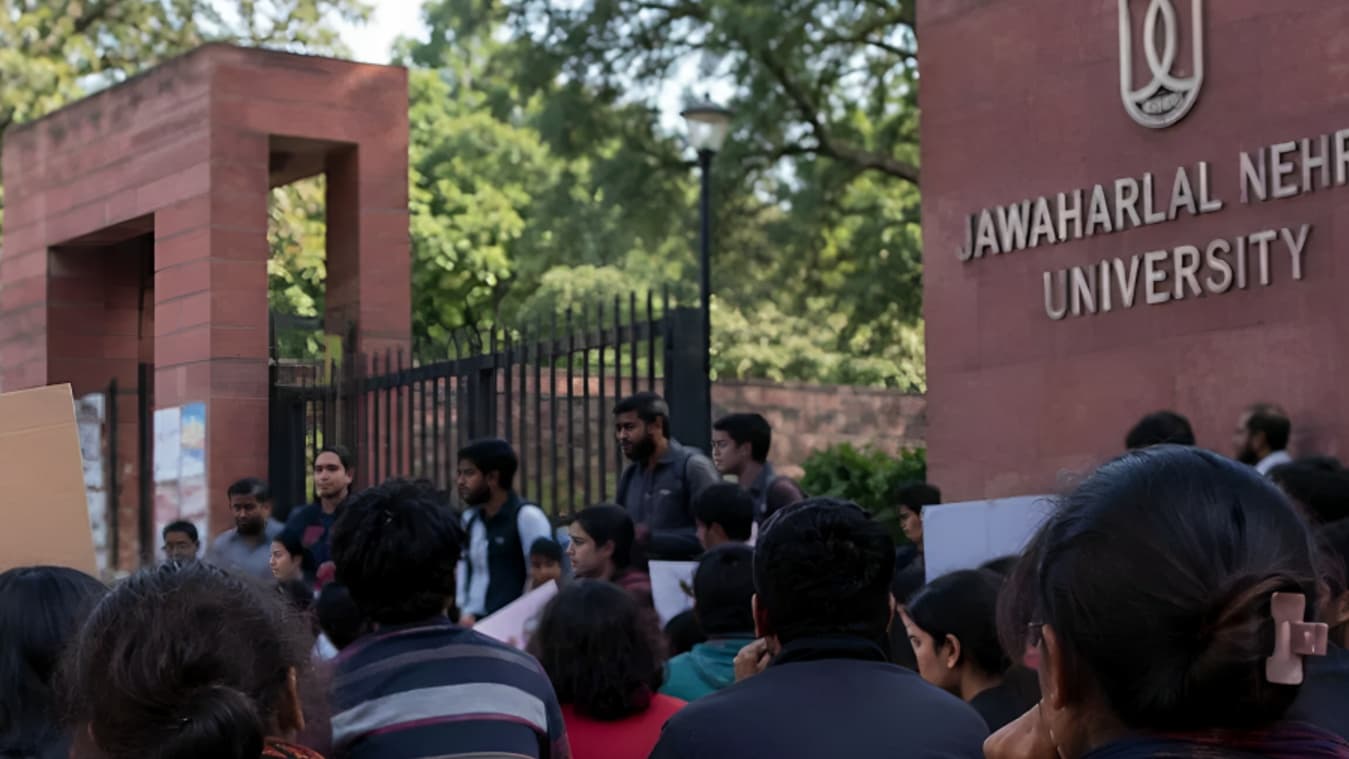
The Birsa Ambedkar Phule Students' Association (BAPSA) began its indefinite protest at the university's T-Point on October 24, demanding that allegedly unadvertised reserved seats be restored to the ongoing admission process.
The organisation claims that 15 ST seats and four SC seats have not been properly accounted for in the current PhD admission notification. It has also demanded greater transparency in the reservation roster and the publication of category-wise seat allocation details.
The controversy has drawn the attention of statutory commissions, adding pressure on the university administration to explain how reservation norms have been applied.
Why Are JNU Students Protesting?
The immediate issue concerns the distribution of reserved seats in JNU's PhD admission prospectus for the 2026–27 academic session.
According to student organisations, the university advertised 711 regular PhD seats across different admission channels, including UGC-NET, UGC-NET-JRF and GATE.
BAPSA alleges that the university advertised only 38 seats for ST candidates, although 53 seats would be required under the 7.5% reservation benchmark when calculated across the total intake of 711 seats.
The association has also alleged a shortfall of four SC seats, claiming that 103 seats were advertised against an estimated requirement of 107 under the 15% reservation benchmark.
The alleged shortfalls are central to the ongoing protest. Students want the university to re-notify the disputed seats and ensure that eligible candidates from reserved categories are not disadvantaged during the admission process.
These figures represent the student organisations' calculations and allegations. The university's explanation and the applicable programme-wise reservation roster are important to establishing whether the allocation violates the prescribed rules.
BAPSA Announces Indefinite Sit-In
BAPSA began its sit-in on October 24 and has said that the protest will continue until the administration takes concrete action on the alleged reservation shortfall.
The organisation has called for the re-notification of the 15 ST and four SC seats. It has also demanded that the university revise its PhD admission prospectus to clearly explain the distribution of reserved seats.
Among its other demands are transparent category-wise seat information for individual programmes, centres and schools, and a review of the way reservation is applied during the admission process.
The student body has also raised objections to the use of different admission channels and the distribution of seats across smaller academic units.
BAPSA has called for greater scrutiny of the university's reservation roster and has questioned whether applying reservation separately across small departments and programmes can result in reserved categories receiving fewer seats than their overall entitlement.
The sit-in has brought together students concerned about access to higher education and the implementation of reservation policies at the university.
SFI Also Raises Reservation Concerns
The Students' Federation of India (SFI) has separately accused JNU of failing to provide the prescribed reservation share in its 2026–27 PhD admission prospectus.
At a press conference, SFI representatives alleged that the university's allocation did not adequately reflect the reservation requirements for SC, ST and Persons with Benchmark Disabilities (PwBD) candidates.
The organisation cited the same overall intake of 711 seats and claimed that the advertised ST allocation was 38 seats against an estimated requirement of 53.
It also pointed to 103 advertised SC seats and questioned the allocation of 17 seats for candidates with benchmark disabilities, against an estimated requirement of around 36.
SFI has attributed the alleged discrepancies partly to what it describes as a fragmented or micro-unit approach to seat allocation. Under this approach, reservation calculations are made across individual centres, disciplines and admission channels, many of which have relatively small numbers of seats.
The organisation argues that this can result in some departments advertising no seats for particular reserved categories, even when the university's overall intake is substantial.
SFI has demanded a revised prospectus, a transparent reservation roster, category-wise admission data and the filling of backlog vacancies.
National Commissions Intervene
The dispute has now attracted the attention of the National Commission for Scheduled Castes (NCSC) and the National Commission for Scheduled Tribes (NCST).
The NCSC had earlier sought information from JNU following a complaint concerning the alleged reservation discrepancies. After the university did not submit its response within the initial deadline, the commission issued a reminder on October 27, asking it to respond within seven days.
In a further development reported on October 30, the NCSC directed the university to re-notify the disputed reserved seats before the viva-voce examinations or submit an explanation for their absence. The commission has also summoned the university administration for an inquiry on Monday.
Separately, the NCST has directed JNU's Equal Opportunity Cell to examine the issue immediately.
The intervention of the two statutory bodies has added an institutional dimension to the controversy. Their examination of the complaint could help establish whether the university's seat allocation complies with the applicable reservation requirements.
The commissions' intervention, however, should not be treated as a final finding that the university has violated reservation rules. The university's response and the outcome of the inquiry remain important.
Students Demand Transparency in PhD Admissions
Apart from the immediate dispute over the number of reserved seats, student organisations have raised wider concerns about transparency in JNU's PhD admission process.
They want the university to publish clear information showing how seats are distributed across departments, schools, centres and admission categories.
They have also questioned the treatment of vacant reserved seats from previous admission cycles and called for information about backlog vacancies.
Another major demand concerns the role of viva-voce examinations in the selection process. BAPSA has objected to the weightage and procedures used in certain admission channels and has called for changes to prevent what it describes as potential discrimination.
The association has also raised demands relating to the implementation of committee recommendations, reservation in hostel allotments and representation of marginalised communities in university decision-making bodies.
These demands go beyond the immediate seat-allocation dispute and reflect a broader debate over access, representation and fairness in higher education.