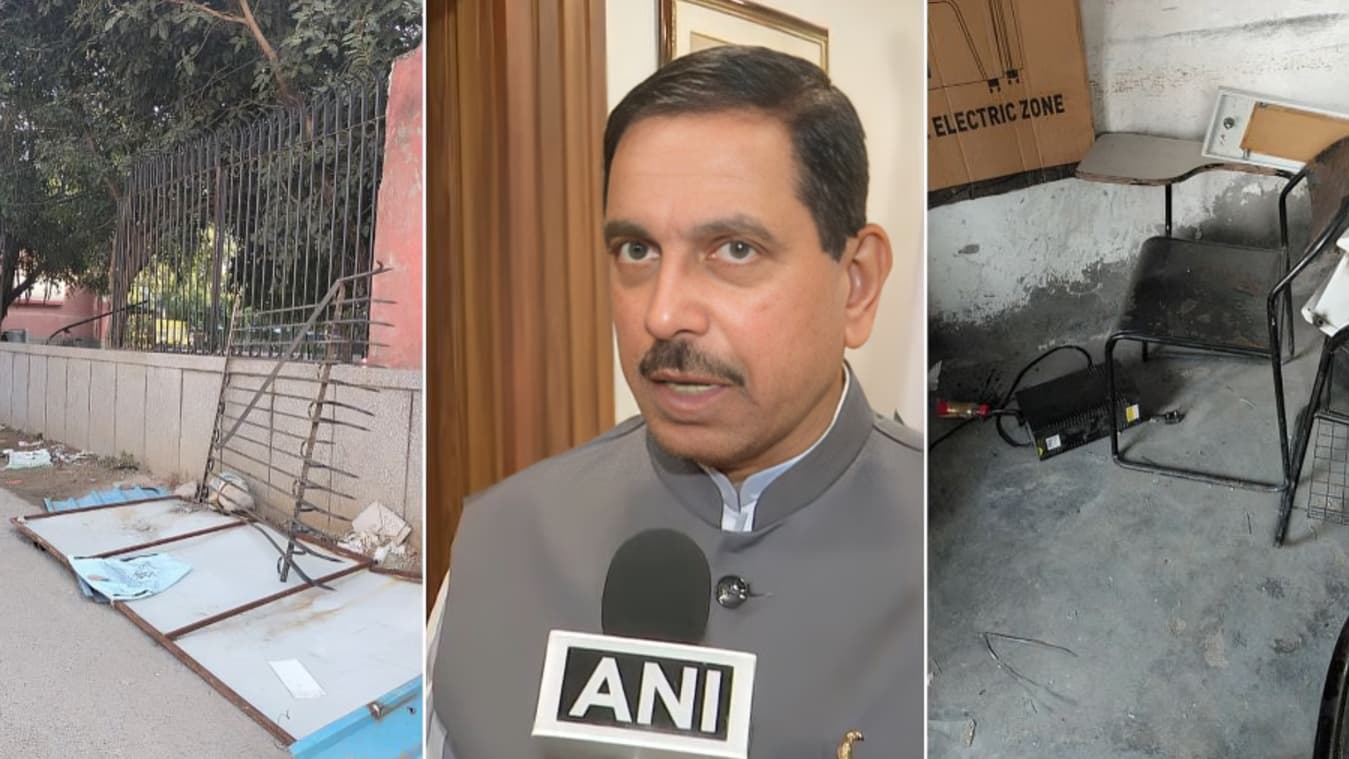
Pralhad Joshi Condemns Alleged Violence at Jamia
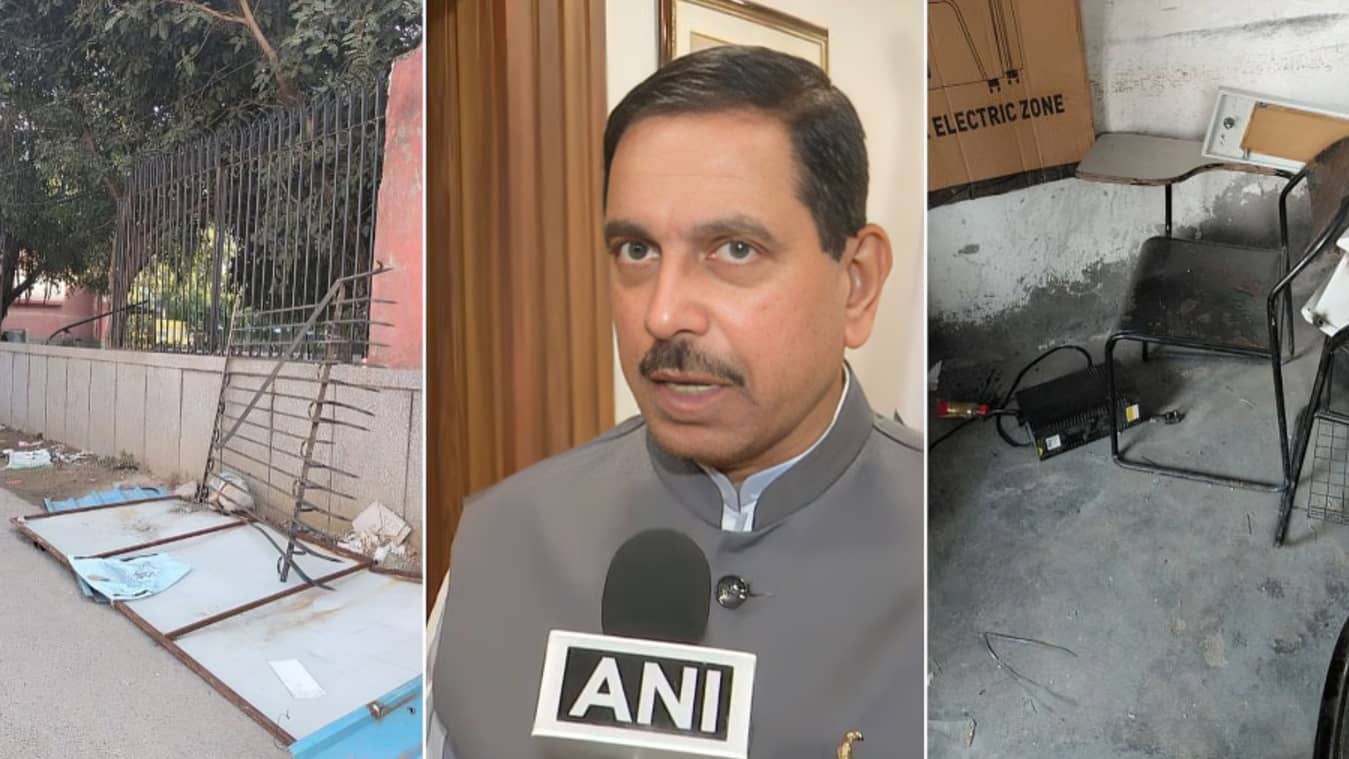
Union Education Minister Pralhad Joshi has condemned alleged violence and vandalism at Jamia Millia Islamia (JMI) in New Delhi, warning that the government will not tolerate “hooliganism” or “rowdy behaviour” on campus.
Speaking to reporters on Wednesday, October 28, Joshi described the incident as unfortunate and called on the Delhi Police to investigate the matter seriously. He also announced a seven-member committee comprising senior deans and professors to examine the grievances raised by protesting students.
The developments come amid a prolonged student agitation seeking the restoration of the Jamia Millia Islamia Students’ Union (JMISU) and a clear schedule for conducting elections.
Seven-Member Committee to Examine Students’ Grievances
Joshi said the committee would review the concerns raised by students, including grievances relating to action taken against individuals during the dispute.
The minister acknowledged that the issue of students’ union elections had remained unresolved for years. He said elections had not been held at the university since 2006, following a serious incident of violence during the previous election process.
Joshi maintained that students’ concerns would be examined but stressed that protests should not involve violence or damage to university property. He also said a police complaint had been filed and urged the Delhi Police to investigate the reported incidents.
According to reports and statements from the university administration, incidents of alleged vandalism occurred on the campus late on October 27. The administration reported damage to gates, boundary walls and surveillance infrastructure, including CCTV cameras and related equipment.
The university also alleged that masked individuals entered restricted areas and that parts of the campus infrastructure were damaged during the unrest. These accounts represent the administration’s allegations; responsibility for specific acts should be established through an investigation.
The incident heightened tensions at a time when university officials and student representatives had been holding discussions over the ongoing agitation. The university had also shifted classes online amid the escalating situation.
Why Are Students Protesting?
The central demand of the agitation is the restoration of the Jamia Millia Islamia Students’ Union and the resumption of elections, which have not taken place since 2006.
Students have called for the administration to approve the union’s constitution and announce a definite election date. They argue that the current proposal does not provide a firm deadline for completing the approval process.
The university announced that elections would be conducted within 15 days after the students’ union constitution receives approval. It also withdrew suspension and show-cause notices issued to students during the agitation and provided for an inquiry into the conduct of security personnel.
However, protesters have maintained that the announcement does not fully address their demand for a specific timeline. The disagreement over the election process has kept the agitation going despite efforts to resolve the dispute through discussions.
University and Students Face Pressure to Resolve the Standoff
The dispute has raised questions about how the university can address students’ demands while maintaining campus safety and preventing disruption to academic activities.
The committee announced by Joshi is expected to examine students’ grievances, while the police investigation will address the reported incidents of violence and property damage. The two processes concern different aspects of the dispute: the committee is intended to review grievances, whereas the police are being asked to investigate alleged offences.
The university’s decision to withdraw disciplinary notices and examine the conduct of security staff forms part of the administrative response. Students, meanwhile, continue to seek clarity on the approval of their union constitution and the timing of elections.
What Happens Next?
The immediate focus will be on the committee’s examination of student grievances, the police response to the reported vandalism and further discussions between the university administration and protesters.
A resolution will require clarity on the election process as well as steps to prevent further disruption and protect students, staff and university property.
For now, the key issues remain the restoration of the students’ union, the timeline for elections and the investigation into the reported campus violence. Any conclusions about individual responsibility should await the findings of the relevant authorities.