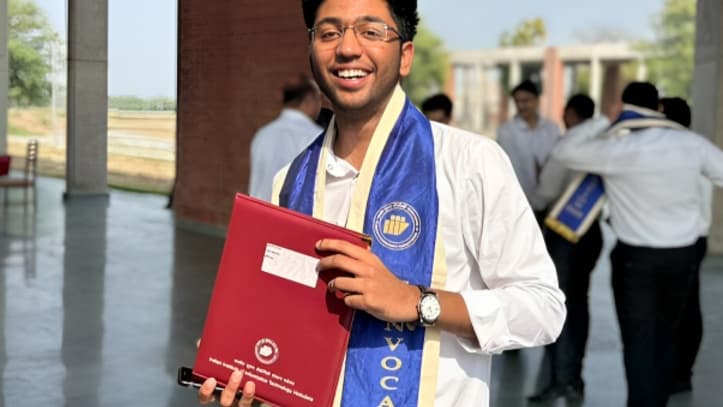
Shobhit Nirwan on Choosing an Unconventional Career Path After IIIT Vadodara
Shobhit Nirwan, an educator, entrepreneur and digital content creator, has shared reflections on how his experience at the Indian Institute of Information Technology Vadodara helped shape his professional journey. Known for his educational videos and guidance for students, Nirwan began creating content while studying Information Technology at the institute. His experience highlights how exploring personal interests alongside formal education can open up career opportunities beyond a traditional employment route.
From Engineering Studies to Educational Content
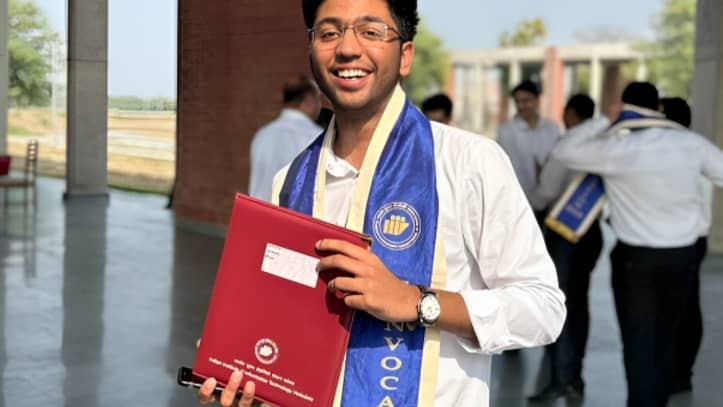
Nirwan pursued a Bachelor of Technology degree in Information Technology at IIIT Vadodara. Although engineering provided him with a conventional academic and professional foundation, he also developed an interest in communicating his experiences and helping students navigate academic challenges.
In an interview published in 2023, Nirwan explained that he realised during his first semester that coding was not the field he wanted to pursue exclusively. Rather than forcing himself to follow a career direction simply because it was associated with his degree, he began exploring other interests and developing different skills.
His experience illustrates an important consideration for students entering higher education. A degree can provide valuable knowledge and career opportunities, but students may discover other interests as they gain exposure to new subjects, people and experiences.
How YouTube Became Part of His Journey
Nirwan started his YouTube channel in August 2019, during his first semester at college. The idea emerged after conversations with his roommates about his experiences preparing for competitive examinations and studying in Kota.
According to his account, his friends encouraged him to share his experiences through videos so that students who were preparing for examinations could benefit from his guidance.
He began creating educational content and discussing study strategies, examination preparation and the challenges students face during their academic journeys. His early work gradually attracted an audience interested in practical advice and accessible educational resources.
The experience demonstrates how a personal interest can develop into a professional opportunity. What initially began as a way to share knowledge became an important part of Nirwan's career.
Moving Beyond the Conventional Career Path
For many students, completing an engineering degree is closely associated with securing a job in the technology sector. Nirwan's experience shows that a technical qualification can also serve as a foundation for exploring other professional directions.
His journey does not suggest that formal education is unimportant. Instead, it highlights the possibility of combining academic learning with independent projects, communication skills and entrepreneurial experimentation.
Students can use their time in college to discover their strengths, understand their interests and test ideas on a small scale. Projects, internships, student communities, content creation and practical assignments can provide experience that complements classroom learning.
Such activities can help students recognise opportunities that may not be immediately visible when they begin their degrees.
The Importance of Exploring Interests Early
One of the key lessons from Nirwan's journey is the value of exploring different interests before committing completely to a single career direction.
College offers opportunities to learn new skills, interact with people from different backgrounds and gain exposure to industries outside a student's chosen subject. Exploring these possibilities can help individuals identify the work they find meaningful and the skills they want to develop.
However, exploring alternative careers does not require students to abandon their studies or make sudden decisions. They can begin with small projects, part-time activities or personal experiments while continuing their education.
This approach allows students to assess their interests, build experience and understand the practical demands of a potential career before making significant commitments.
Consistency and Skill Development
Building a career through content creation or entrepreneurship requires more than identifying an interesting idea. It also involves consistent effort, learning from feedback and improving the quality of work over time.
Nirwan's experience creating educational videos illustrates how regular practice can help turn knowledge into useful content. Explaining concepts clearly, understanding students' difficulties and communicating effectively are skills that can be developed through repeated work.
These abilities are valuable beyond content creation. Communication, problem-solving, adaptability and the capacity to work independently can benefit people in technology, business, education and many other professions.
Students considering an alternative career path should therefore focus on developing practical abilities and producing work that demonstrates what they can do.
What Students Can Learn From His Experience
Nirwan's journey offers several useful lessons for students who feel uncertain about their future after school or college.
First, students should not assume that their degree must determine every aspect of their professional life. Their education can remain valuable even if they eventually work in a different field.
Second, experimenting with personal interests can help reveal strengths that may not emerge through academic performance alone. A student who enjoys teaching, writing, designing or communicating may discover opportunities by trying these activities outside the classroom.
Third, consistency matters when developing a new skill. Early efforts may not generate immediate results, but regular practice can help individuals improve and understand whether an opportunity is worth pursuing further.
Finally, students should make career decisions based on realistic assessments of their interests, abilities, financial circumstances and long-term goals rather than following social expectations alone.
Balancing Education and Career Decisions
An unconventional career path is not automatically better than a conventional one. Employment, higher education, entrepreneurship and independent creative work all involve different opportunities and risks.
Students should evaluate the qualifications required for their preferred profession, the stability of available income, the demand for their skills and the resources needed to pursue their goals. Seeking guidance from experienced professionals and discussing decisions with trusted people can also help.
For those interested in content creation, building a portfolio while studying may offer a practical way to test their abilities without immediately giving up other opportunities. Similar approaches can be used in programming, design, business and other fields.
Conclusion
Shobhit Nirwan's journey from studying Information Technology at IIIT Vadodara to building a career in educational content creation highlights the importance of curiosity, practical experience and consistent effort.
His experience shows that college can provide more than an academic qualification. It can also be a period for exploring interests, learning new skills and discovering professional opportunities.
For students considering alternatives to conventional career paths, the central lesson is to explore thoughtfully, continue learning and build practical experience before making major decisions. A degree and an unconventional career are not necessarily opposing choices. With careful planning, the knowledge gained through formal education can support a range of professional possibilities.