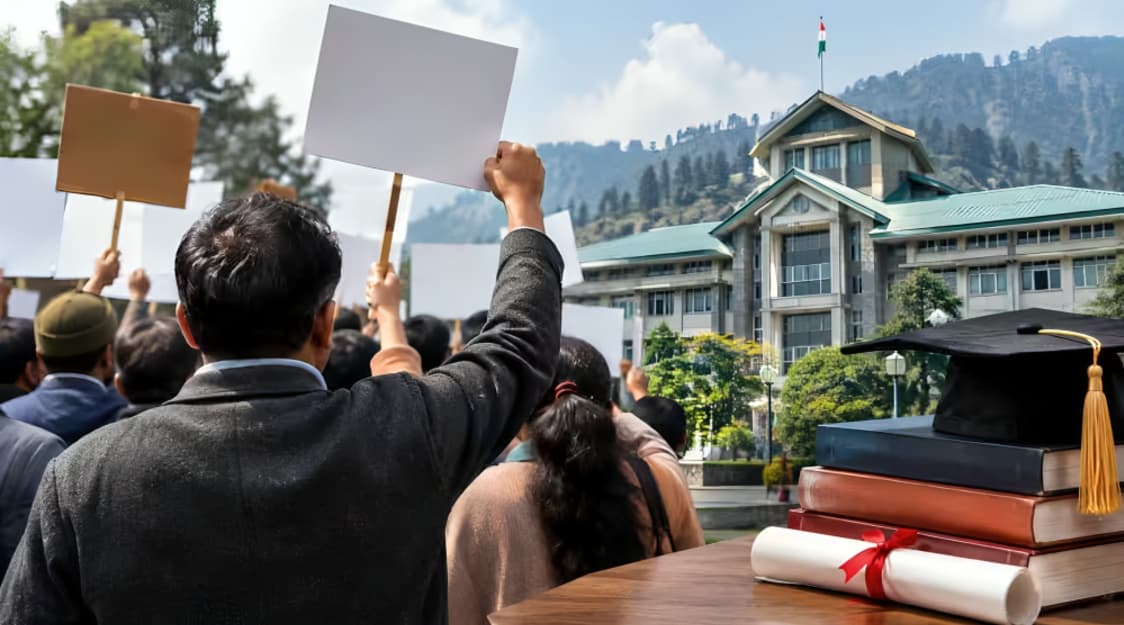
The UPSC Civil Services Examination is widely regarded as one of the most challenging competitive exams in India. Every year, thousands of aspirants dedicate years of preparation to secure a position in the civil services. While the examination is known for its difficulty, the reasons behind choosing this path vary widely among candidates.
Several successful candidates have shared their journeys, offering insights into what motivated them to pursue a career in public service. Their experiences reflect a mix of personal ambition, social responsibility and a desire to create meaningful change.
Abhishek Chauhan from Bihar, who secured All India Rank 102, left a corporate career after graduating from a prestigious engineering institution. Despite having a stable job in a multinational company, he felt that his work did not directly impact the lives of vulnerable communities. This realization motivated him to pursue civil services, where he believed he could contribute more effectively to society.
Another candidate, Ram Bhajan Kumar from Rajasthan, faced significant financial challenges during his journey. Coming from a family dependent on livestock for income, he experienced hardship after losing his father during the COVID pandemic. Despite these difficulties, he continued his preparation while working in the Delhi Police and eventually secured All India Rank 662. His story highlights resilience and determination in the face of adversity.
Ritika Chitlangia, who achieved All India Rank 55, had a clear goal from an early stage. Inspired by her school teacher, she developed an interest in civil services during her school years. Her consistent efforts and focused preparation helped her achieve success. Her journey emphasizes the importance of early motivation and sustained dedication.
Hemant Mishra from Bihar, who secured All India Rank 13, brought prior administrative experience to his civil services journey. Having worked in roles such as Deputy Superintendent of Police and Sub Divisional Magistrate, he aimed to use his position to address issues related to welfare and governance. His perspective reflects a commitment to public service and policy implementation.
Dongre Revaiah from Telangana also made a significant career shift by leaving a well paying job to prepare for the civil services. After achieving financial stability, he chose to pursue his aspiration of serving society. His decision underscores the idea that career choices are often driven by purpose rather than financial considerations alone.
These examples demonstrate that the decision to pursue civil services is influenced by a range of factors. For some, it is about contributing to society and addressing social issues. For others, it is about achieving personal goals or improving their family’s circumstances. In many cases, it is a combination of these motivations.
Experts note that civil services offer a unique opportunity to work at the grassroots level and participate in policy implementation. This aspect attracts individuals who are interested in governance and public administration. At the same time, the rigorous selection process ensures that only those with strong commitment and capability succeed.
The journeys of these candidates continue to inspire future aspirants. Their stories highlight the importance of perseverance, discipline and clarity of purpose. Preparing for the civil services requires not only academic effort but also mental resilience and long term dedication.
Overall, the motivations behind choosing civil services reflect a broader aspiration to make a difference in society. Whether driven by personal ambition or social responsibility, these journeys serve as examples of how determination can lead to success in one of India’s most competitive fields.