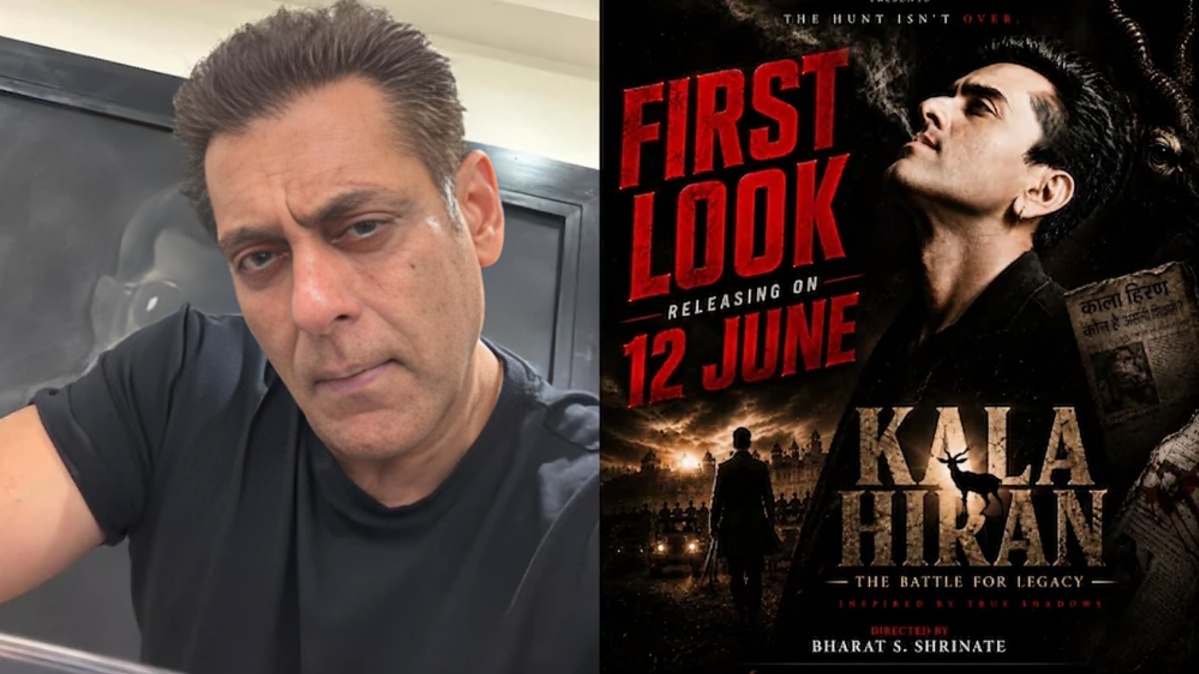
Bollywood actor Salman Khan has reportedly approached the Delhi High Court seeking legal intervention against the upcoming film Kala Hiran. According to reports, the actor has requested an immediate stay on the production, promotion and release of the film, claiming that it could negatively affect his reputation and goodwill.
The legal action is said to be linked to the film's reported storyline, which has been described as loosely inspired by the widely discussed 1998 blackbuck poaching case involving Salman Khan. The actor's legal team has reportedly argued that the project may create a misleading impression among audiences and potentially harm his public image.
The blackbuck poaching case has remained one of the most publicized legal matters involving the actor. Over the years, the case has attracted significant media attention and has been the subject of extensive legal proceedings. Because of its high-profile nature, any creative work referencing the case is likely to generate public interest and discussion.
According to reports, Salman Khan has contended that the proposed film could lead viewers to associate fictionalized events with real-life incidents, resulting in potential reputational damage. The actor has therefore sought judicial protection to prevent what his legal representatives describe as irreparable harm.
The petition reportedly requests that the court examine whether the film's content infringes upon the actor's rights or creates unfair associations that may affect his standing among audiences. Legal experts note that such cases often involve a balance between creative freedom and an individual's right to protect their reputation.
The makers of Kala Hiran have not publicly responded in detail to the allegations at the time of reporting. However, disputes involving films inspired by real-life events are not uncommon in the entertainment industry. Courts are often called upon to determine whether a production crosses legal boundaries relating to defamation, privacy or personality rights.
Legal analysts point out that filmmakers generally have the right to create fictional stories inspired by public events, provided they comply with applicable laws and avoid presenting inaccurate or defamatory material. At the same time, public figures are entitled to seek legal remedies if they believe a project may unfairly damage their reputation.
The case is expected to draw attention from both the film industry and legal observers because it raises important questions about creative expression and the rights of individuals portrayed or referenced in cinematic works. Similar disputes in the past have often led to modifications in film content, disclaimers or other legal settlements.
Salman Khan remains one of the most recognized figures in the Indian film industry, with a career spanning several decades. Any legal development involving the actor is likely to attract significant public and media attention.
As the matter proceeds before the Delhi High Court, all parties involved will have an opportunity to present their arguments and supporting evidence. The court's decision could influence the future of the film and provide further clarity regarding legal standards applicable to projects inspired by real-life events.
Until an official ruling is issued, the future release and promotion plans of Kala Hiran remain uncertain. Industry observers will closely monitor the proceedings, as the outcome may have implications for filmmakers, producers and public personalities involved in similar disputes in the future.