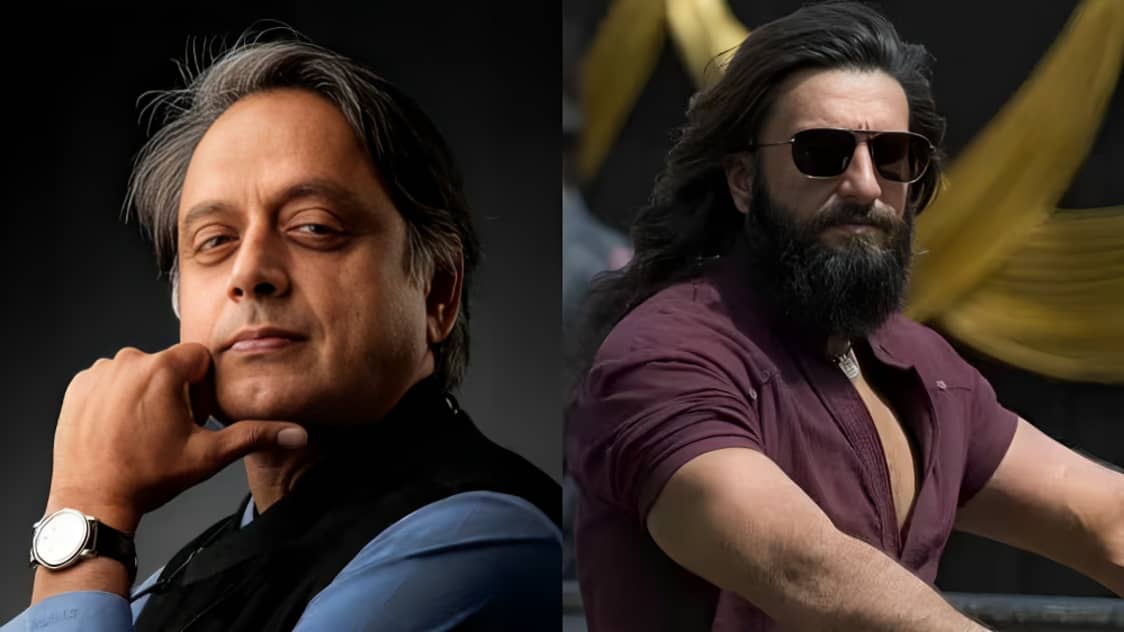
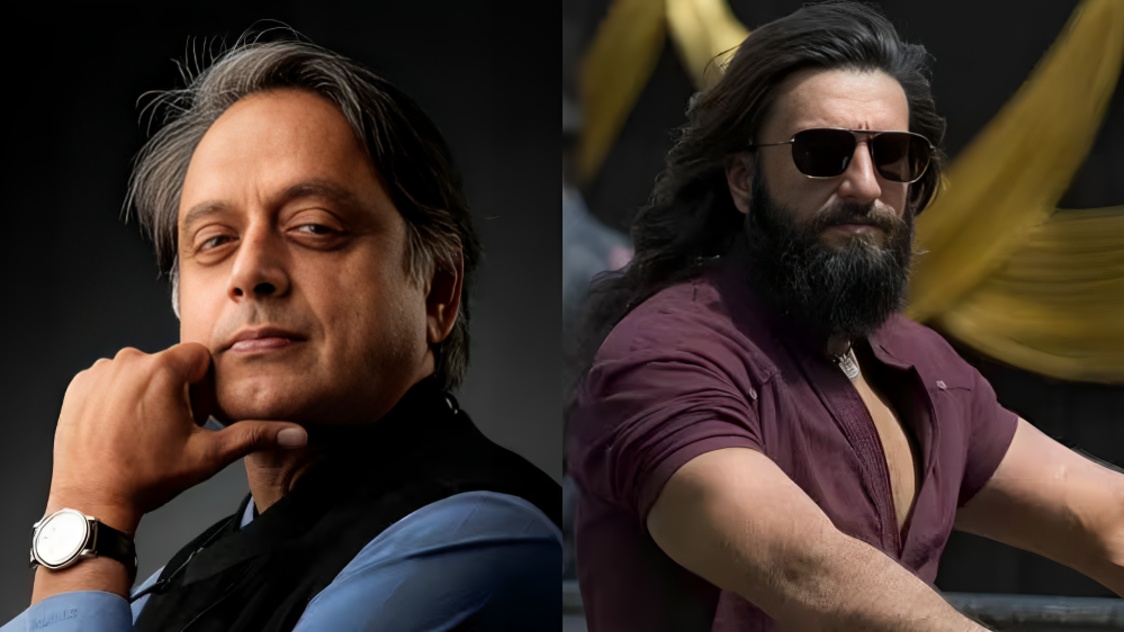
Congress Member of Parliament Shashi Tharoor has shared his views on Ranveer Singh’s Dhurandhar film franchise, praising its performances, production quality and storytelling while criticising what he considers excessive violence and controversial political messaging.
Tharoor discussed both films in a video shared on his official YouTube channel. Although he appreciated the scale and entertainment value of the franchise, he argued that some of its violent scenes were unnecessarily graphic. He also raised questions about the way the films portray India-Pakistan relations and the work of intelligence agencies.
His comments have added to the wider public discussion surrounding the two-part spy thriller directed by Aditya Dhar.
Tharoor Prefers the Sequel
After watching both instalments, Tharoor said he enjoyed Dhurandhar: The Revenge more than the first film. He praised the sequel’s storyline, plot twists and narrative development, suggesting that the second part was more entertaining because it addressed some of the loose ends left by the original.
The Congress MP also appreciated the performances of the actors portraying the antagonists. He singled out Akshaye Khanna and Arjun Rampal for their convincing portrayals, describing their performances as particularly effective.
Tharoor’s review was not entirely negative. He acknowledged the work involved in creating the films, including the production design, sets, direction and visual presentation. He said the overall experience felt like a major cinematic event, recognising the effort required to deliver a large-scale action franchise.
His assessment therefore combined appreciation for the filmmakers’ technical and creative achievements with criticism of some of the content and themes.
Concerns Over Excessive Violence
One of Tharoor’s main criticisms concerned the depiction of violence across the two films. He argued that the filmmakers relied too heavily on graphic scenes involving bloodshed, cruelty and physical brutality.
In his video review, he described the violence as excessive and questioned whether the story required such explicit treatment. His comments reflected a distinction between appreciating an action film’s storytelling and believing that graphic violence is necessary to communicate its themes.
The criticism has renewed debate over the role of violent imagery in mainstream Indian cinema. Action thrillers often use intense scenes to create suspense, establish the danger faced by characters and convey the consequences of conflict. However, audiences and reviewers differ over how much graphic detail is appropriate.
Some viewers may regard such scenes as an essential part of a film’s realism, while others may find them distracting or unnecessarily disturbing. Tharoor’s remarks place him among those who believe that the franchise could have maintained its dramatic impact without depicting violence so explicitly.
His comments represent his personal assessment of the films rather than an official evaluation of their content.
Questions About Political Messaging
Tharoor also questioned the political themes in the Dhurandhar franchise, particularly its portrayal of India-Pakistan relations. The films combine fictional espionage, national security themes and conflict between characters associated with the two countries.
He expressed concern that some elements could be interpreted as political propaganda and suggested that the portrayal of events might influence how audiences view people across the border.
The issue is significant because films dealing with national security and international conflict can shape public perceptions of history, identity and relations between countries. While filmmakers have the freedom to use fictional narratives and dramatic interpretations, viewers may debate how closely those narratives reflect real events.
Tharoor also referred to reports that the films had faced restrictions in Pakistan and some Gulf countries. He suggested that concerns about the possible effect on relations between Indians and Pakistanis were understandable. These comments were part of his review and should not be treated as a comprehensive account of the legal status of the films in every country.
He also wondered how Pakistani audiences might respond to the story and its dialogue, noting that different scenes could provoke different reactions.
Tharoor Questions the Portrayal of Intelligence Operations
Another aspect of the review concerned the film series’ depiction of intelligence work. Dhurandhar follows an undercover operative, Jaskirat Singh Rangi, who operates under the identity of Hamza Ali Mazari.
Tharoor said his own interactions with Indian intelligence officials had involved discussions, analysis and the exchange of information rather than the dramatic covert missions shown in the films. He questioned whether some of the operations depicted on screen accurately reflected his experience.
He also raised doubts about the timeline associated with R. Madhavan’s character, Ajay Sanyal, who is portrayed as a senior intelligence figure. Tharoor argued that the idea of one official remaining in the same position over such an extended period was difficult to accept as a realistic account of how government institutions function.
At the same time, he acknowledged that the films are fictional works. Fictional thrillers often combine recognisable people, institutions and historical references with invented characters and events to create a continuous narrative.
His remarks highlighted the importance of distinguishing cinematic storytelling from verified accounts of intelligence operations or government decision-making.
Praise for Direction, Production and Acting
Despite his objections, Tharoor praised the films’ overall execution. He acknowledged their visual presentation, sets, production design, direction and performances, saying the films created an impressive cinematic experience.
The franchise features Ranveer Singh alongside actors including Akshaye Khanna, Arjun Rampal, Sanjay Dutt and R. Madhavan. The ensemble cast and large-scale production have been central to the films’ appeal among audiences.
Tharoor’s review suggests that he found the filmmaking effective even when he disagreed with aspects of the screenplay and its political implications. His comments also illustrate how a viewer can appreciate a film’s technical achievements while remaining critical of its themes or treatment of sensitive subjects.
The distinction between cinematic execution and narrative content is common in film criticism, where reviewers may praise performances and direction while questioning a film’s choices concerning violence, historical interpretation or political messaging.
A Wider Debate About Cinema and Public Perception
The response to Tharoor’s review reflects a broader debate about the relationship between popular cinema and public discourse. Films involving espionage, terrorism, military operations and national security often draw attention because their themes overlap with real political and historical issues.
Such films can offer dramatic entertainment, but their treatment of real-world tensions may also invite scrutiny. Audiences may ask whether a story clearly distinguishes fiction from fact, whether it presents competing perspectives fairly and whether its use of violence serves a narrative purpose.
There is no single standard that determines how every viewer should interpret a film. Reviews such as Tharoor’s contribute to the discussion by explaining which elements worked for him and which raised concerns.
His comments do not diminish the fact that he praised the franchise’s production and performances. Instead, they present a mixed assessment of films that he found visually impressive and entertaining but, in some respects, excessively violent and politically questionable.
Conclusion
Shashi Tharoor’s review of the Dhurandhar franchise combines praise for its performances, storytelling and production scale with criticism of its graphic violence and political themes.
He said he preferred Dhurandhar: The Revenge to the first film, while arguing that several violent scenes went beyond what was necessary. He also questioned the portrayal of India-Pakistan relations and certain aspects of the fictional intelligence world.
His remarks have added another perspective to the public conversation about the franchise, highlighting how viewers can appreciate a film’s technical achievements while disagreeing with its narrative choices.