

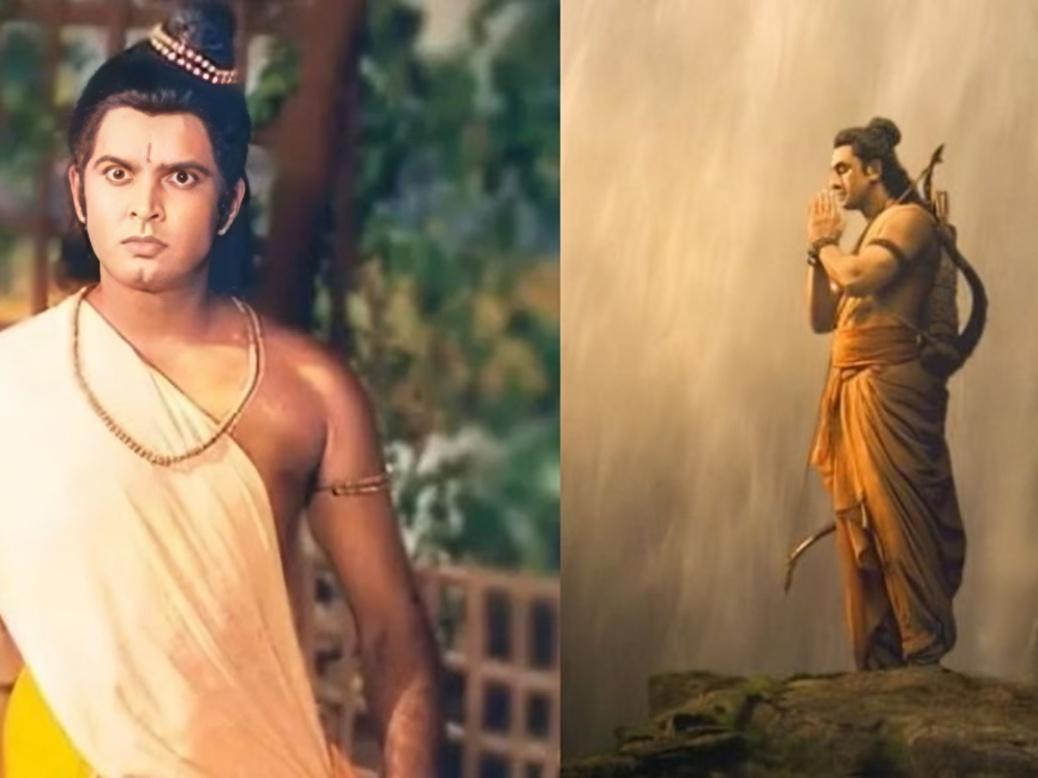
Actor Sunil Lahri, who became popular for portraying Lakshman in Ramanand Sagar’s legendary television series Ramayan, has shared his opinion on the latest big-screen adaptation of the Hindu epic, Ramayana. While he appreciated the film’s visual presentation and the performances of its cast, Lahri expressed disappointment over several aspects of its storytelling, particularly the emotional scenes, dialogues and devotional elements.
Directed by Nitesh Tiwari, the new adaptation stars Ranbir Kapoor as Lord Rama, Sai Pallavi as Sita, Yash as Ravana and Ravie Dubey as Lakshman. The film has attracted considerable attention because of its large-scale production and the challenge of bringing a much-revered epic to the big screen.
Sunil Lahri Praises the Visual Effects and Performances
In a video shared on social media after watching the film, Lahri began by acknowledging its technical achievements. He described it as a grand production and praised its visual effects, saying that the visuals were impressive and pleasing to watch.
He also appreciated the performances of the actors, noting that the cast had put considerable effort into their respective roles. According to Lahri, some sequences in the film were particularly impressive. His comments indicated that he recognised the effort involved in presenting the epic on such a large cinematic scale.
However, his review was not entirely positive. After acknowledging the film’s strengths, he explained that certain important elements had not received the attention he expected from an adaptation of the Ramayana.
Emotional Scenes and Dialogues Draw Criticism
One of Lahri’s main concerns was the treatment of emotional moments and conversations between characters. He felt that some scenes needed more attention and that the dialogues did not always reflect the dignity and emotional depth expected in a film based on the epic.
He specifically mentioned the Parashuram sequence, which he found weak. He also pointed out that the Ahalya episode was absent from the film. These observations formed an important part of his criticism, as he believed that such episodes contribute to the wider spiritual and narrative significance of the Ramayana.
Lahri also expressed dissatisfaction with the way certain characters address Lord Rama. He referred to the conversations involving Shurpanakha and Rama, as well as the way Sita addresses Rama. In his view, the dialogue and manner of addressing the central character could have been handled more appropriately to maintain the traditional tone and dignity associated with the story.
Lahri Says the Film Needs More Devotional Depth
Beyond individual scenes, Lahri raised a broader concern about the film’s overall approach. He felt that several portions lacked the devotional atmosphere and sense of divinity that audiences traditionally associate with the Ramayana.
He described the film as being more focused on power than devotion. His assessment suggested that, although the production succeeds in creating a visually grand cinematic experience, he expected a stronger emphasis on the spiritual and devotional dimensions of the epic.
The distinction he highlighted is significant because the Ramayana is not simply an adventure or a story of conflict between powerful characters. For many viewers, it is also a deeply respected religious and cultural narrative. Its emotional relationships, moral choices, devotion and spiritual values are central to how the story is understood and remembered.
Lahri’s comments reflect his personal expectations as an actor who was part of one of the most widely remembered television adaptations of the epic. His portrayal of Lakshman in the 1987 series made him familiar to generations of viewers. Therefore, his observations also bring attention to the different expectations audiences may have when a well-known religious story is reinterpreted for a new generation.
A Different Interpretation of a Familiar Epic
Adapting the Ramayana for cinema involves several creative decisions, including selecting episodes, shaping character interactions and presenting familiar events within a film’s narrative structure. A feature film may approach the material differently from a television series, which has more time to explore individual episodes and relationships.
However, viewers who grew up watching Ramanand Sagar’s Ramayan may compare the new adaptation with the emotional treatment and devotional presentation of the earlier series. Lahri’s remarks highlight this difference in expectations, particularly regarding the importance of dialogue, character relationships and spiritual atmosphere.
His review does not dismiss the entire film. He acknowledged its technical quality, grand presentation and the efforts of the cast while identifying areas where he felt the storytelling could have been stronger. This makes his response a mixed assessment rather than an entirely negative reaction.
Lahri has also previously expressed appreciation for Ravie Dubey’s portrayal of Lakshman in the new adaptation, praising the innocence and intensity he felt were important to the character. His latest comments, therefore, address specific creative choices in the film rather than rejecting every aspect of the new production.
Sunil Lahri Invites Viewers to Share Their Opinions
At the end of his review, Lahri encouraged audiences to watch the film and share their own views. His comments have added another perspective to the discussion surrounding the new adaptation, particularly among viewers familiar with the earlier television version.
Ultimately, reactions to a film based on a respected epic can differ depending on viewers’ expectations, cultural understanding and preference for storytelling styles. Some may value the visual scale and cinematic presentation, while others may place greater importance on devotional elements, traditional dialogues and the emotional depth of familiar episodes.
Lahri’s assessment brings these differences into focus. While he praised the film’s visual effects and performances, he felt that important emotional and devotional aspects deserved greater attention. His comments have renewed discussion about how a modern cinematic adaptation can balance visual spectacle with the cultural and spiritual significance of the Ramayana.


