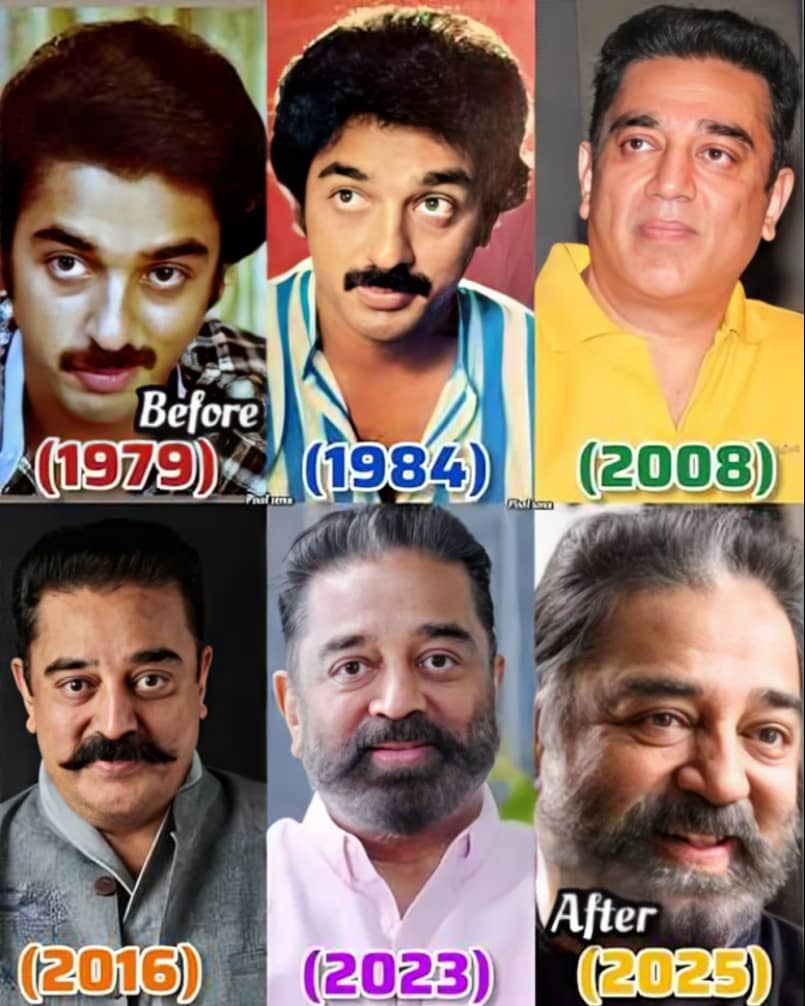
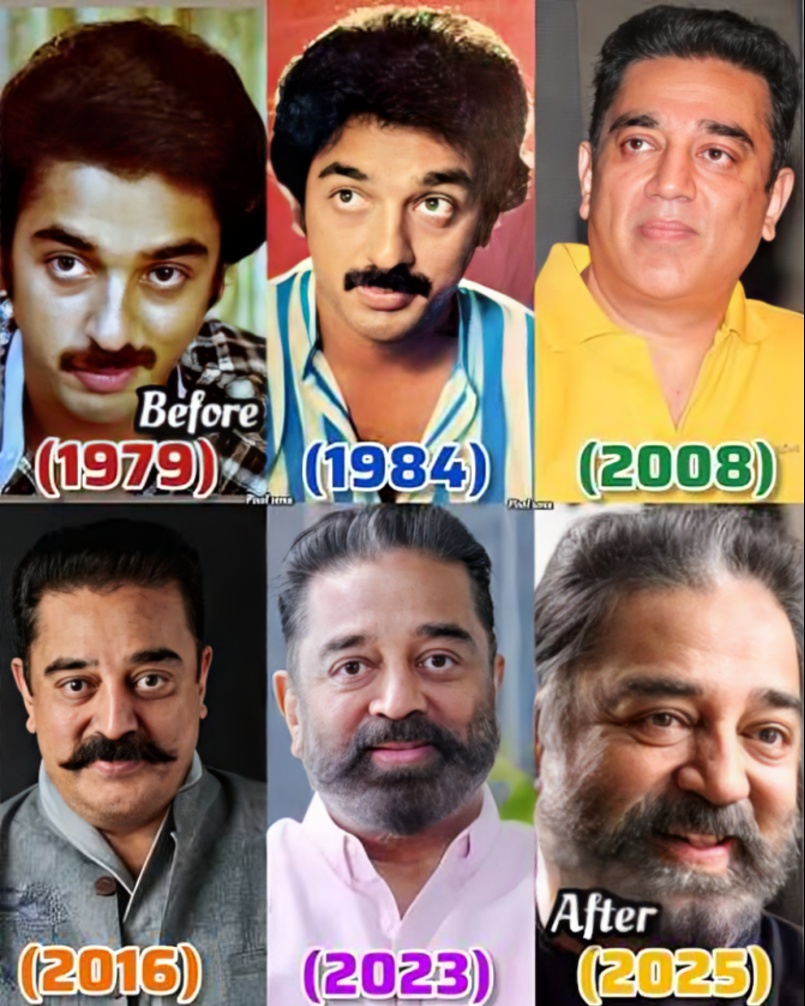
Kamal Haasan has opened up about his extraordinary journey in Indian cinema and his personal approach to fame, success and professional growth. With a career spanning more than six decades, the veteran actor has established himself not only as a performer but also as a filmmaker, writer and technician.
In a candid interview with PTI, Haasan reflected on the many stages of his career and explained why he has never viewed success as a permanent destination. His comments offered an insight into the mindset that has helped him continue working and reinventing himself across generations.
Haasan entered the film industry as a child and has remained connected with cinema for most of his life. Over the decades, he has taken on a wide variety of roles and has worked in several areas of filmmaking, including acting, direction, writing, choreography and makeup.
Rather than looking back at his achievements with a sense of permanent satisfaction, Haasan has often emphasised the importance of continuing to learn. In his interview, he acknowledged that his pursuit of money and success had at times affected his desire to keep learning. He described this as one of the contradictions that can come with a long career in the film industry.
One of the most notable aspects of Haasan's comments was his description of success as temporary. He referred to a saying associated with writer Jayakanthan, comparing success to reaching the summit of Mount Everest.
The idea, according to Haasan, is that a person should not remain attached to the top after reaching it. Instead, the achievement should become a milestone from which the person moves forward. Staying focused on remaining at the top can prevent further growth and may create a sense of isolation.
Haasan also spoke about the loneliness that can accompany stardom. Being highly successful can create distance between a celebrity and ordinary experiences. While fame allows an actor to reach a much larger audience, it can also make it difficult to experience genuine reactions and honest criticism.
This observation reflects one of the central challenges of celebrity culture. An actor may receive enormous public attention, but that attention does not necessarily provide an accurate understanding of how people genuinely view their work.
Haasan's career demonstrates his willingness to move between different forms of cinema. He has worked in commercial films as well as projects that demanded experimentation and unconventional performances. His filmography includes critically recognised works such as Nayakan, Apoorva Raagangal, Thevar Magan, Sadma, Pushpak Vimana and Chachi 420.
His approach to filmmaking has also involved taking creative risks. Instead of relying entirely on an established image, Haasan has repeatedly attempted different characters and storytelling styles.
This willingness to reinvent himself has been an important part of his longevity. While many actors eventually become closely associated with a particular screen persona, Haasan has frequently attempted to challenge audience expectations.
His comments about success are therefore closely connected to his professional journey. Rather than treating previous achievements as something that guarantees future success, he has continued to look for new challenges.
Haasan's reflections also highlight the difference between fame and artistic development. A successful film or a popular performance can bring recognition, but it does not necessarily mean that an artist has reached the end of their creative journey.
The actor has previously spoken about the difficulties created by excessive fame. In his conversation with PTI, he discussed how stardom can create a bubble around an actor and separate them from ordinary experiences. He suggested that the applause received by celebrities may not always provide the honest feedback that an artist needs.
For Haasan, continuing to learn appears to be an important part of remaining relevant. His career has already extended across several generations of Indian cinema, and he has worked through major changes in filmmaking technology, audience preferences and the business of movies.
His career began at a time when Indian cinema operated very differently from the present industry. Since then, filmmaking has moved from traditional studio systems to digital production, computer generated visual effects and global distribution platforms.
Haasan has experienced many of these changes firsthand. His interest in technology and filmmaking techniques has been a recurring feature of his career.
The actor's comments also provide a broader perspective on what it means to remain successful for several decades. Instead of measuring a career only through awards, box office numbers or popularity, Haasan's approach focuses on continuing to work and explore new possibilities.
His philosophy can be summed up through his belief that reaching the top should not become the final objective. Once an artist reaches a significant achievement, the next challenge is to find another mountain to climb.
This mindset may also explain why Haasan has continued to experiment with different roles and filmmaking responsibilities throughout his career.
His upcoming projects and recent work demonstrate that he remains active even after decades at the top of Indian cinema. His collaboration with filmmaker Mani Ratnam in Thug Life was another example of his continued interest in challenging roles and ambitious projects.
At the same time, Haasan's comments reveal that long-term success can have its own difficulties. Maintaining a successful public image can create pressure, while constantly meeting audience expectations can make experimentation more challenging.
For an actor who has been in the public eye since childhood, the ability to separate personal growth from public recognition becomes particularly important.
Haasan's reflections therefore go beyond the film industry. His comments about success, learning and moving forward can also be viewed as a broader philosophy about achievement.
Success can provide recognition and opportunities, but becoming too attached to past achievements may prevent a person from exploring new possibilities. For Haasan, the answer appears to be continued learning and willingness to accept new challenges.
His more than six decades in cinema have given him an unusual perspective on the changing nature of fame. He has seen generations of actors and filmmakers enter the industry, witnessed major technological changes and experienced both critical appreciation and commercial setbacks.
Rather than defining his career solely through the highs, Haasan has acknowledged the importance of failures and difficult periods as part of the creative process.
That perspective has helped make his career distinctive. His willingness to take risks has sometimes produced commercial setbacks, but it has also resulted in performances and films that continue to be discussed by audiences and critics.
Kamal Haasan's latest reflections once again underline his belief that success should not become a permanent destination. For an artist, reaching the top may be an achievement, but remaining curious and continuing to learn can be even more important.
After more than 60 years in cinema, Haasan continues to approach his profession with an emphasis on experimentation and growth. His comments provide an unusual look at the mindset behind one of Indian cinema's longest and most varied careers