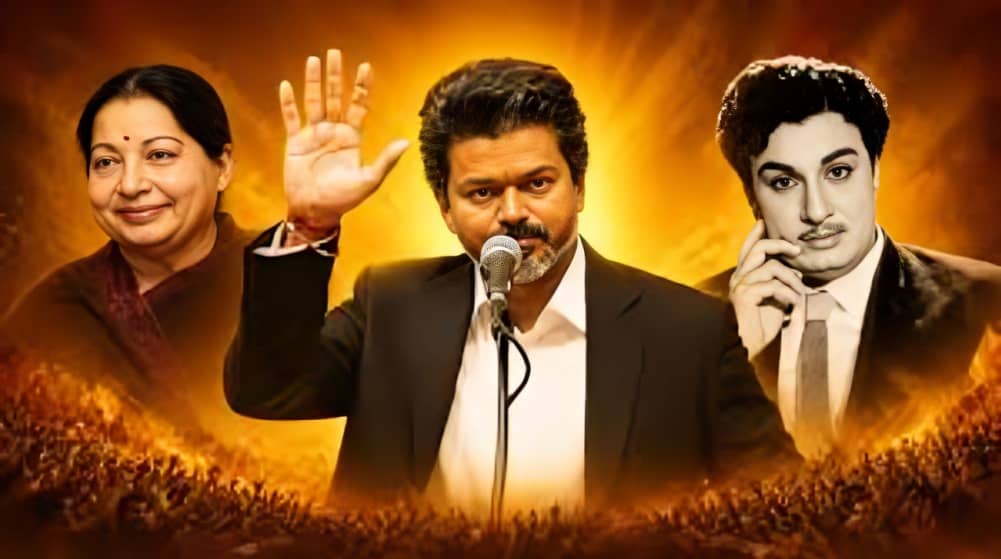
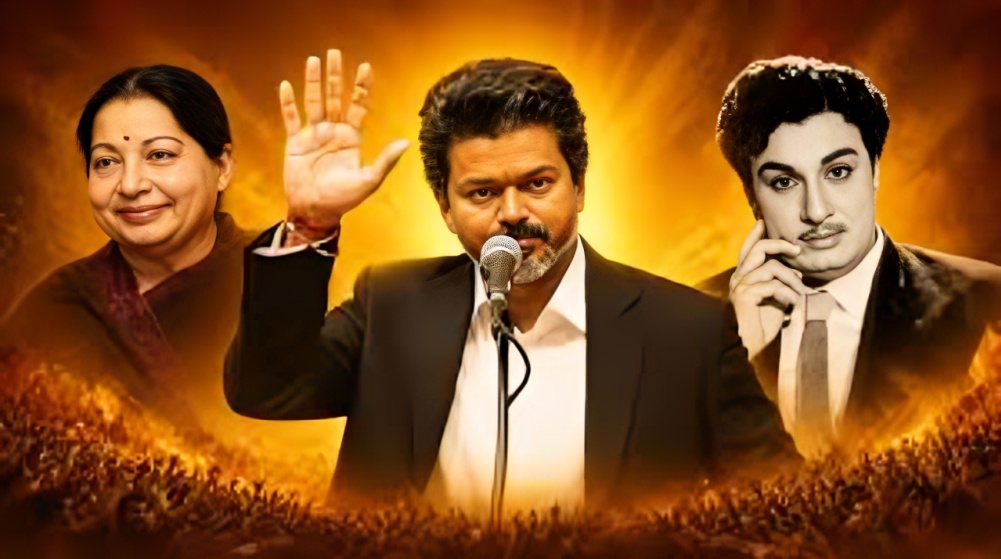
The swearing in of Vijay as the Chief Minister of Tamil Nadu on May 10 has once again highlighted the deep connection between cinema and politics in the state. Tamil Nadu has a unique political history where several major film personalities successfully transitioned from the entertainment industry into influential political leaders.
Vijay’s rise to political leadership reflects a long established pattern in Tamil Nadu, where film stars often command large public support due to their popularity, screen image, and extensive fan networks. Over several decades, cinema has played a major role in shaping political culture and public opinion in the state.
Tamil Nadu’s political landscape has historically witnessed the emergence of actor politicians who built mass appeal through films before entering public life. Film dialogues, social themes, heroic screen portrayals, and fan associations have often helped actors establish direct emotional connections with audiences.
Political observers note that Vijay’s transition from cinema to politics followed years of public engagement, social messaging, and growing political speculation surrounding his future ambitions. His political party gradually expanded its organizational structure and support base before entering electoral politics.
The influence of cinema in Tamil Nadu politics dates back several decades and has become a defining feature of the state’s democratic culture. Many actors developed strong grassroots networks through fan clubs, which later evolved into political support systems capable of mobilizing voters across regions.
Experts believe that cinema has historically served as a powerful communication medium in Tamil Nadu due to the strong emotional connection audiences share with film personalities. Popular actors are often viewed not only as entertainers but also as influential public figures capable of shaping social and political discussions.
Vijay’s political rise has drawn attention from across India because of his massive fan following and successful film career. His popularity among younger voters and urban audiences is considered one of the major factors behind his political emergence.
Analysts also point out that Tamil Nadu voters have often responded positively to leaders who combine public communication skills, cultural influence, and welfare oriented political messaging. Cinema personalities entering politics in the state have traditionally focused on social justice, public welfare, and regional identity themes.
The actor turned politician’s swearing in ceremony attracted widespread public and media attention, with supporters celebrating what they described as a historic political transition. His administration is now expected to focus on governance, welfare schemes, infrastructure development, education, employment, and law and order issues.
Political experts believe Vijay’s success may further strengthen discussions about the continuing influence of celebrity politics in regional Indian politics. At the same time, analysts note that sustaining long term political leadership requires administrative performance beyond public popularity.
The relationship between cinema and politics remains especially strong in Tamil Nadu compared to many other Indian states. Public rallies, fan driven campaigns, and media visibility often play an important role in shaping political narratives.
As Vijay begins his tenure as Chief Minister, political observers across the country will closely monitor how his government balances cinematic popularity with administrative responsibilities and policy implementation.
His rise marks another significant chapter in Tamil Nadu’s long history of actor politicians who transformed screen popularity into political power.