
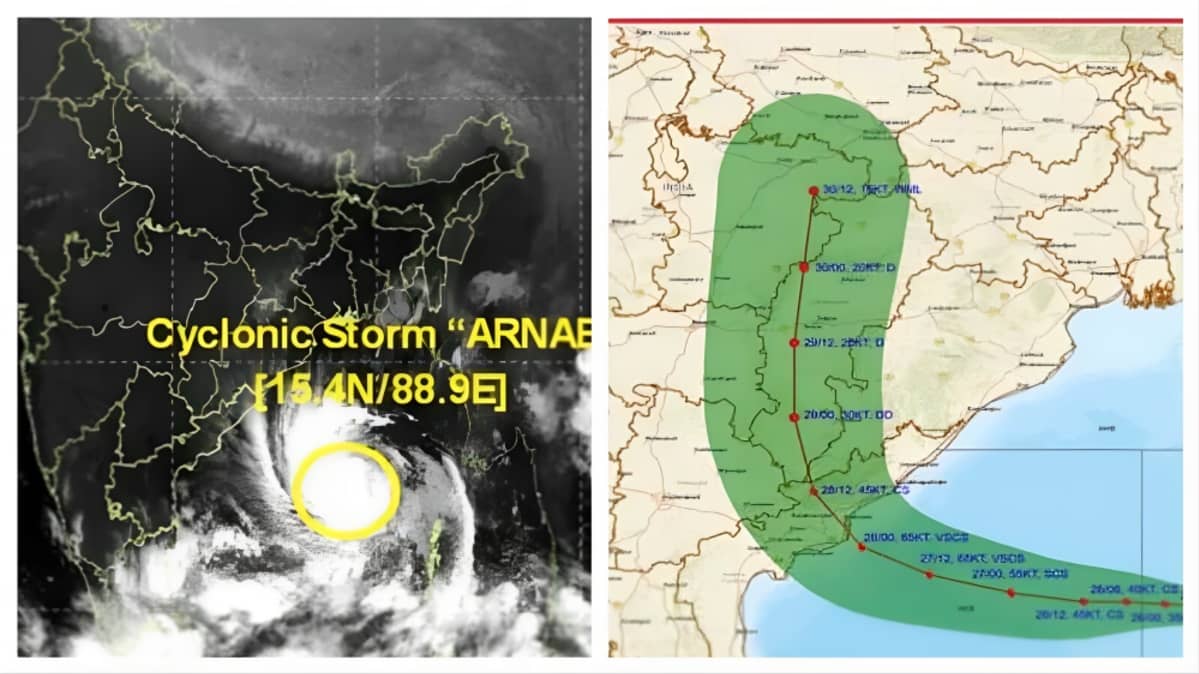
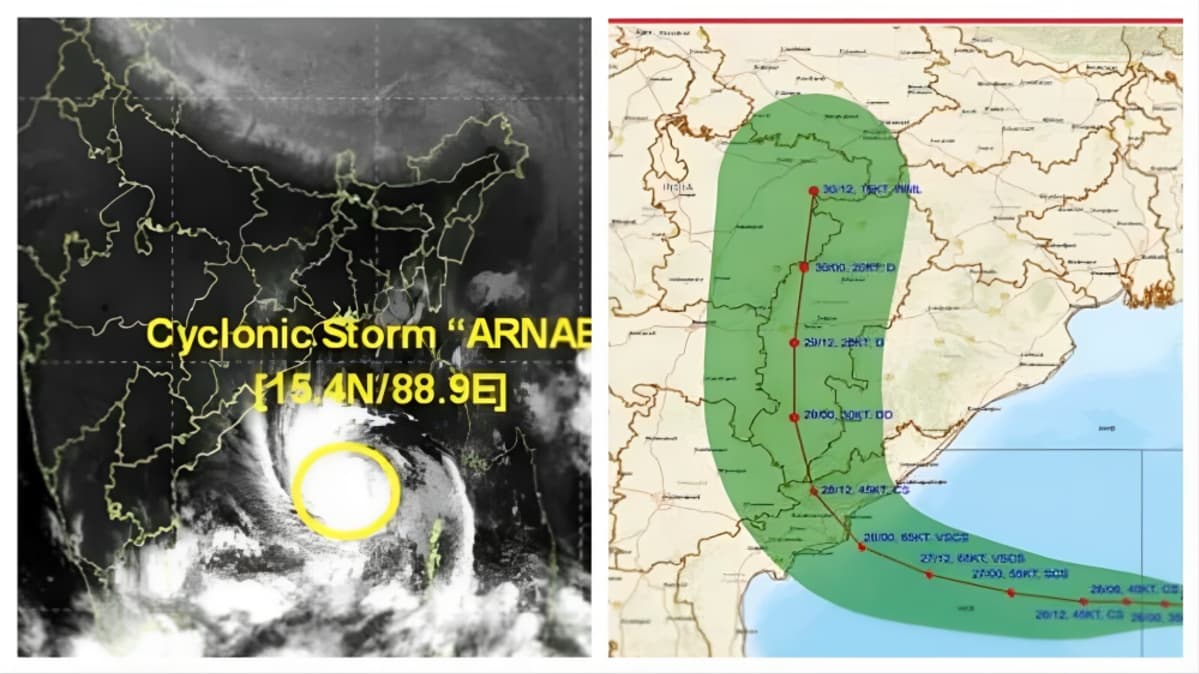
Cyclone Arnab made landfall along the Andhra Pradesh and Yanam coasts early on Wednesday, October 28, bringing powerful winds, heavy rainfall and flooding to several coastal areas. Wind speeds during landfall reached 125 to 135 kilometres per hour, with gusts of up to 150 kilometres per hour, according to the India Meteorological Department. The storm uprooted trees, damaged electricity lines and disrupted normal life in affected districts.
The cyclone crossed the coast near Narsapur, southwest of Yanam, after a prolonged landfall process. As the storm moved inland, its intensity weakened from a very severe cyclonic storm to a severe cyclonic storm. However, heavy rain and strong winds continued to pose risks to coastal communities, roads, power infrastructure and low-lying areas.
Cyclone Makes Landfall Along Andhra Pradesh Coast
Cyclone Arnab developed over the Bay of Bengal and moved towards the Andhra Pradesh coastline. The India Meteorological Department had warned that the storm would cross the coast between Bapatla and Visakhapatnam, close to the south of Yanam.
The landfall process began during the early hours of October 28 and continued for several hours. The storm's centre remained close to the coastline as its rain-bearing bands moved further inland.
The cyclone affected coastal districts, including Visakhapatnam, Anakapalli, Kakinada, Konaseema and West Godavari. Strong winds and heavy rain created difficult conditions for residents and emergency response teams. Fallen trees and damaged power lines also presented risks to road users and electricity workers.
Although the landfall process was reported to have been completed by Wednesday morning, weather conditions remained dangerous in several areas. Residents were advised to follow official updates as the system moved inland and gradually weakened.
Winds of Up to 150 Kmph Cause Damage
One of the major concerns during Cyclone Arnab's landfall was the intensity of the winds. The IMD reported maximum sustained winds of 125 to 135 kilometres per hour, with gusts reaching 150 kilometres per hour.
These powerful winds uprooted trees, snapped electricity lines and caused disruption in several locations. In Visakhapatnam, fallen trees obstructed traffic in some areas, while coastal locations experienced heavy rain and gusty conditions. Reports also indicated damage to electricity infrastructure and temporary power interruptions.
Such wind speeds can damage weak structures, uproot trees, affect communication systems and disrupt transport. Fallen electrical wires can also create a serious risk of electrocution, particularly in areas experiencing flooding.
Residents should avoid approaching fallen trees, damaged poles or loose power cables. Any damaged electrical infrastructure should be reported to the relevant authorities rather than handled directly.
Heavy Rainfall and Flooding Concerns
Heavy rainfall accompanied the cyclone as it crossed the coast. The IMD warned of intense rainfall in coastal Andhra Pradesh and neighbouring regions, raising concerns about waterlogging, flash floods and flooding in low-lying areas.
Several places in the coastal region experienced substantial rainfall. The combination of persistent rain, strong winds and possible seawater intrusion increased the risk of disruption in vulnerable communities. Flooded roads can make travel difficult and may prevent emergency vehicles from reaching affected locations quickly.
People living in low-lying coastal areas were advised to pay attention to evacuation instructions and local weather warnings. Residents should avoid crossing flooded roads or walking through moving floodwater, as the depth and strength of the current may be difficult to judge.
Authorities also faced the task of monitoring drainage systems, clearing blocked roads and assessing damage to public infrastructure.
Coastal Communities Face Disruption
The impact of Cyclone Arnab extended beyond wind damage. Heavy rainfall and flooding affected movement in several locations, while fallen trees and damaged electricity lines disrupted normal activities.
Fishing communities along the coast faced additional risks from rough seas and severe weather. Fishermen were warned to remain away from dangerous sea conditions and follow official instructions.
Cyclones can also affect agriculture, homes, communication networks and essential services. Standing crops may be damaged by strong winds and excess rainfall, while thatched houses and other vulnerable structures may suffer damage.
Residents in affected districts were encouraged to remain in safer locations until local authorities confirmed that conditions had improved. Emergency teams continued to face the challenge of clearing debris and responding to weather-related incidents.
Weather Department Warns of Continued Rain
Even after landfall, a cyclone can continue to bring heavy rainfall and strong winds as its circulation moves over land. The IMD therefore continued to monitor Arnab's movement and the weather conditions across Andhra Pradesh and neighbouring states.
The storm's weakening does not necessarily mean that all risks have ended. Flooding may continue after intense rainfall, and damaged trees or power lines can remain dangerous even after wind speeds decrease.
Residents should rely on official weather bulletins and instructions from local administrations rather than unverified messages circulating on social media. People should also avoid unnecessary travel during periods of heavy rain and remain alert to local flood warnings.
Emergency services and electricity teams may need time to restore damaged infrastructure, remove fallen trees and make affected areas safe.
Safety Measures for Residents
During and after a severe cyclone, residents should take precautions to protect themselves and their families. People in areas under evacuation advisories should follow the instructions issued by local authorities and move to designated safe locations.
Residents should stay indoors during strong winds and keep away from windows and unstable structures. They should not touch fallen electrical wires or attempt to move damaged poles. Flooded roads and bridges should be avoided, particularly when water is moving rapidly.
Families should keep essential medicines, drinking water, food, flashlights and charged mobile phones ready when severe weather is expected. Any emergency should be reported to the appropriate local authorities.
People should continue to follow official weather updates even after the cyclone has crossed the coast, as heavy rainfall and flooding may persist.
Cyclone Arnab's Impact on Andhra Pradesh
Cyclone Arnab's landfall brought strong winds, heavy rain and infrastructure damage to parts of Andhra Pradesh. The storm's winds reached gusts of up to 150 kilometres per hour, uprooting trees and damaging electricity lines. Flooding and waterlogging added to the difficulties faced by coastal residents.
Although the cyclone weakened after crossing the coast, the threat from heavy rainfall and local flooding remained important. The situation highlighted the need for timely weather warnings, evacuation arrangements and emergency response measures in vulnerable coastal areas.
Residents should continue to follow official advisories and avoid dangerous locations until authorities confirm that conditions are safe.


