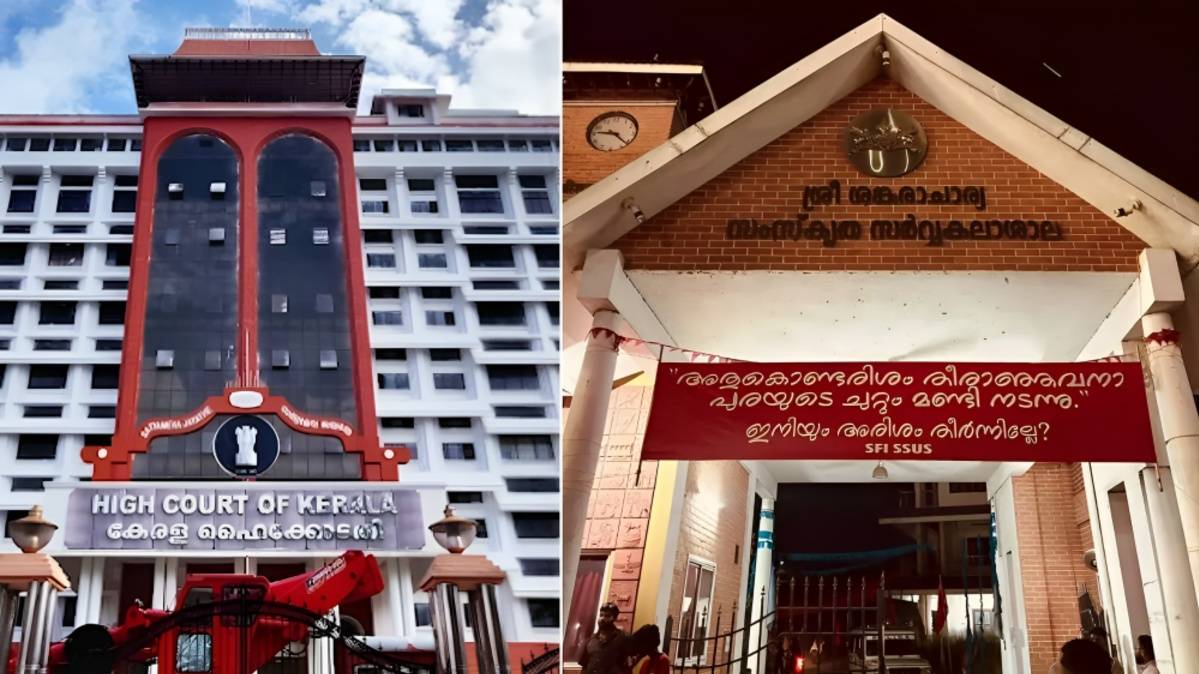
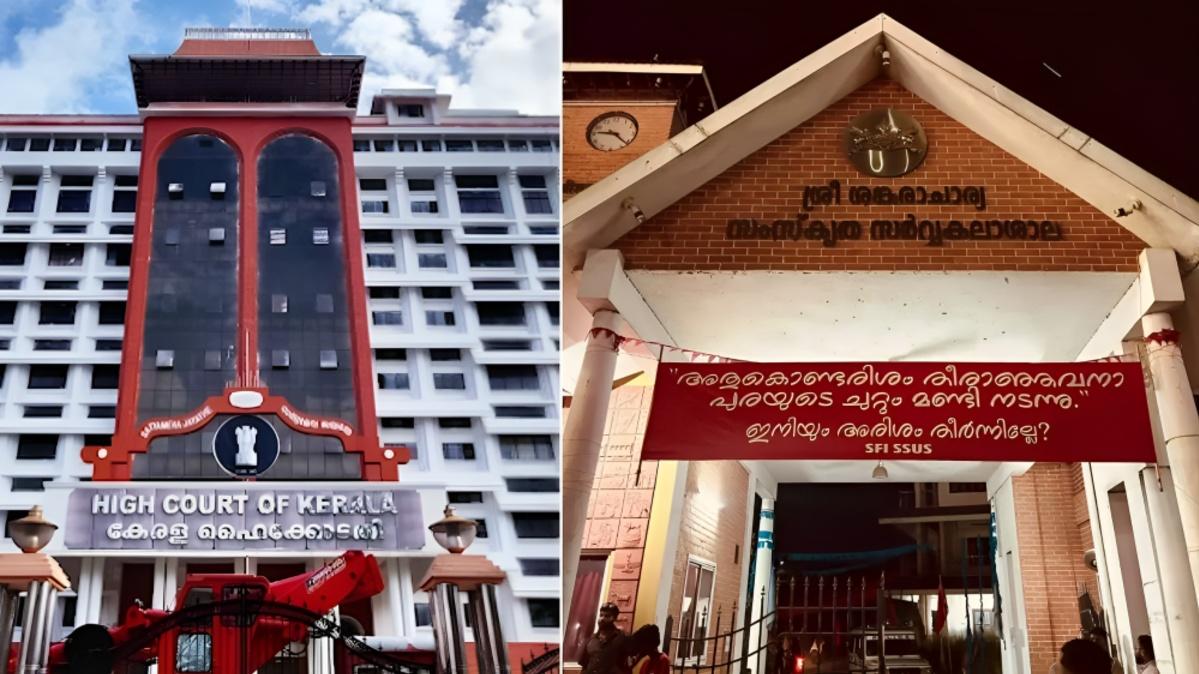
The Kerala High Court has quashed the suspension of 16 students from Sree Sankaracharya University of Sanskrit in Kalady following allegations that they assaulted Vice Chancellor Ciza Thomas during a student protest.
Justice PV Kunhikrishnan allowed petitions filed by the affected students challenging the disciplinary action taken by the university and its syndicate.
The court set aside four orders associated with the disciplinary proceedings and directed the university to conduct separate examinations for the students.
The judgment provides relief to the affected students and addresses the academic consequences of the disciplinary action initiated against them.
Background of the University Protest
The controversy began following a protest organised by the Students Federation of India over the alleged lack of essential facilities on the university campus.
During the demonstration, allegations emerged that students had assaulted Vice Chancellor Ciza Thomas.
Following the incident, the university initiated disciplinary proceedings against 16 students and issued orders suspending them from the institution.
The university also constituted a disciplinary committee to investigate the circumstances surrounding the protest and the allegations against the students.
The disciplinary action subsequently became the subject of a legal challenge before the Kerala High Court.
Students Challenge University Disciplinary Action
The suspended students approached the Kerala High Court seeking relief against the decisions taken by the university administration and its syndicate.
Their petitions challenged the suspension orders and subsequent proceedings associated with the disciplinary inquiry.
The legal challenge brought the university’s disciplinary decisions under judicial scrutiny.
Educational institutions have the authority to maintain discipline and investigate allegations of misconduct. However, disciplinary proceedings must comply with applicable regulations and legal requirements.
The High Court considered the petitions and ultimately set aside the four orders challenged by the students.
Justice PV Kunhikrishnan Quashes Four Orders
Justice PV Kunhikrishnan quashed four orders issued by Sree Sankaracharya University of Sanskrit and its syndicate.
These included the order suspending the 16 students, the decision to constitute a disciplinary committee, the committee’s inquiry report and the subsequent review of the university’s disciplinary decision.
The judgment effectively set aside the challenged administrative actions associated with the suspension.
However, the complete reasoning behind the court’s decision would need to be examined through the official judgment.
The cancellation of the disciplinary orders should not automatically be interpreted as a judicial finding that the alleged assault never occurred.
University Directed to Conduct Separate Examinations
In addition to quashing the disciplinary orders, the Kerala High Court directed the university to conduct separate examinations for the affected students.
The direction addresses the academic disruption associated with their suspension and provides them with an opportunity to appear for examinations.
Missing university examinations can affect academic progression, completion of degree programmes and future educational opportunities.
The court’s direction is therefore significant for the students seeking to continue their studies.
The university will be responsible for making the necessary arrangements to conduct the examinations in accordance with the judicial directions.
Details regarding examination dates, schedules and administrative arrangements were not specified in the information provided.
Importance of Fair Disciplinary Proceedings
The case highlights the importance of following appropriate procedures when educational institutions initiate disciplinary action against students.
Universities are responsible for maintaining a safe academic environment for students, teachers and administrative personnel.
At the same time, disciplinary proceedings should respect applicable institutional regulations and principles of procedural fairness.
Providing students with appropriate opportunities to respond to allegations and ensuring that decisions are supported by relevant evidence are important aspects of fair disciplinary procedures.
These are general legal principles, and their specific application in the present case should be understood through the complete court judgment.
Student Protests and Campus Facilities
The original protest reportedly focused on concerns regarding inadequate facilities at Sree Sankaracharya University of Sanskrit.
Access to suitable classrooms, libraries, sanitation facilities and other academic resources is important for maintaining a productive educational environment.
Student organisations frequently raise concerns regarding campus infrastructure and institutional administration.
However, disagreements between students and university authorities should be addressed through lawful and peaceful means.
Constructive communication between student representatives and university administrators can help resolve concerns while maintaining academic continuity and campus safety.
About Sree Sankaracharya University of Sanskrit
Sree Sankaracharya University of Sanskrit is located in Kalady in Kerala’s Ernakulam district.
The university offers academic programmes in Sanskrit, languages, humanities, social sciences and other disciplines.
The institution contributes to higher education, research and the preservation of traditional knowledge.
The recent legal dispute has drawn attention to student welfare, campus administration and disciplinary procedures within the university.
Further Examination Arrangements Awaited
Following the Kerala High Court judgment, attention is expected to turn towards the university’s implementation of the directions concerning separate examinations.
The affected students will have an opportunity to continue their academic activities in accordance with the court’s orders.
Further announcements from the university may provide clarity regarding examination schedules and other administrative arrangements.
The judgment highlights the importance of ensuring that disciplinary decisions comply with legal requirements while protecting academic opportunities for students.
The complete court order will provide further clarity regarding the legal grounds on which the four disciplinary orders were quashed.