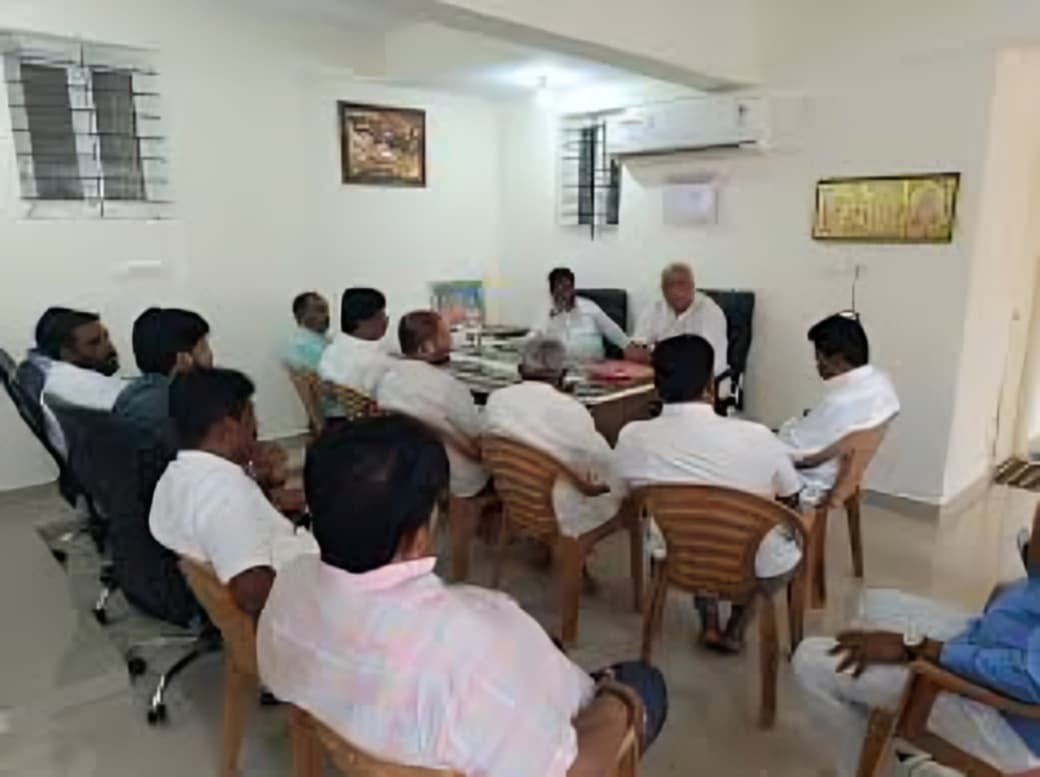
On Friday, the Tamil Nadu Farmers' Association organized a significant protest in Thiruvallur district, specifically in Ammannampakkam, demanding that free house site pattas (land title deeds) be provided to the villagers in the area. The protest, which took place on the Thamarai Paakkam main road, was led by the regional secretary of the association, M. Palani. The gathering saw the active participation of several prominent leaders and members of the association, who voiced their concerns about the lack of proper land documentation and the challenges faced by the local villagers in securing legal ownership of their land.
The protest highlighted a critical issue faced by the villagers of Ammannampakkam, many of whom have been living in the area for years without official ownership records for their properties. The Tamil Nadu Farmers' Association is advocating for the distribution of free house site pattas to these villagers, which would legally recognize their homes and properties. This move is essential not only for ensuring legal security for the villagers but also for improving their access to various government schemes and financial benefits related to land ownership.
The protest included speeches and addresses from several leaders, including:
P. Thulasi Narayanan, the state secretary of the Tamil Nadu Farmers' Association, who emphasized the importance of securing land rights for the agricultural and rural communities.
G. Sampath, the district secretary, who spoke about the struggles faced by the villagers in accessing basic amenities and government support due to the lack of legal land titles.
P. Ravi, the district deputy secretary, who highlighted the need for immediate action to address the land-related issues in the area.
A.G. Kannan, a representative of the agricultural labor union, who discussed the economic hardships faced by the farmers and their families as a result of inadequate land documentation.
D. Viswanathan and N. Gangadharan, local leaders who joined the protest and raised their voices for the rights of the rural community.
The protesters were demanding that the Tamil Nadu government take prompt action and provide house site pattas to all eligible villagers in Ammannampakkam, as they have been living in the area for generations without legal recognition of their land. The demand for free house site pattas is a long-standing issue, with many families waiting for years for the government to grant them the necessary documentation to claim ownership of their homes.
In response to the protest, the Thiruvallur District Revenue Officer (DRO), Vasudevan, arrived at the scene and addressed the protesters. He assured them that their demands would be taken seriously, and he confirmed that the necessary steps would be taken to ensure that the house site pattas would be provided to the villagers. He further explained that the matter would be communicated to higher authorities for prompt action.
Additionally, Chandrasekar, the sub-collector of Thiruvallur, and Brinda, the revenue officer, also visited the site. They expressed their support for the villagers' cause and confirmed that they would immediately follow up on the matter with senior government officials to expedite the process.
With the authorities giving their assurance that the issue would be addressed, the protesters decided to call off the demonstration peacefully. The Tamil Nadu Farmers' Association members expressed their satisfaction with the government's commitment to resolving the matter, and they thanked the district authorities for their responsiveness. The protesters dispersed, confident that their concerns had been heard and that the process for providing house site pattas would begin soon.
This protest has drawn attention to the ongoing issue of land rights in rural areas and the need for government intervention to ensure that all villagers, particularly those in remote regions like Ammannampakkam, are granted legal recognition of their properties. The Tamil Nadu Farmers' Association has vowed to continue advocating for the rights of farmers and rural communities until their demands are fully met.