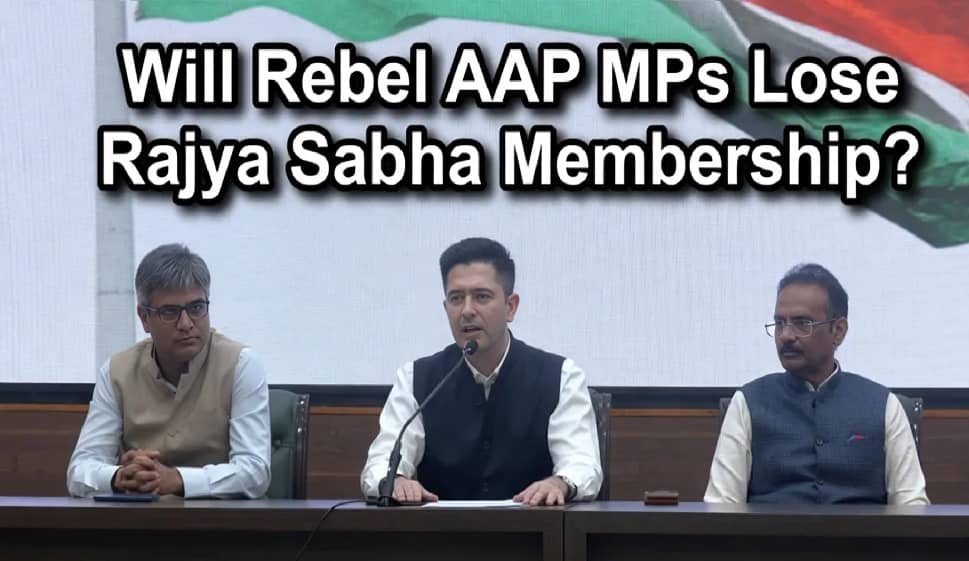
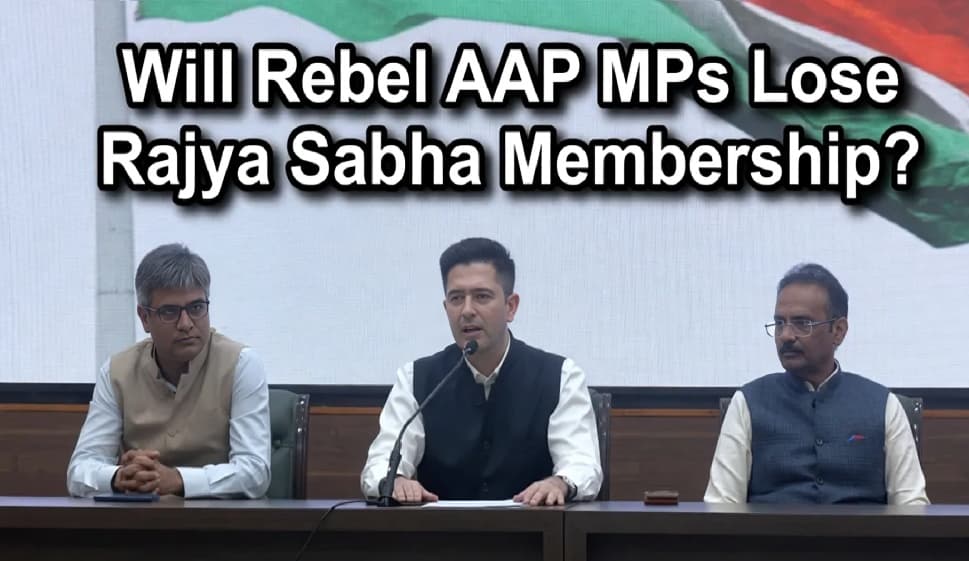
The reported decision of several Aam Aadmi Party Rajya Sabha Members of Parliament to join the Bharatiya Janata Party has triggered legal and political discussions on the applicability of the anti defection law in India. According to constitutional experts, the move may not attract disqualification under existing provisions of the Tenth Schedule of the Constitution.
The Tenth Schedule, commonly referred to as the anti defection law, was introduced to curb political defections and ensure stability in legislative bodies. However, it also provides a specific exception. If at least two thirds of the members of a legislature party agree to merge with another political party, such a move is considered a valid merger and does not lead to disqualification.
In the present context, the reported shift of seven MPs led by Raghav Chadha is being examined under this provision. Legal experts suggest that if the number of MPs meets the required threshold, the action would fall within the scope of a lawful merger rather than defection. This interpretation is based on previous legal precedents and constitutional provisions.
The Supreme Court of India has, in earlier judgments, upheld the validity of the merger clause under the Tenth Schedule. The court has recognized that political realignments are a part of democratic functioning, provided they comply with the conditions laid down in the Constitution. These rulings continue to guide interpretations in similar cases.
Despite this legal clarity, the situation has sparked debate among political analysts and constitutional experts. Some argue that the existing framework of the anti defection law has limitations and can be used strategically by political parties. Critics believe that the provision allowing mergers weakens the original intent of preventing opportunistic shifts in political allegiance.
There have been increasing calls for reforming or replacing the Tenth Schedule to address these concerns. Experts suggest that a more stringent and transparent mechanism may be required to ensure accountability while still allowing legitimate political changes. Proposals include clearer definitions of merger, stricter timelines for decisions by presiding officers, and enhanced judicial oversight.
The current development also highlights the broader issue of balancing political flexibility with institutional stability. While the Constitution permits certain forms of realignment, maintaining public trust in the democratic process remains a key concern. Political parties, legal institutions, and lawmakers are expected to engage in discussions on possible reforms in the coming years.
As the situation unfolds, attention will remain on how the legal provisions are applied and whether any challenges arise. The role of parliamentary authorities and judicial institutions will be crucial in ensuring that constitutional norms are upheld.
The debate surrounding the anti defection law reflects the evolving nature of Indian democracy, where legal frameworks must adapt to changing political realities while preserving the core principles of accountability and transparency.