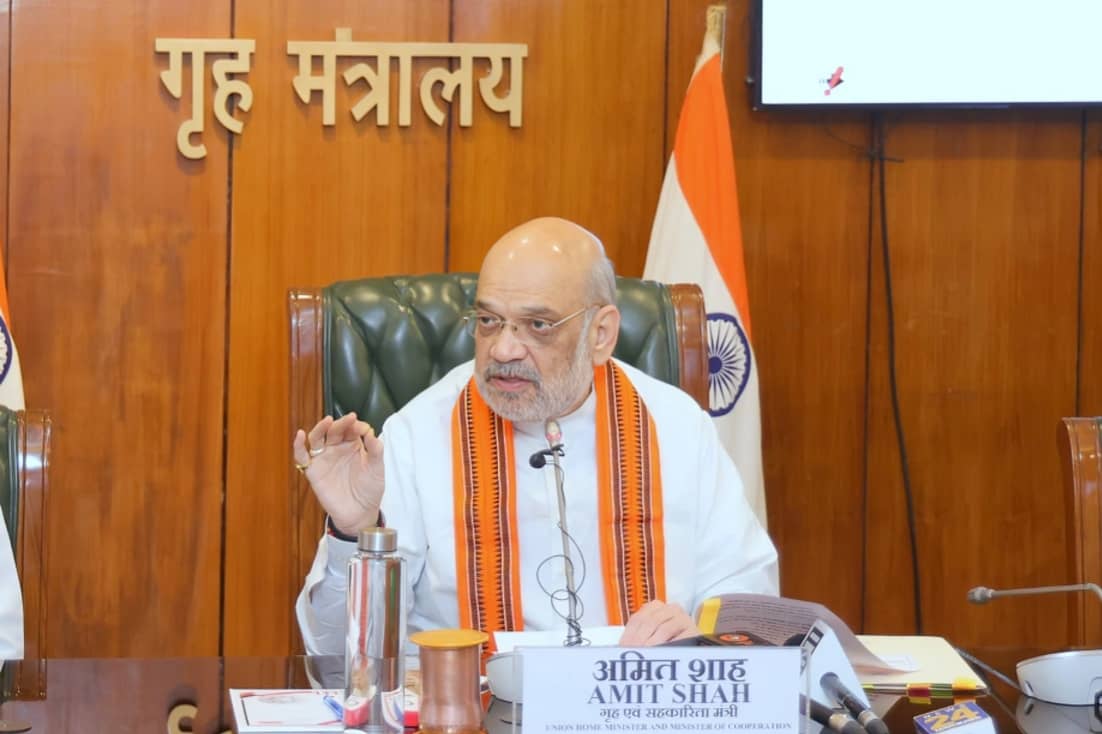
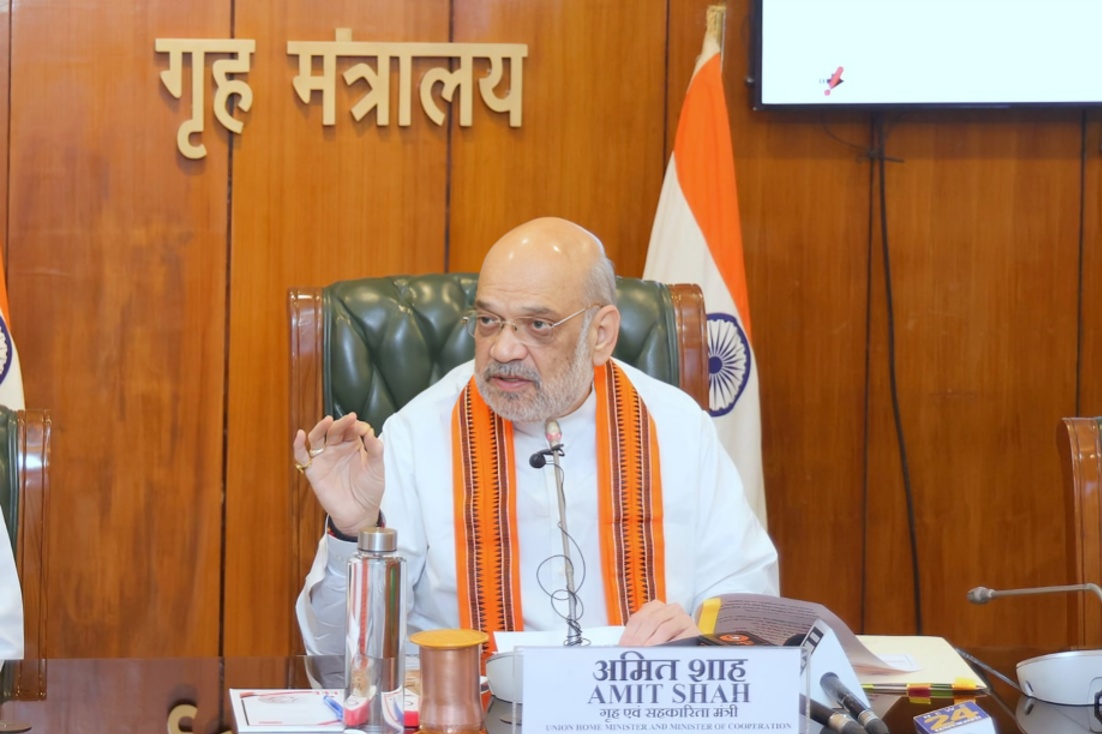
Union Home Minister Amit Shah has announced a three year roadmap aimed at making India drug free by 2029, placing the fight against narcotics in mission mode between July 2026 and July 2029. The announcement was made during a press conference in Panaji, Goa, where Shah outlined a coordinated strategy involving the central government, state governments and multiple enforcement agencies.
According to the Ministry of Home Affairs, the roadmap has been prepared with time bound targets, defined responsibilities and measurable outcomes. The government intends to conduct regular reviews to assess progress and ensure that agencies remain accountable for the objectives set under the programme.
The strategy is built around four major pillars. The first is intelligence and operation based enforcement. Under this approach, agencies will focus on gathering intelligence, identifying drug networks and taking action against key members of trafficking organisations. The government intends to move beyond individual seizures and focus more strongly on dismantling entire supply networks.
The second pillar is the control of precursor chemicals and synthetic drugs. Precursor chemicals can be used in the manufacture of various narcotic and psychotropic substances. The government plans to strengthen monitoring and regulation to prevent such chemicals from being diverted into illegal drug production.
The third pillar focuses on reducing demand and the harmful effects associated with drug use. This includes prevention, awareness, treatment and rehabilitation. The government has stated that combating narcotics cannot depend only on enforcement and seizures, and that reducing demand is also an important part of the long term strategy.
The fourth pillar is capacity building and coordination. The government plans to strengthen cooperation among central agencies, state police forces and other institutions involved in narcotics control. The objective is to ensure that information is shared more effectively and that investigations can move across jurisdictions when required.
Shah said the Ministry of Home Affairs and state governments would work together to implement the roadmap. The government has declared the 2026 to 2029 period as mission mode for the campaign, with timelines and measurable outcomes to be monitored through periodic reviews.
Financial investigations will also form an important part of the strategy. According to the official announcement, agencies will examine the money trail associated with cases involving commercial quantities of drugs. The objective is to identify the financial networks supporting major drug operations and target the economic infrastructure behind trafficking organisations.
The government also plans to prepare detailed dossiers on major drug kingpins and examine backward and forward links within drug networks. This approach is intended to help investigators identify suppliers, distributors, financiers and other individuals who may be connected to organised trafficking networks.
Several border and enforcement agencies will have an important role in the plan. The Border Security Force, Central Industrial Security Force, Indian Coast Guard, Customs and the Directorate of Revenue Intelligence will strengthen surveillance and risk based profiling. Scanners and other monitoring systems are expected to be used at land borders, ports, airports and cargo facilities to improve the detection of illegal consignments.
The government is also focusing on international cooperation because drug trafficking networks frequently operate across national borders. According to Shah, India has agreements with 46 countries for international cooperation in this area. The Central Bureau of Investigation, Ministry of External Affairs and Interpol will work together to pursue fugitives and strengthen international action against drug trafficking networks.
Financial intelligence agencies will also be involved in tracking the proceeds of drug trafficking. The Enforcement Directorate, Financial Intelligence Unit and the banking system are expected to assist in following the movement of money connected with suspected narcotics operations. This financial approach is intended to weaken the economic base of organised drug networks.
Border surveillance has been given particular importance because India is located close to major international drug trafficking routes. The government has referred to the so called Death Triangle and Death Crescent routes while outlining its strategy to prevent narcotics from entering the country. Enhanced surveillance at land borders, airports, ports and cargo facilities is expected to form an important part of the enforcement effort.
The government has also highlighted the role of public awareness and rehabilitation in tackling drug abuse. Under the Nasha Mukt Bharat Abhiyan, the government says that around 25 crore citizens have been reached and administered an anti drug pledge. It has also reported that about 5.7 lakh citizens have been made drug free through treatment and rehabilitation programmes.
The roadmap follows earlier efforts by the central government to strengthen coordination between agencies through the National Coordination Committee for Drug Law Enforcement, commonly known as NCORD. The government has been seeking greater coordination among central ministries, state governments and enforcement agencies to address the narcotics problem as a national issue rather than treating it only as a conventional law and order challenge.
The government has also linked the fight against narcotics with national security. Shah has described the campaign as one of the country's major national battles and has emphasised the potential links between drug trafficking, organised crime and financial networks. The government intends to use intelligence, enforcement, financial investigation, border surveillance, international cooperation and rehabilitation as interconnected parts of the strategy.
The three year roadmap does not rely on a single agency. Instead, it seeks to create a coordinated system involving law enforcement agencies, financial institutions, border agencies, state police forces, international organisations and departments responsible for health and rehabilitation.
The success of the programme will depend on how effectively these agencies coordinate their operations and share intelligence. It will also depend on the ability of authorities to identify major trafficking networks, disrupt their finances, prevent the diversion of precursor chemicals and improve treatment and rehabilitation services.
With the roadmap covering the period from July 2026 to July 2029, the government has set a defined timeframe for implementing its drug control strategy. Quarterly reviews and outcome based accountability are expected to provide mechanisms for assessing progress during the three year period.
The announcement marks a significant expansion of India's national strategy against narcotics, combining enforcement with prevention, treatment, financial investigation and international cooperation. The government has set the goal of achieving a drug free India by 2029, while the effectiveness of the roadmap will ultimately depend on implementation, coordination and measurable results across the country.