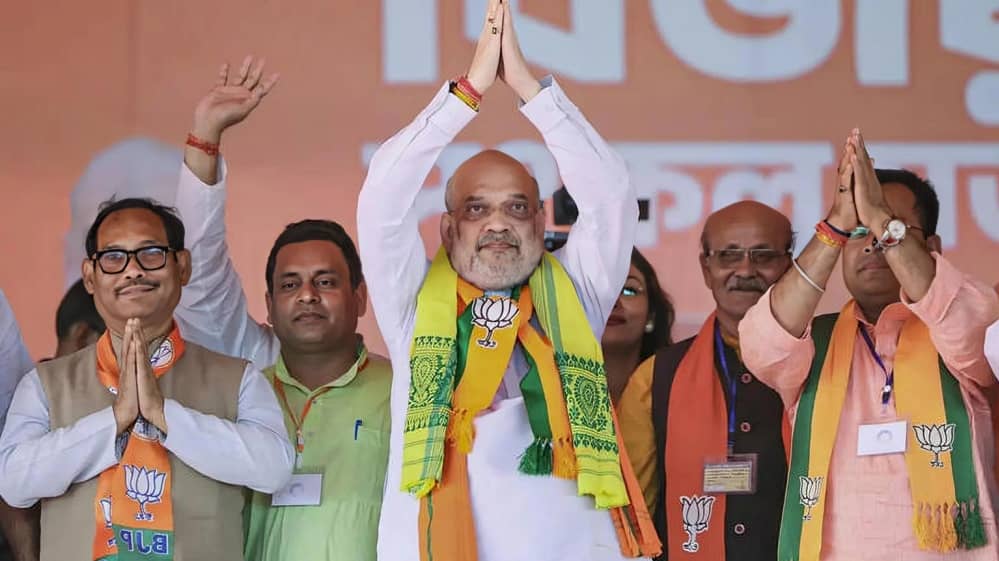
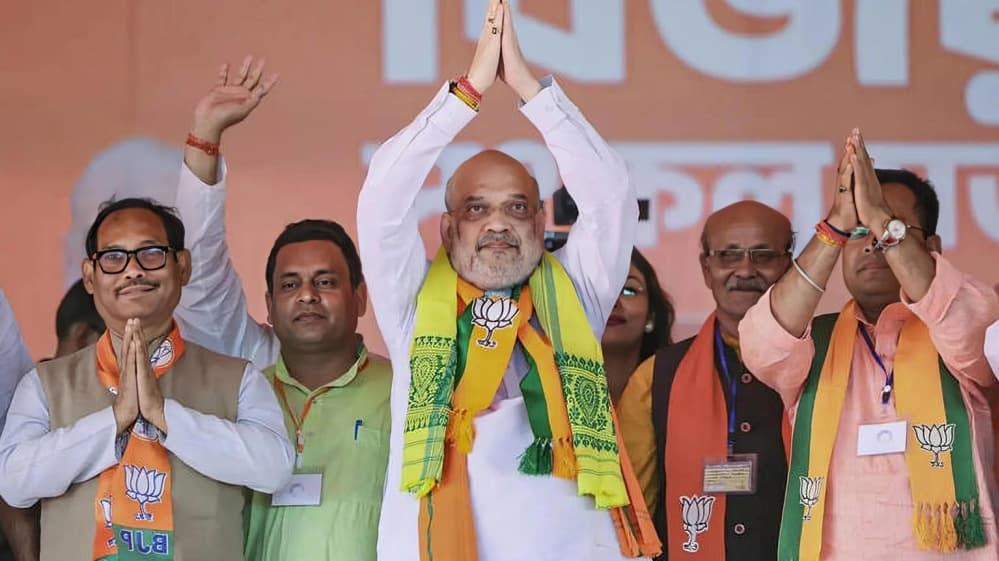
Amit Shah, the Union Home Minister, has presented a series of policy priorities while campaigning for the West Bengal Assembly Elections. His statements focused on strengthening border security, addressing concerns related to illegal infiltration, and working toward a long term solution for issues affecting the Gorkha community.
During his campaign outreach, Amit Shah emphasised the importance of securing the state’s international borders. West Bengal shares boundaries with neighbouring countries, making border management a key issue in the region. Shah stated that efforts would be made to improve surveillance and enforcement mechanisms to ensure better control over cross border movement.
He also addressed concerns related to law and order, particularly in the context of post election situations. Shah noted that maintaining peace and stability is essential for the development of the state. His remarks included warnings against activities that could disrupt public order, while also stressing that governance should prioritise safety and accountability.
Another important aspect of his speech was the focus on the Gorkha community. The Gorkha issue has been a longstanding topic in the Darjeeling and surrounding hill regions. Amit Shah stated that efforts would be made to find a permanent and peaceful resolution that addresses the aspirations of the community while maintaining administrative stability. He added that development initiatives and inclusive policies would be part of the approach to ensure long term progress in these areas.
The campaign statements come at a time when political competition is increasing in West Bengal. The Bharatiya Janata Party is seeking to expand its presence in the state, while other parties, including the All India Trinamool Congress, continue to play a significant role in the political landscape. Election campaigns have therefore focused on a mix of regional concerns, governance issues, and broader policy commitments.
Border security has remained a recurring theme in political discussions in West Bengal due to its geographical location. Experts note that addressing such issues involves coordination between central and state authorities, as well as engagement with local communities living in border areas. Similarly, resolving regional matters such as the Gorkha issue requires dialogue and long term policy planning.
While Shah’s statements outline the priorities of the Bharatiya Janata Party, opposition parties have presented their own perspectives on governance and development. This exchange of views reflects the competitive nature of the election and the diverse concerns of voters across the state.
The West Bengal Assembly Elections continue to draw attention nationwide, with multiple phases of polling and extensive campaigning. Political leaders from different parties are addressing rallies and public meetings to communicate their plans and seek voter support.
As the election progresses, issues such as security, development, and regional identity are expected to remain central to the political discourse. The outcome will depend on how voters respond to the various promises and policy proposals presented during the campaign period.