
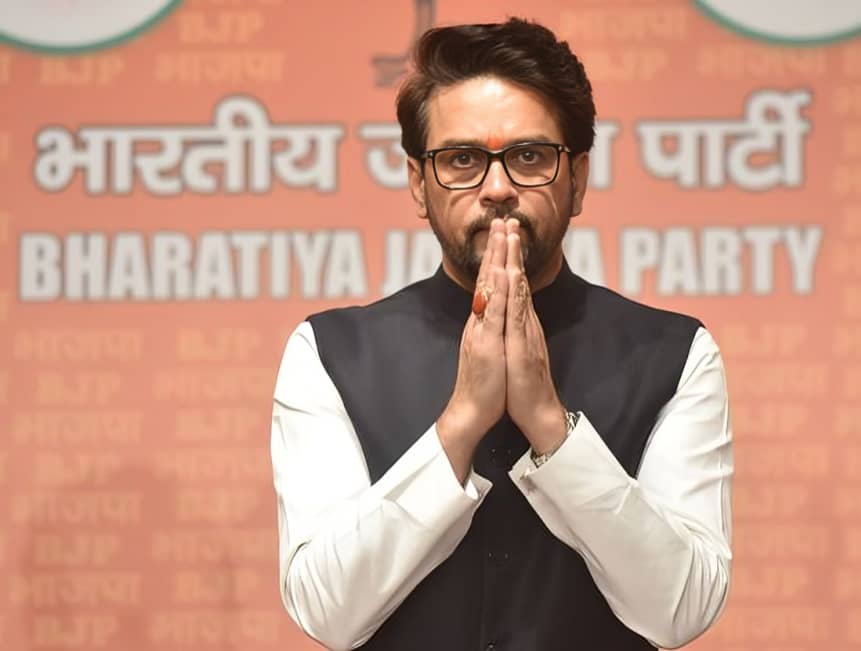
Union Minister Anurag Thakur has launched a strong criticism of opposition parties amid the VB-GRAM-G row, drawing attention to what he termed “issues with Ram’s name.” Speaking at a press briefing, Thakur said the Congress and other opposition parties are focusing on symbolic controversies instead of addressing real governance and developmental issues affecting citizens. He predicted that the Congress is likely to face a “century of defeats” if it continues to pursue such strategies, arguing that voters are increasingly discerning and prioritizing performance over rhetoric.
Thakur’s comments come amid a heated debate over the VB-GRAM-G matter, which has sparked political controversy in several states. The minister accused opposition parties of exploiting religious and cultural symbols for political gain, creating unnecessary tension and diverting public attention from pressing issues like employment, healthcare, and infrastructure. He asserted that these tactics are unlikely to resonate with the electorate, who are focused on tangible improvements in their lives.
The minister emphasized that the government remains committed to effective governance, development programs, and welfare initiatives. Thakur cited examples of policy successes and public schemes aimed at improving education, healthcare, and rural infrastructure, highlighting how these measures have directly benefited citizens across the country. According to him, opposition parties should focus on presenting constructive alternatives rather than politicizing symbolic matters.
Thakur also warned that repeated attacks on cultural or religious subjects could backfire politically. He argued that the Congress’ strategy of targeting the government on such issues reflects a disconnect from ground realities and public priorities. The minister’s prediction of a “century of defeats” underscores his confidence in the electorate’s ability to distinguish between symbolic controversies and meaningful governance.
Political analysts note that Thakur’s remarks are part of a broader strategy to frame the narrative around development and governance, positioning the ruling party as results-oriented while portraying opposition parties as preoccupied with polarizing issues. This approach may influence upcoming elections, especially in constituencies where voters are concerned about basic civic amenities, employment opportunities, and economic development.
In addition to critiquing opposition parties, Thakur highlighted the importance of public discourse that focuses on accountability, transparency, and performance. He encouraged parties to engage in policy-driven debates rather than engaging in theatrics over symbolic or cultural topics. The minister also urged citizens to assess parties based on governance outcomes rather than media-driven controversies.
As political debates around VB-GRAM-G continue, Thakur’s intervention signals an aggressive stance by the government in controlling the narrative and projecting a results-oriented image. By focusing on development and welfare initiatives, he aims to redirect public attention to issues that directly impact citizens’ lives, positioning the ruling party as proactive and solutions-driven.
Overall, Anurag Thakur’s statements underscore the government’s intent to challenge the opposition on governance and performance metrics, while cautioning against politicizing cultural symbols. His comments reinforce the narrative that voters are increasingly prioritizing development and effective administration over symbolic disputes in shaping electoral outcomes


