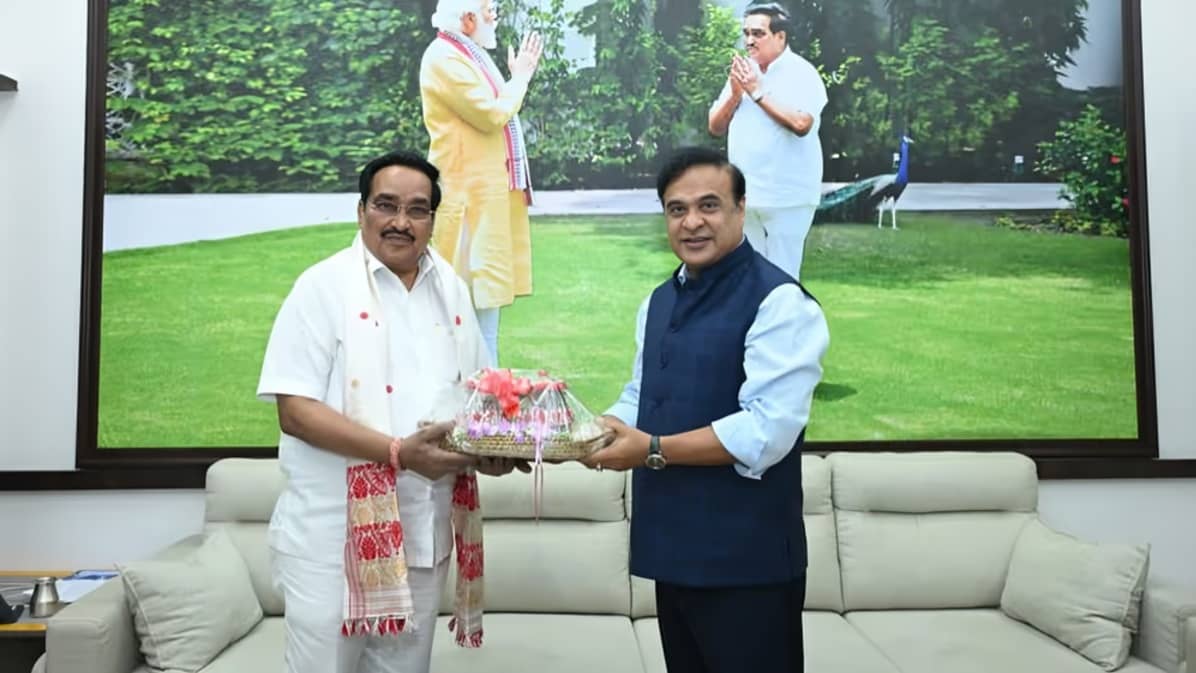
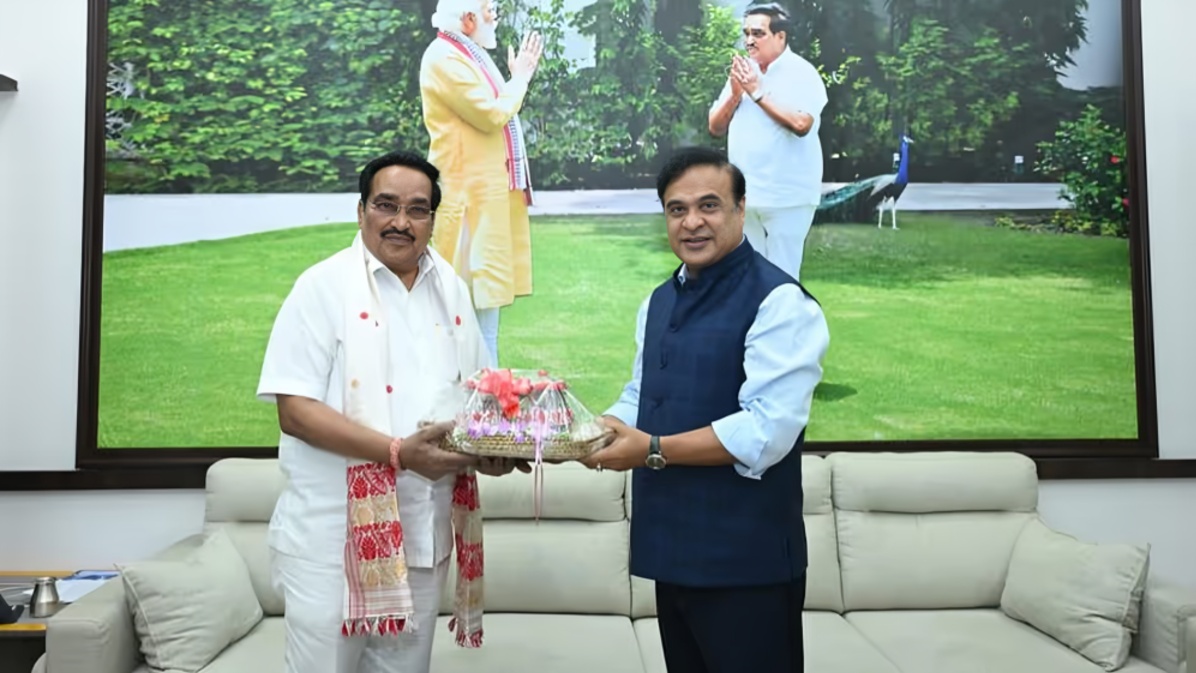
Assam Chief Minister Himanta Biswa Sarma met Union Jal Shakti Minister C R Paatil in New Delhi and discussed several important issues related to water infrastructure, drinking water supply and water security in Assam.
The meeting focused particularly on strengthening the implementation of the Jal Jeevan Mission in the state and advancing the rejuvenation of Silsako Beel, one of Guwahati’s important urban wetlands. Officials from the Ministry of Jal Shakti and the Assam government were also present during the discussions.
The Jal Jeevan Mission is a major central government programme aimed at providing functional household tap water connections to rural households. The mission focuses not only on expanding household connections but also on ensuring a reliable supply of adequate and safe drinking water over the long term.
Assam has made significant progress under the Jal Jeevan Mission. According to the Union Ministry of Jal Shakti, 58,98,638 rural households in Assam had functional household tap connections as of the latest reported status in 2025. This represented 81.65 percent coverage of rural households at that time.
The Union government has also extended the Jal Jeevan Mission until December 2028 under Jal Jeevan Mission 2.0. The revised programme has an overall financial outlay of Rs 8.69 lakh crore, including a central share of Rs 3.59 lakh crore. The extended mission places greater emphasis on reliable and sustainable drinking water services rather than simply creating new connections.
Against this backdrop, the discussion between Sarma and Paatil is significant for Assam. The state has a large rural population and faces recurring challenges related to floods, water management and access to dependable drinking water infrastructure.
The Chief Minister discussed measures to further strengthen the implementation of the Jal Jeevan Mission in Assam. The objective is to improve access to drinking water while also ensuring that water supply infrastructure remains functional and sustainable over the long term.
Another major issue discussed during the meeting was the rejuvenation of Silsako Beel in Guwahati. The project has an approved cost of Rs 237 crore and is being implemented by the Guwahati Metropolitan Development Authority with funding assistance from the Ministry of Jal Shakti.
Silsako Beel is an important urban water body that serves as a reservoir for stormwater runoff from nearby hills. Its restoration is therefore important for Guwahati’s water management system. The wetland also has ecological importance because urban water bodies support aquatic life, contribute to groundwater recharge and provide habitats for different species.
The Rs 237 crore rejuvenation project aims to restore the water retention capacity of Silsako Beel. Improving the ability of the wetland to retain and manage water can help reduce the impact of heavy rainfall and support flood mitigation efforts in areas surrounding the water body.
Guwahati has experienced challenges associated with rapid urbanisation, encroachment and inadequate drainage. Government authorities have identified the restoration of major water bodies as an important part of addressing waterlogging and artificial flooding in the city.
According to the Guwahati Metropolitan Development Authority, Silsako Beel plays an important role in managing stormwater runoff from nearby hills and Meghalaya. The authority has undertaken conservation and restoration activities with the aim of improving the ecological condition of the water body and preserving its aquatic habitat.
The restoration of Silsako Beel is therefore not only an environmental initiative but also part of a broader urban flood management strategy. Restoring wetlands can improve their ability to store excess rainwater and help reduce pressure on urban drainage systems during periods of heavy rainfall.
The project also highlights the importance of protecting natural water bodies as cities expand. Wetlands can provide several environmental benefits, including supporting biodiversity, recharging groundwater and retaining stormwater. Their degradation can increase the risk of waterlogging and flooding in urban areas.
The discussions between the Assam government and the Union Ministry of Jal Shakti indicate that water security is being considered from multiple perspectives. These include household drinking water, rural water supply infrastructure, urban wetland conservation and flood management.
For rural Assam, the Jal Jeevan Mission remains an important mechanism for expanding access to household tap water. However, ensuring long term functionality of the infrastructure is equally important. The Assam government has highlighted the need for sustainable water supply systems, source protection, water quality management and community participation.
The Jal Jeevan Mission also covers the development of reliable drinking water sources, improvement of existing sources, treatment facilities, distribution networks and greywater management. These measures are intended to make rural water supply systems more sustainable and dependable.
The Union government has recently placed greater emphasis on sustainability under Jal Jeevan Mission 2.0. The extended programme seeks to strengthen service delivery and ensure that rural households receive adequate quantities of safe drinking water on a regular basis.
For Assam, this approach is particularly relevant because the state faces complex water-related challenges. Heavy monsoon rainfall and recurring floods can damage infrastructure and disrupt water supply systems. Therefore, resilient infrastructure and reliable water sources are essential for maintaining services during difficult weather conditions.
The Silsako Beel project provides a complementary approach on the urban side. While Jal Jeevan Mission primarily addresses drinking water access in rural households, wetland restoration focuses on water management, environmental conservation and flood mitigation in urban areas.
The two issues discussed during the meeting therefore represent different but connected aspects of water security. Providing safe drinking water requires reliable infrastructure and sustainable sources, while managing excess water requires functioning wetlands, drainage systems and natural water retention areas.
The Assam government is expected to continue working with the Ministry of Jal Shakti to advance both areas. Coordination between the state and central governments can help address funding, technical requirements and implementation challenges associated with major water infrastructure projects.
The meeting also reflects the importance of protecting natural water bodies alongside expanding modern infrastructure. Wetland restoration can complement drainage and flood control measures by retaining excess water naturally.
For residents of Guwahati, the rejuvenation of Silsako Beel could have particular significance if the restored wetland improves stormwater retention and reduces the impact of flooding in surrounding areas. The effectiveness of the project, however, will depend on proper implementation, protection from encroachment and long term maintenance.
For rural residents, continued progress under the Jal Jeevan Mission could improve access to household drinking water and reduce dependence on distant or unreliable water sources. Ensuring water quality and maintaining the functionality of existing connections will remain important as coverage expands.
The latest meeting between Chief Minister Himanta Biswa Sarma and Union Minister C R Paatil has therefore brought together two major priorities for Assam: expanding reliable drinking water infrastructure and protecting critical urban water bodies.
The discussions are also part of a broader effort to improve Assam’s resilience to water-related challenges. With recurring floods and rapid urban growth, sustainable water management is increasingly important for the state’s future development.
The Rs 237 crore Silsako Beel rejuvenation project, supported by the Ministry of Jal Shakti, is expected to play a role in restoring the wetland’s capacity to retain water. At the same time, continued implementation of the Jal Jeevan Mission can help expand reliable household drinking water services across rural Assam.
Overall, the meeting between the Assam Chief Minister and the Union Jal Shakti Minister underlines the growing focus on water security, infrastructure development and environmental conservation. The success of these initiatives will depend on effective implementation, regular maintenance and continued coordination between the Centre and the Assam government.