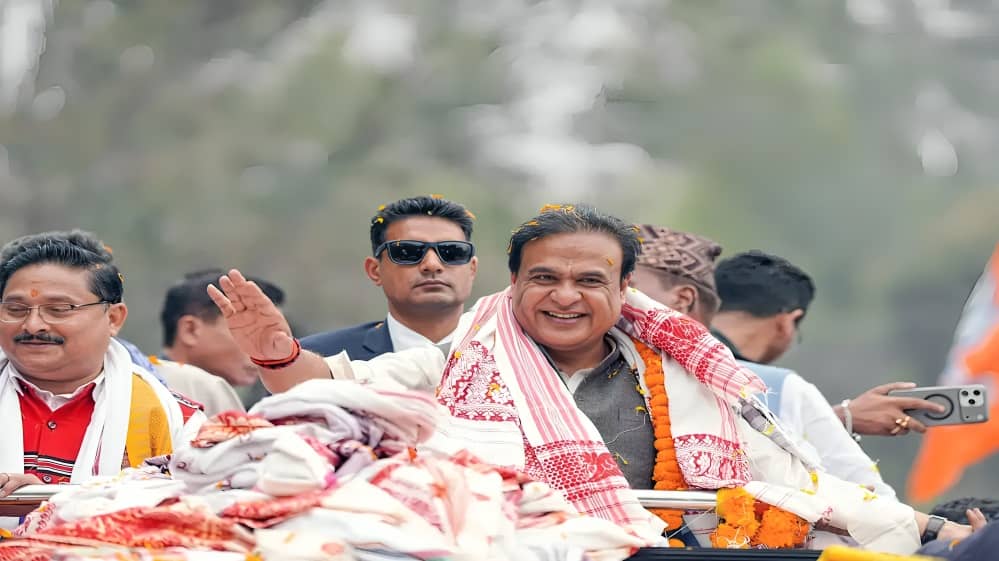
Assam Chief Minister Himanta Biswa Sarma has launched a strong political attack on the Congress party, stating that it has become politically irrelevant in the state. His remarks come amid an ongoing exchange of allegations between the ruling party and Congress leaders, which has intensified political tensions in Assam.
Sarma alleged that certain Congress leaders, including Gaurav Gogoi and Pawan Khera, have links with foreign social media groups, including those based in Pakistan. According to the Chief Minister, documents being circulated in connection with allegations against his family were sourced from such platforms and may have been digitally altered using artificial intelligence tools. He described these materials as misleading and aimed at damaging his reputation.
The controversy stems from earlier accusations made by Congress leaders regarding the Chief Minister’s family, including claims about assets and documents. In response, Sarma rejected these allegations and asserted that they are part of a deliberate attempt to spread misinformation. He emphasized that such tactics undermine the credibility of political discourse and called for responsible communication in public life.
Sarma also reiterated that the Congress party has weakened significantly in Assam over the years. He stated that the party no longer holds the same level of influence it once had and claimed that its current approach reflects a lack of strong political direction. His comments have sparked reactions from opposition leaders, who have dismissed the claims and defended their position.
Congress leaders have responded by denying any association with foreign entities and have maintained that their questions are based on issues of public interest. They have accused the ruling party of diverting attention from key governance matters by making counter allegations. The exchange has further escalated into a broader political debate, with both sides accusing each other of spreading misinformation.
Political observers note that such exchanges are becoming increasingly common, especially with the growing influence of digital platforms in shaping political narratives. The use of social media and the rapid spread of information, both verified and unverified, have added complexity to political communication.
The situation in Assam highlights the challenges faced by political leaders in addressing allegations in a transparent and responsible manner. It also underscores the importance of verifying information before it is shared in the public domain.
As the political discourse continues, both the ruling party and the opposition are expected to maintain their positions and engage with the issue through public statements and political campaigns. The developments are likely to remain a topic of discussion in the state’s political landscape.
Overall, the ongoing controversy reflects the intensity of political competition in Assam. It also brings attention to the role of accountability, transparency and responsible communication in maintaining public trust in democratic institutions.