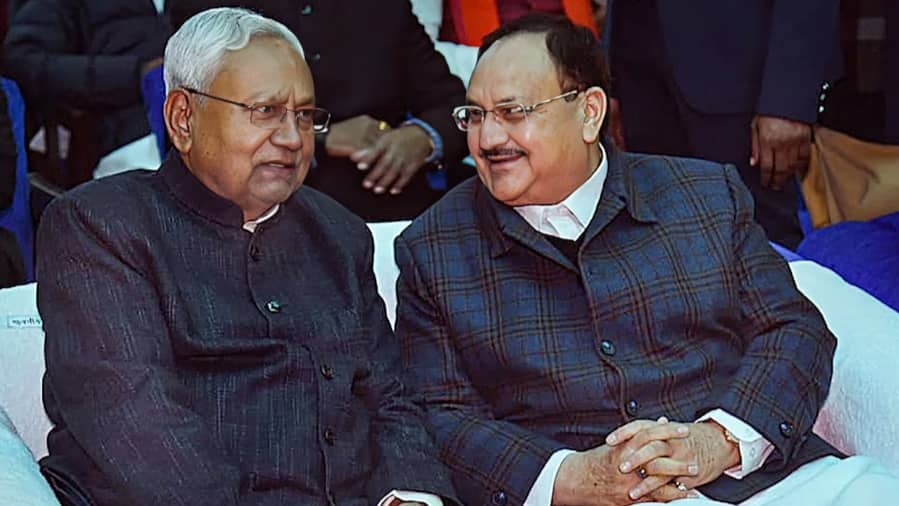
Bihar Chief Minister Nitish Kumar has returned to power with the formation of a new cabinet under the NDA government, following careful political calculations based on social and caste considerations. The cabinet composition reflects a strategic effort to ensure representation for various communities, consolidate party interests, and maintain political stability in the state.
Political analysts highlight that Nitish Kumar’s cabinet is shaped by a blend of backward classes, Other Backward Classes (OBCs), and other key voter groups, reflecting the social arithmetic that continues to influence Bihar’s electoral and governance dynamics. This arrangement is seen as an attempt to ensure broad-based support while maintaining internal cohesion within the NDA alliance.
Nitish Kumar, addressing media after assuming charge, outlined key priorities for his administration, including development projects, infrastructure expansion, law and order, and inclusive governance. He emphasized that the cabinet formation ensures all significant social groups are adequately represented, reinforcing the government’s commitment to addressing the diverse needs of Bihar’s population. Analysts suggest that the selection of ministers from strategic caste and community backgrounds aims to preempt potential political challenges from opposition parties.
The new cabinet also indicates Nitish Kumar’s continued efforts to balance internal party dynamics and alliance demands. Certain portfolios have been distributed to accommodate partners within the NDA, while others aim to enhance administrative efficiency and governance outcomes. The emphasis on social and caste representation is not only a reflection of Bihar’s demographic diversity but also a calculated political strategy to retain voter confidence.
Observers point out that the NDA’s governance strategy under Nitish Kumar focuses on developmental initiatives while maintaining political stability. By aligning cabinet representation with social and caste considerations, the government seeks to ensure that policies resonate with a broad spectrum of voters, strengthening the alliance’s position in upcoming electoral cycles.
Experts note that Bihar’s political landscape has long been shaped by caste equations, and Nitish Kumar’s approach demonstrates an understanding of this reality. The cabinet formation is designed to balance competing interests within the alliance while also signaling commitment to inclusive governance.
In addition to social representation, the cabinet prioritizes administrative expertise, with ministers chosen for their experience and ability to implement policies effectively. Nitish Kumar’s leadership aims to combine political acumen with governance efficiency, addressing both public expectations and alliance dynamics.
In conclusion, the formation of Bihar’s NDA cabinet under Nitish Kumar reflects a careful blend of social, caste, and political considerations. By ensuring representation for key communities and strategically distributing portfolios among alliance partners, the Chief Minister seeks to reinforce political stability, consolidate support, and focus on governance priorities. Analysts say this cabinet formation demonstrates the intricate social arithmetic that continues to shape Bihar’s political and administrative landscape, preparing the state for future challenges and development opportunities.