
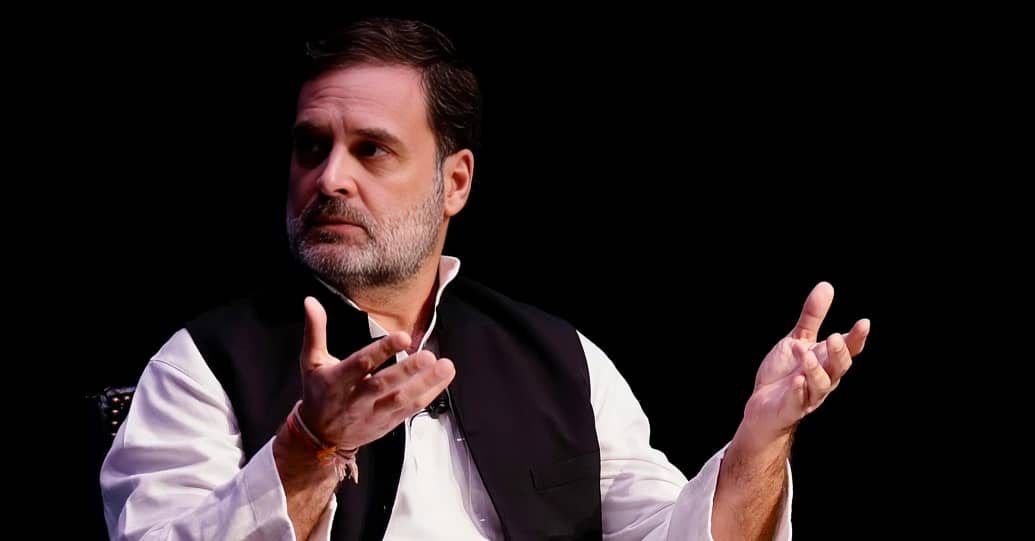
The Bharatiya Janata Party (BJP) has launched a strong response to Congress leader Rahul Gandhi following his remarks made during a visit to Berlin, Germany. Gandhi’s statements, which critiqued India’s political and economic environment, have been met with sharp criticism from ruling party officials.
In his remarks, Gandhi alleged that investigative agencies in India have been weaponized for political purposes, suggesting that businesses face undue pressure and intervention from government authorities. He further claimed that China’s dominance in manufacturing is contributing to job losses and instability within democratic nations. These statements, made on an international platform, have been interpreted by BJP leaders as attempts to malign India’s democratic and economic institutions.
Senior BJP officials accused Gandhi of encouraging anarchy and attempting to create unrest both domestically and internationally. They argued that public criticism of India’s institutions in foreign countries could harm the nation’s global reputation and misrepresent India’s internal governance. According to BJP spokespersons, such statements were not only irresponsible but also posed a risk of misleading citizens regarding the functioning of India’s democratic processes.
The BJP also emphasized that India’s democratic institutions, including investigative and regulatory agencies, operate independently and transparently. Party leaders stated that attempts to portray these institutions as biased or politically motivated are unfounded. They accused Gandhi of using international platforms to push a narrative that could disrupt domestic political stability.
Political analysts noted that Gandhi’s remarks highlight a growing trend where opposition leaders use global forums to raise concerns about India’s governance. While some argue this can be part of democratic expression, the BJP contends that such statements should be made responsibly and with consideration for national interests.
This exchange has intensified political debate in India, with the Congress party defending Gandhi’s right to speak on economic and political issues. They maintain that highlighting concerns about investigative agencies and job losses is part of holding the government accountable. Meanwhile, the BJP continues to frame Gandhi’s statements as an attempt to question India’s sovereignty and democratic integrity on an international stage.
As the controversy unfolds, both parties are expected to engage in further discussions and media exchanges. Observers suggest that the remarks could influence upcoming political campaigns and public perception of India’s governance, particularly among the international community.


