
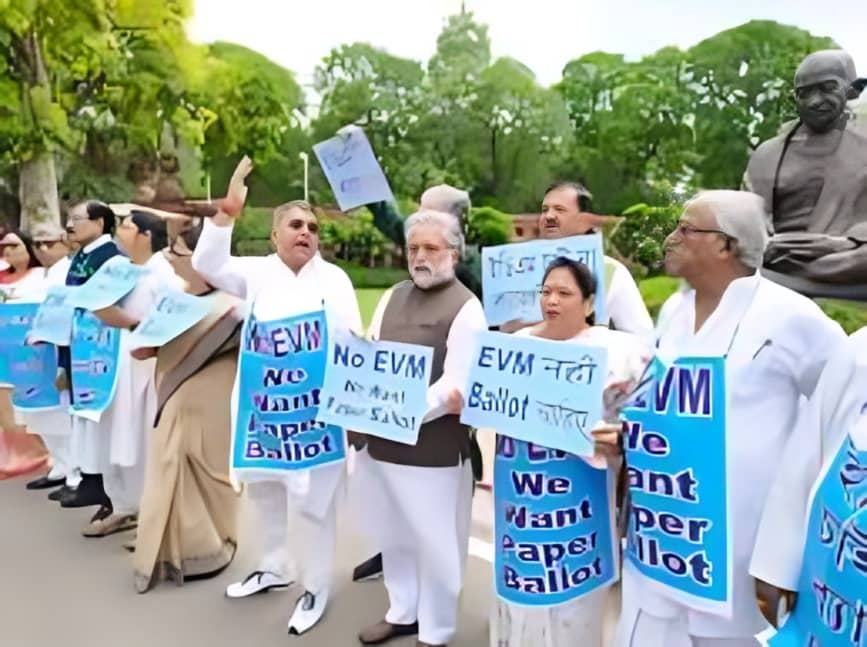

The credibility of Electronic Voting Machines (EVMs) has once again become a subject of political debate, with the BJP and its allies criticizing opposition parties for raising concerns over their reliability after electoral losses. Party leaders accused opposition members of selectively questioning the integrity of EVMs depending on electoral outcomes, arguing that this behavior undermines public trust in the democratic process.
According to BJP officials, EVMs have successfully conducted numerous elections at both state and national levels in India, providing a secure and efficient mechanism for voting. They stressed that these machines have undergone rigorous testing and have been used for years, ensuring transparency and accuracy in vote counting. The officials further highlighted that the Election Commission of India has repeatedly affirmed the reliability of EVMs, countering claims of potential manipulation.
BJP and allied party representatives argued that questioning EVMs only after defeat reflects political opportunism rather than genuine concern for electoral integrity. They urged the opposition to respect democratic institutions and processes, emphasizing that undermining confidence in election systems could have broader consequences for India’s democracy.
The controversy gained prominence following remarks by several opposition leaders challenging the accuracy of EVMs in recent elections. These statements prompted BJP leaders to respond strongly, asserting that the technology is robust and designed to prevent tampering. Party spokespersons pointed out that allegations of malfunction or rigging have repeatedly been tested and debunked in past elections, including judicial scrutiny and audits by the Election Commission.
Political analysts note that while EVMs are a critical component of India’s electoral system, public perception remains sensitive to claims of irregularities. Any suggestion of malpractice can influence voter confidence, making it essential for political parties to engage responsibly on the issue. Analysts further observe that repeated controversies over EVMs often emerge during closely contested elections, reflecting high stakes in the political landscape rather than systematic flaws in the voting machinery itself.
Opposition parties, on the other hand, argue that raising concerns over EVMs is part of safeguarding democracy and ensuring transparency. They emphasize the need for continuous monitoring, audits, and verification processes to maintain public trust. The debate underscores the tension between technological solutions in elections and the perception of fairness among political stakeholders.
The BJP and its allies have called for constructive dialogue and adherence to established election protocols, urging all political parties to respect the Election Commission’s authority. Leaders reiterated that EVMs, combined with Voter Verified Paper Audit Trail (VVPAT) systems, provide sufficient checks and balances to ensure that votes are accurately recorded and counted.
As political discourse continues, the discussion on EVMs highlights the importance of balancing technological efficiency with transparency and voter confidence. While India’s electronic voting system remains largely accepted and trusted, ongoing debates reflect the vibrant nature of its democratic processes, where political actors continually negotiate trust, accountability, and fairness in the electoral landscape.


