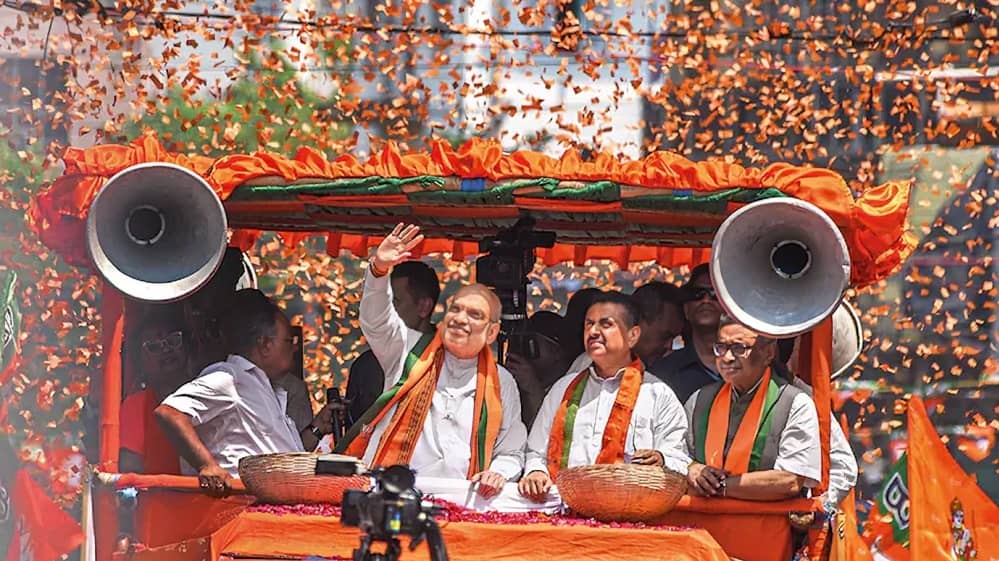
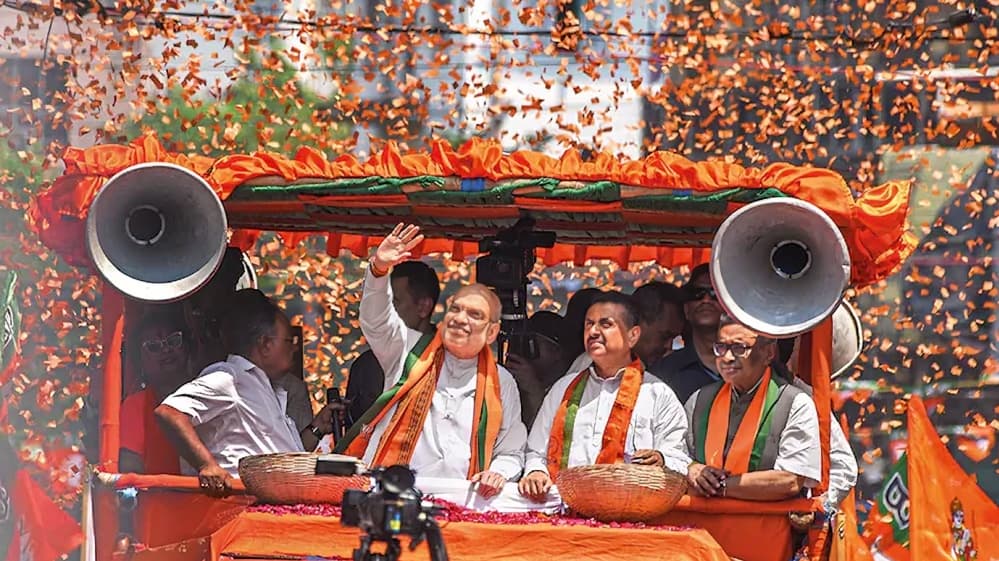
The political landscape in West Bengal is witnessing heightened activity as the Bharatiya Janata Party intensifies its preparations for the 2026 Assembly elections. The party has launched a comprehensive and multi layered campaign strategy aimed at challenging the incumbent All India Trinamool Congress government.
As part of its election outreach, the BJP has unveiled its Sankalp Patra, which outlines a range of welfare measures and governance priorities. The document proposes direct financial assistance schemes for women, youth, and farmers. These include monthly cash support initiatives, employment linked benefits, and assurances of improved minimum support prices for agricultural produce. The party has positioned these proposals as part of its broader vision to strengthen economic security and social welfare in the state.
In addition to welfare commitments, the BJP has emphasized law and order as a central theme of its campaign. The party has pledged to take strict action against issues such as illegal infiltration and border security. It has also highlighted plans to enhance border fencing and strengthen administrative mechanisms to ensure safety and stability. These measures are being presented as necessary steps to address long standing concerns raised by sections of the population.
Development has also been a key focus area in the campaign narrative. The BJP has promised infrastructure improvements, job creation initiatives, and industrial growth. By linking welfare schemes with employment opportunities, the party aims to appeal to both urban and rural voters. Political observers note that this combined approach reflects an effort to broaden the party’s support base across different demographics.
Cultural identity and regional pride have also been incorporated into the campaign messaging. The BJP has sought to connect with voters by addressing cultural and social issues, positioning its agenda as inclusive while also emphasizing national integration. This aspect of the campaign is seen as a strategic move to counter the strong regional identity politics traditionally associated with the Trinamool Congress.
Meanwhile, the ruling All India Trinamool Congress continues to rely on its established governance record and existing welfare schemes. The party has a significant presence in the state and has previously secured electoral success through its grassroots outreach and policy implementation. The upcoming election is expected to witness a closely contested battle between the two major political forces.
The 2026 West Bengal Assembly elections are likely to be shaped by multiple factors, including economic issues, governance performance, and voter sentiment. Both parties are expected to intensify their campaigns in the coming months, with rallies, public meetings, and policy announcements playing a crucial role.
As the election approaches, political analysts believe that the combination of welfare promises, governance agendas, and strategic messaging will determine the outcome. Voters across West Bengal will play a decisive role in shaping the state’s political future through their participation in the democratic process.