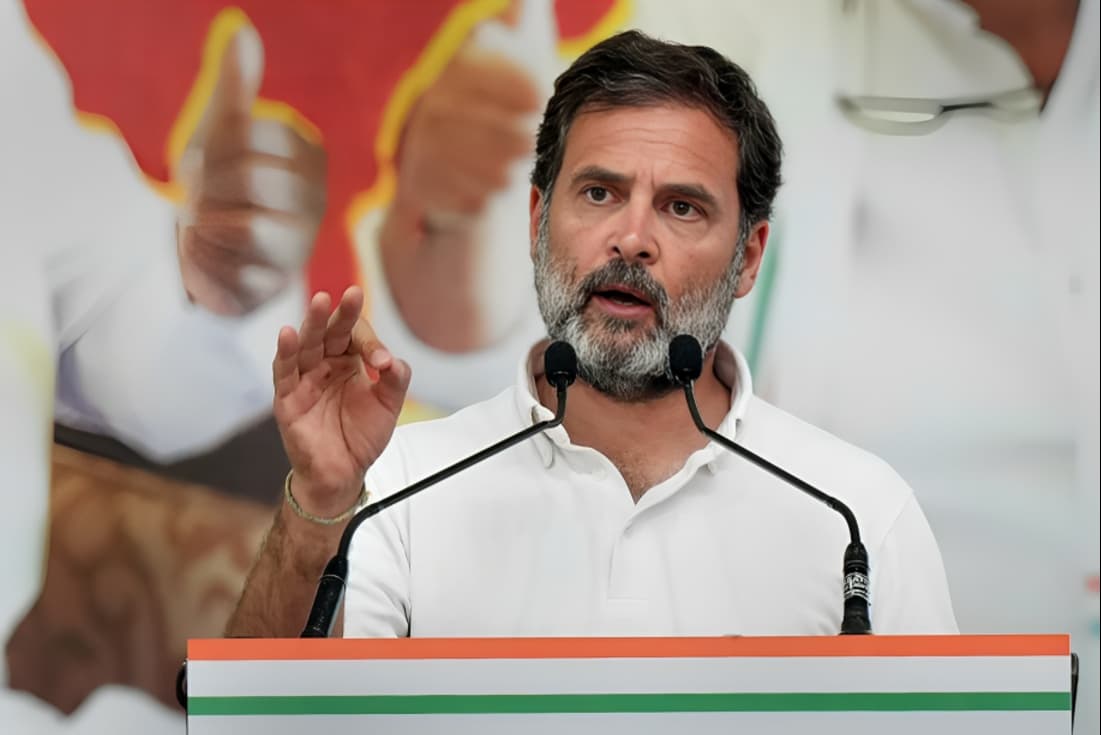
BJP Targets Rahul Gandhi After NDA Sweeps All Four Karnataka MLC Seats
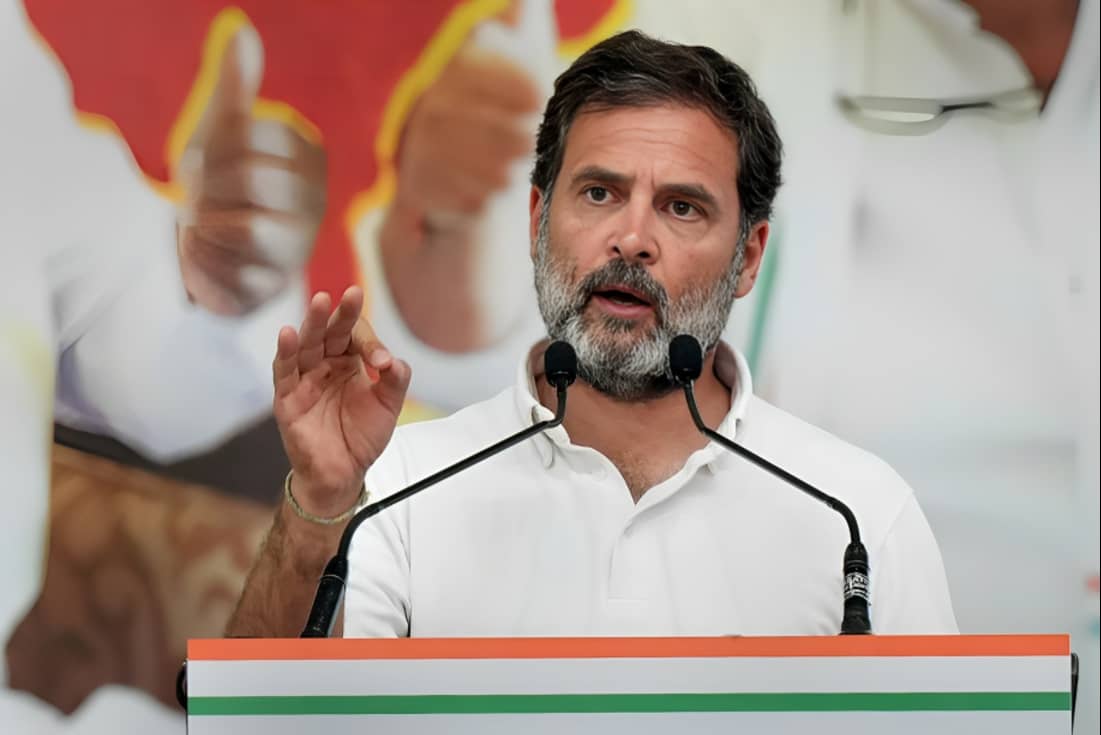
The Bharatiya Janata Party has criticised Congress leader Rahul Gandhi after the National Democratic Alliance secured victories in all four Karnataka Legislative Council constituencies contested in the 2026 elections. BJP leader Sudhanshu Trivedi used the results to question the Congress party's allegations of vote theft and irregularities in the electoral process.
The BJP and its alliance partner, the Janata Dal Secular, won two Teachers' constituencies and two Graduates' constituencies. The outcome was a setback for the Congress, which governs Karnataka. The results have also intensified the political debate between the ruling party in the state and the BJP over electoral transparency.
Trivedi argued that the Congress party's performance in elections conducted using ballot papers contradicted its repeated allegations about the credibility of India's electoral system. His remarks were directed at Rahul Gandhi, who has raised concerns about alleged irregularities in elections.
The BJP's criticism reflects the political contest between the two parties. However, the results of the Legislative Council elections alone do not establish whether allegations of electoral irregularities in other elections are valid or invalid.
Sudhanshu Trivedi Questions Congress's Electoral Claims
BJP leader Sudhanshu Trivedi criticised Rahul Gandhi over the Congress party's allegations of vote theft. He argued that the NDA's victory in Karnataka's Legislative Council elections undermined the opposition's claims about the electoral process.
Trivedi's remarks focused on the fact that the BJP and JD(S) alliance won all four seats in the contest. He questioned why the Congress continued to raise concerns about election procedures despite its performance in elections conducted using ballot papers.
The BJP has repeatedly challenged the Congress's allegations about electoral irregularities, arguing that opposition parties should accept election results and provide evidence when making specific accusations.
The Congress, meanwhile, has called for greater scrutiny of electoral processes and has raised concerns about voter lists and other aspects of election administration. The disagreement has become a recurring feature of national political debate.
Trivedi's latest comments add another chapter to this confrontation. His statement represents the BJP's political position, while the broader questions surrounding electoral transparency must be evaluated using evidence from the relevant elections and official investigations, where applicable.
NDA Wins Two Teachers' and Two Graduates' Constituencies
The BJP and JD(S) alliance recorded a clean sweep in Karnataka's four Legislative Council constituencies. The seats represented two Teachers' constituencies and two Graduates' constituencies.
In the Bengaluru Teachers' constituency, JD(S) candidate A P Ranganath defeated Congress candidate Puttanna by 908 votes. Ranganath received 10,810 votes, while Puttanna secured 9,902 votes.
The BJP also retained the North-East Teachers' constituency through Shashil G Namoshi, who defeated Congress candidate Sharanappa Mattur.
In the Graduates' constituencies, BJP candidates S V Sankanur and K M Suresh secured victories in the West Graduates' and South-East Graduates' constituencies, respectively.
These victories gave the BJP-JD(S) alliance all four available seats. The results were significant for the alliance because the elections involved specific groups of registered voters rather than the broader electorate that participates in Assembly elections.
The Congress failed to secure any of the four seats, making the outcome a political setback for the party in the state.
Why the Karnataka MLC Elections Matter
Legislative Council elections differ from state Assembly elections in terms of their constituencies and electorate. Teachers' constituencies are intended to represent eligible teachers, while Graduates' constituencies represent eligible registered graduates. Only voters who meet the relevant requirements can participate in these elections.
As a result, the outcome reflects political support among these particular voter groups. Although the BJP-JD(S) alliance's performance gives the parties a reason to claim an electoral advantage, the results should not be treated as a direct prediction of the next Karnataka Assembly election.
The Congress remains the governing party in Karnataka, and the Legislative Council results do not change the composition of the state Assembly. Nevertheless, the opposition's inability to win any of the four seats provides the BJP and JD(S) with an opportunity to highlight their organisational strength and challenge the Congress's political narrative.
The results may also influence how the parties prepare for future elections, particularly in terms of campaigning, voter outreach and coordination between alliance partners.
Vote Theft Allegations Remain a Political Flashpoint
Rahul Gandhi and other Congress leaders have raised concerns about alleged irregularities in elections, including issues relating to voter lists and electoral procedures. The BJP has strongly rejected these allegations and has accused the Congress of questioning democratic institutions when election results do not favour the party.
The Karnataka MLC results have provided the BJP with a fresh opportunity to criticise the Congress's position. Trivedi's argument is that the party's electoral performance weakens its political claims about the system.
However, electoral outcomes and allegations of irregularities are separate questions. Winning or losing an election does not, by itself, prove whether a particular allegation is true. Claims about election administration must be assessed through verifiable evidence, official records and the relevant procedures.
The political exchange also highlights the continuing disagreement between the BJP and Congress over how electoral transparency should be evaluated and communicated to voters.
What the Results Mean for Karnataka Politics
The NDA's sweep of all four Karnataka Legislative Council seats represents a significant result for the BJP and JD(S) alliance. It also gives the BJP fresh grounds to challenge Rahul Gandhi's statements on electoral integrity.
For the Congress, the outcome highlights the need to assess its performance in the Teachers' and Graduates' constituencies and strengthen its campaign among these groups.
The results are likely to remain part of the political debate as the BJP and Congress continue to challenge each other's claims. While the BJP has presented the victory as a response to the opposition's allegations, the broader debate over electoral transparency will continue to depend on evidence and scrutiny of specific claims.