
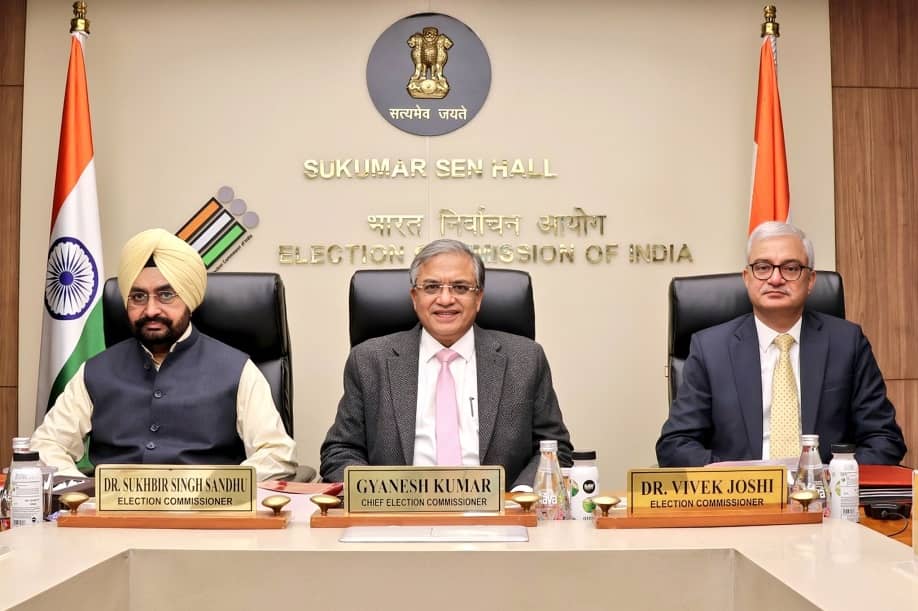

Chief Election Commissioner Gyanesh Kumar used the platform of the India International Conference on Democracy and Election Management 2026 to highlight India’s experience in conducting elections with a focus on accuracy and transparency. Speaking at the inaugural session of the conference in New Delhi, Kumar showcased the successful implementation of the Special Intensive Revision of electoral rolls in Bihar as an example of best electoral practices.
The conference, which has drawn participation from delegates representing around seventy countries, serves as a global forum for sharing experiences, challenges, and innovations in election management. Addressing the international audience, the Chief Election Commissioner underlined the importance of maintaining a pure and inclusive electoral roll as the foundation of any democratic system.
Kumar pointed out that the Special Intensive Revision exercise carried out in Bihar resulted in a final electoral roll that included every eligible voter as mandated by law. He noted that following the publication of the final roll, the Election Commission did not receive a single appeal or objection, reflecting public confidence in the process. He further added that the assembly election conducted on the basis of this revised roll did not witness any repolls, indicating smooth conduct of the electoral process.
According to Kumar, strengthening democracy requires success on two critical fronts. The first is the preparation of an accurate electoral roll that ensures the inclusion of all eligible electors while preventing duplication or ineligible entries. The second is the effective conduct of elections, which he described as a complex logistical exercise involving strict adherence to electoral laws and the instructions issued by the Election Commission.
He explained that managing elections in a country as large and diverse as India requires coordination among millions of officials, security personnel, and polling staff. Ensuring compliance with electoral regulations, maintaining order at polling stations, and facilitating voter participation are among the major challenges faced by election management bodies.
The Chief Election Commissioner also emphasised that the Bihar example demonstrates how meticulous planning, transparency, and public engagement can lead to credible electoral outcomes. He said such practices not only strengthen voter trust but also enhance the legitimacy of democratic institutions.
Delegates at the conference discussed a range of issues, including voter registration, use of technology in elections, combating misinformation, and ensuring inclusivity. India’s experience with large scale elections has often been cited as a reference point for emerging democracies and election management bodies worldwide.
The India International Conference on Democracy and Election Management is organised periodically to foster international cooperation and knowledge sharing in the field of electoral governance. The 2026 edition is expected to feature multiple sessions, workshops, and bilateral meetings focused on improving election systems globally.
Kumar concluded his address by reiterating the Election Commission of India’s commitment to conducting free, fair, and transparent elections. He said continuous improvement in voter roll management and poll administration remains central to upholding democratic values.


