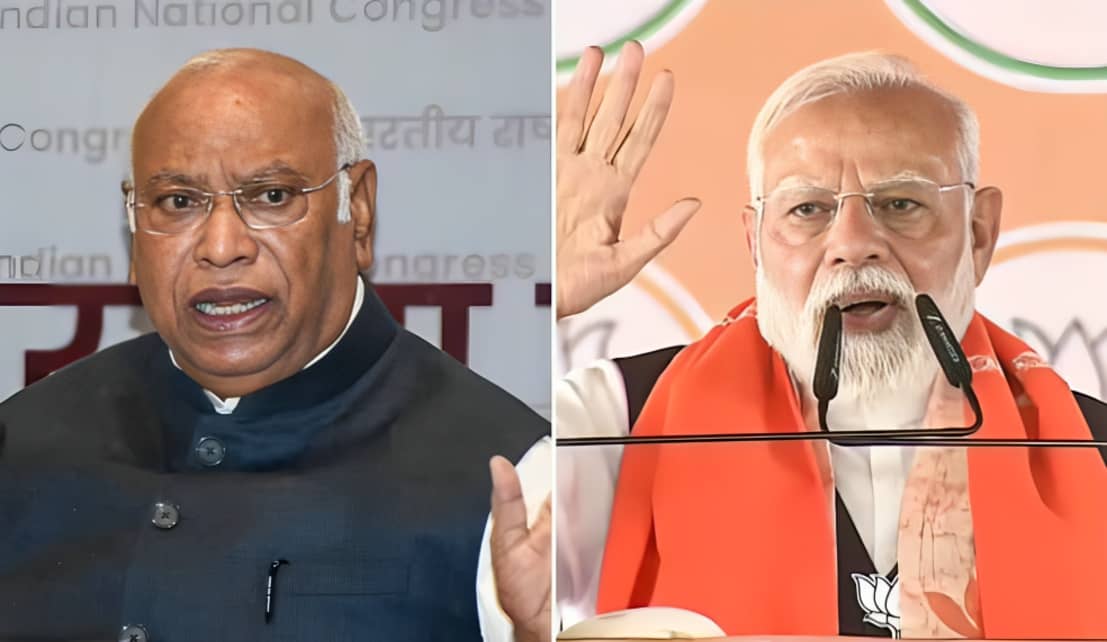
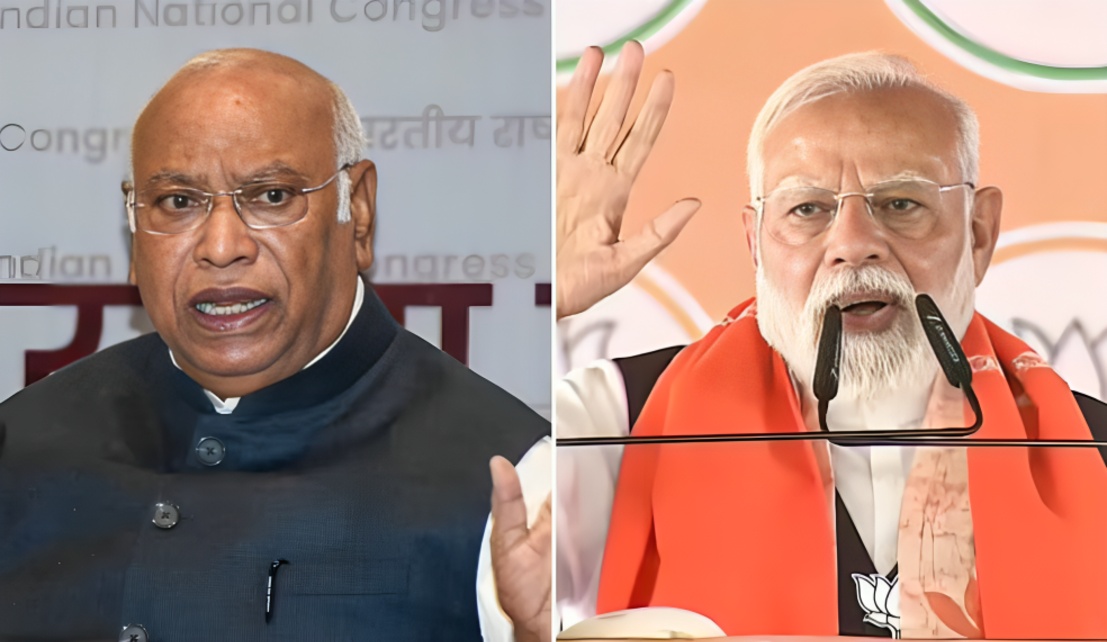
Congress president and Leader of Opposition in the Rajya Sabha Mallikarjun Kharge has once again urged Prime Minister Narendra Modi to convene an all party meeting to discuss the proposed delimitation exercise. The demand comes amid renewed discussion within the Union government about legislation connected with delimitation and the implementation of women’s reservation in the Lok Sabha.
Kharge wrote to Prime Minister Modi on August 27, reiterating his earlier request for an all party meeting. He asked the government to share its proposals with political parties and provide adequate time to study the details before introducing any legislation in Parliament.
The Congress president’s latest letter follows remarks by Parliamentary Affairs Minister Kiren Rijiju, who indicated that Parliament could potentially be convened for another sitting. The Monsoon Session has not formally been prorogued, leaving open the possibility of another sitting if the government decides to proceed with important legislative business.
Against this backdrop, Kharge has asked the government not to rush the proposed delimitation legislation. He has argued that the issue has major implications for political representation across the country and therefore requires detailed discussion among political parties and state governments.
Delimitation refers to the process of determining or redrawing the boundaries of electoral constituencies. Any major change to the distribution of parliamentary constituencies can have implications for political representation among states and regions. The issue has therefore become a significant subject of political discussion, particularly among states that have expressed concerns about the possible consequences of population based delimitation.
Kharge reiterated the Congress party’s position that the existing strength of the Lok Sabha should remain at 543 seats for another 25 years. He also called for the existing state wise allocation of Lok Sabha seats to remain unchanged during the same period.
According to the Congress position outlined by Kharge, the party also wants one third reservation for women to be implemented from the 2029 Lok Sabha elections. The demand links the delimitation discussion with the implementation of the constitutional framework for women’s reservation in Parliament.
The women’s reservation issue has been closely connected with delimitation because the implementation of the reservation framework involves changes following the delimitation process. The government and opposition parties have differed over how quickly the reservation should be operationalised and how the associated changes to parliamentary representation should be structured.
Kharge’s latest communication is not the first time the Congress has sought an all party discussion on the issue. He had previously written to the Prime Minister in July requesting consultations on the government’s proposed delimitation plans and adequate time for political parties to examine them.
The renewed demand comes as reports suggest that the government is examining possible legislative options related to delimitation and women’s reservation. The issue has attracted particular attention because any future changes to the number and distribution of Lok Sabha constituencies could have long term implications for representation.
Political parties from different regions have expressed varying concerns about delimitation. States that have successfully implemented population control measures have raised questions about whether a population based redistribution of parliamentary seats could affect their existing representation. Supporters of delimitation, on the other hand, argue that electoral constituencies should reflect demographic changes and provide more balanced representation.
The debate is therefore not limited to the number of Lok Sabha seats. It also involves questions about federal representation, demographic changes, constitutional provisions and the balance between different regions of the country.
Kharge has asked the Prime Minister to ensure that all political parties and state governments have sufficient time to examine any proposals before they are introduced in Parliament. His demand is based on the Congress view that such a major constitutional and political issue should be discussed through a broad consultation process.
The possibility of another sitting of Parliament has added urgency to the discussion. Parliamentary Affairs Minister Kiren Rijiju has indicated that the Monsoon Session has not yet been formally concluded and that the possibility of another sitting cannot be ruled out.
Kharge has therefore asked the government to hold consultations before moving forward with any proposed constitutional amendment. He has also reiterated that the Congress does not support increasing the Lok Sabha’s existing strength for another 25 years under its current position.
At the same time, the Congress has maintained that women’s reservation should be implemented from the 2029 Lok Sabha elections. This demand is significant because the timing and mechanism for implementing the reservation are closely linked to the broader delimitation process.
The issue is expected to remain an important subject of discussion among political parties in the coming days. Any legislation relating to delimitation would require detailed parliamentary consideration and, depending on its constitutional provisions, could involve a special majority.
For state governments, the issue is particularly important because changes in parliamentary representation can affect the political balance between states. This is one of the reasons Kharge has specifically called for state governments to be given adequate time to study the proposals.
The Congress has also emphasised the importance of maintaining the existing state wise distribution of Lok Sabha seats. Kharge’s latest letter repeats the party’s position that the current arrangement should continue for another 25 years.
The government’s next steps will determine whether an all party meeting is convened and whether a fresh delimitation related constitutional amendment is introduced in Parliament. As of now, Kharge’s demand is for wider consultation and sufficient time for all stakeholders to examine the proposals.
The delimitation debate is likely to remain politically significant as India prepares for the next stages of parliamentary and constitutional discussions. The questions surrounding the number of Lok Sabha seats, state wise representation and women’s reservation are closely connected and could influence the political debate leading up to the 2029 general elections.
For now, the Congress has clearly stated its position through Kharge’s letter. The party wants the existing 543 Lok Sabha seats and their state wise distribution to remain unchanged for another 25 years, while also seeking implementation of one third reservation for women from the 2029 elections.
The next major development will depend on the Union government’s response to Kharge’s request and whether an all party meeting is convened before any new delimitation legislation is brought before Parliamen