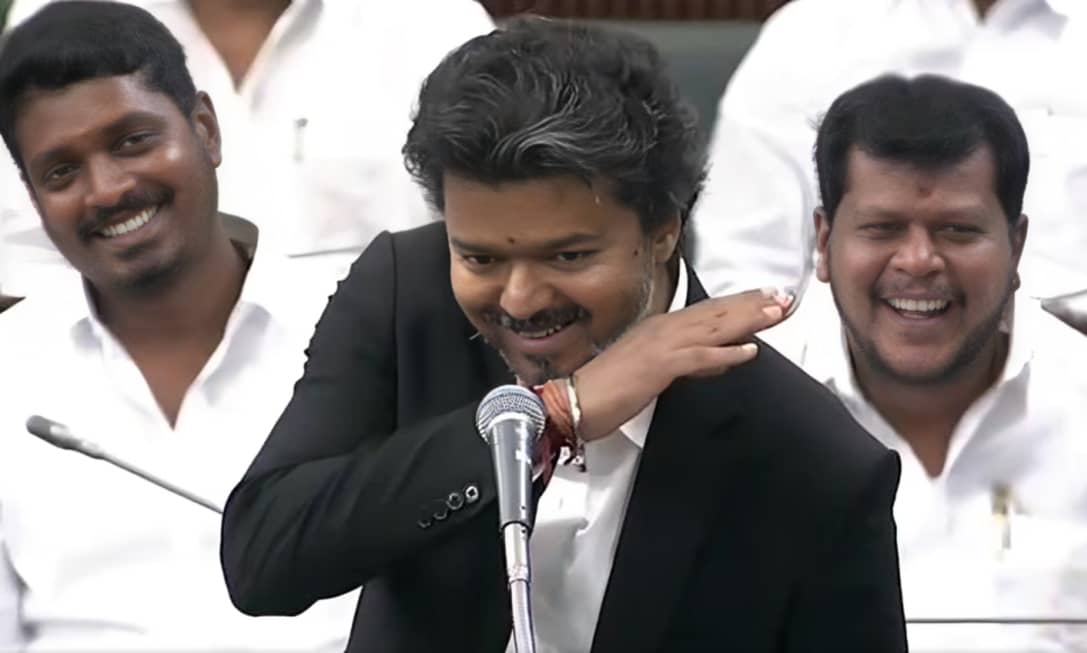
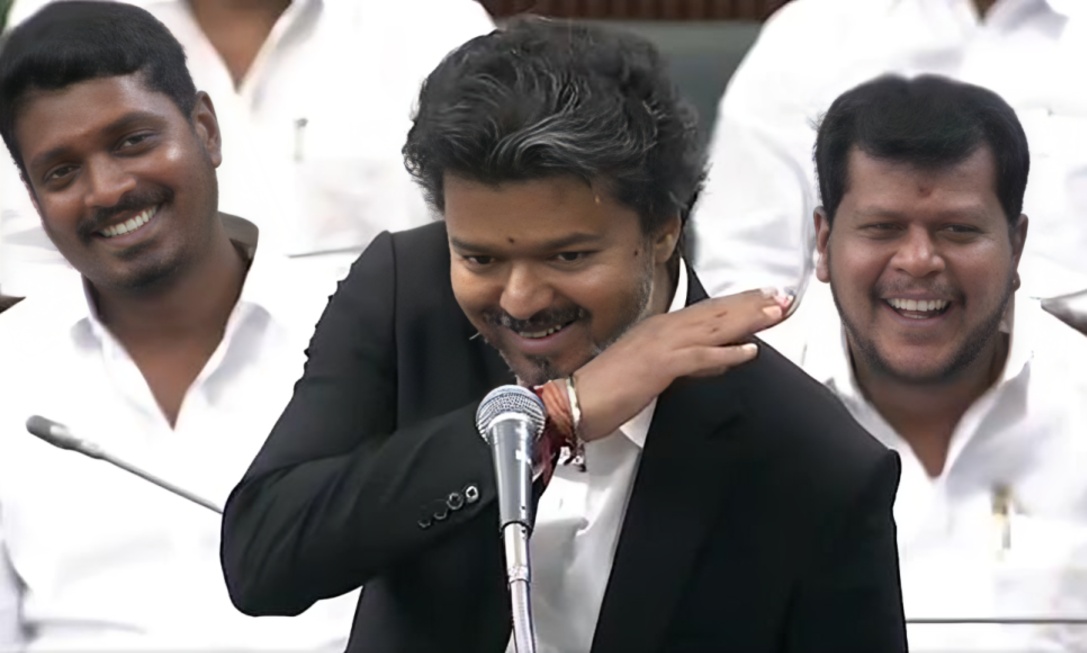
Chennai: Tension prevailed in the Tamil Nadu Legislative Assembly on Tuesday after Dravida Munnetra Kazhagam MLAs protested against Chief Minister C. Joseph Vijay’s remarks concerning the Maintenance of Internal Security Act and the Sarkaria Commission. The issue led to a confrontation between the Opposition members and the Speaker, following which marshals were ordered to remove the protesting DMK legislators from the House.
The controversy began with remarks made by Chief Minister Vijay during the previous day’s Assembly proceedings. During his reply in the House, Vijay referred to the MISA and the Sarkaria Commission while responding to issues raised by the Opposition. The references triggered objections from the DMK, which argued that the Chief Minister had brought up matters that the party considered inappropriate in the context of the ongoing Assembly proceedings.
On Tuesday, DMK Whip and MLA EV Velu raised the issue in the Assembly. He objected particularly to references to Vigilance cases that are currently under investigation. Velu argued that referring to cases under investigation during the Chief Minister’s reply was against the traditions of the House.
According to reports, Velu maintained that matters relating to ongoing investigations should not be discussed in the manner adopted during the Chief Minister’s response. He also objected to the references made to the MISA and the Sarkaria Commission during the previous day’s proceedings.
The DMK subsequently demanded that Vijay’s remarks concerning MISA be removed from the official Assembly proceedings. The party argued that the remarks should not remain on record. The demand led to further exchanges between the Opposition members and Speaker JCD Prabhakar.
The Speaker rejected the DMK’s demand to expunge the Chief Minister’s MISA remarks from the Assembly records. The Speaker said that Vijay had referred to information that had already been discussed in the House and that there was no sufficient reason to remove the remarks from the proceedings.
The disagreement escalated as DMK members continued their protest inside the Assembly. The protesting legislators raised objections before the Speaker and sought action on their demand. The situation created disruption in the proceedings.
Following the continued protest, the Speaker ordered Assembly marshals to remove the DMK legislators from the House. Marshals subsequently intervened and escorted the protesting members out of the Assembly. Reports from the Assembly proceedings described the situation as a period of considerable commotion.
After the eviction, EV Velu criticised the Speaker’s decision. He described the action as undemocratic and maintained that the DMK was raising concerns about issues that deserved discussion in the Assembly. Velu also reiterated his objection to references being made to Vigilance cases that are still under investigation.
The latest confrontation comes amid growing political tensions between the ruling establishment and the DMK in the Tamil Nadu Assembly. The two sides have repeatedly clashed during recent proceedings over the manner in which political and administrative issues are being discussed in the House.
The previous day’s Assembly proceedings had also witnessed a confrontation involving the DMK. During the discussion on the police department’s demands for grants, Opposition members sought an opportunity to respond to remarks made by the Chief Minister. The disagreement resulted in a walkout by DMK legislators.
The latest dispute is therefore part of a broader series of disagreements between the ruling side and the Opposition during the current Assembly session. The DMK has continued to question the government on various issues, while the ruling side has defended the Chief Minister’s statements and the manner in which the government is conducting the proceedings.
The MISA issue has added another dimension to the political debate. The Maintenance of Internal Security Act was a significant piece of legislation in India’s political history, particularly in relation to the Emergency period. References to the Act in political debates can therefore generate strong reactions, particularly when they are linked to the history and actions of political parties.
The Sarkaria Commission has also been an important reference point in discussions concerning Tamil Nadu politics. The commission was established to examine Centre-State relations, and its findings have historically been referred to in political debates involving the state.
In the present case, however, the immediate dispute in the Assembly centred on whether the Chief Minister’s remarks should remain in the official proceedings and whether references to matters under investigation were appropriate. The Speaker rejected the demand to remove the MISA-related remarks, while the DMK continued its protest.
The eviction of the DMK MLAs by marshals has further intensified the political disagreement between the Opposition and the government. The incident is expected to remain a point of discussion as the Assembly session continues.
The episode also highlights the importance of legislative procedure and the role of the Speaker in maintaining order inside the House. While the Opposition has the right to raise objections and seek clarification, the Speaker is responsible for regulating proceedings and ensuring that the Assembly functions according to its rules.
For the DMK, the immediate focus remains on its objection to the Chief Minister’s remarks and the discussion of Vigilance cases that are under investigation. For the Speaker and the ruling side, the position is that the Chief Minister’s remarks did not warrant removal from the Assembly records.
The dispute ended with the removal of the protesting DMK legislators from the House, but the political disagreement over the remarks and the conduct of Assembly proceedings continues. The developments are likely to remain a significant political issue in Tamil Nadu as the Assembly session progresses.
The incident has once again brought the focus onto the relationship between the government and the Opposition in the Tamil Nadu Legislative Assembly. Further proceedings will determine whether the two sides reach an understanding on the issue or whether similar confrontations continue during the remaining discussions.