Kolkata
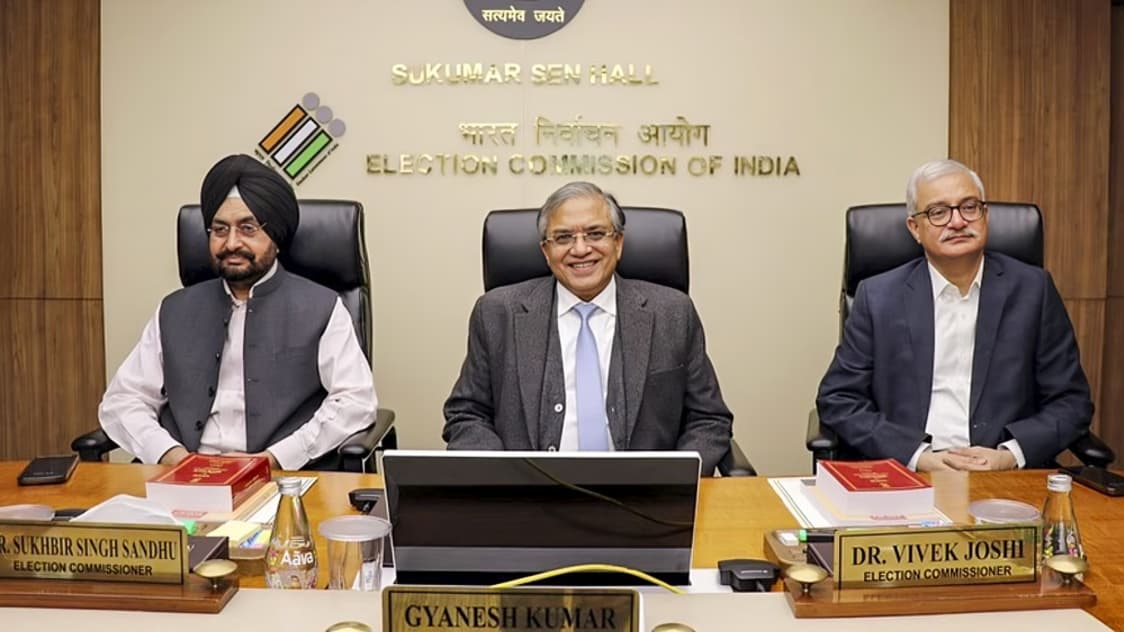
The Election Commission of India has carried out a series of administrative transfers in West Bengal following the announcement of election dates on March 15. The changes come after the enforcement of the Model Code of Conduct, which aims to ensure free and fair elections.
In its latest orders, the Commission has transferred 13 Indian Administrative Service officers and 20 Indian Police Service officers who were holding key positions in the state. Many of the transferred IAS officers were serving as District Election Officers, responsible for overseeing election related activities at the district level.
Among those transferred are officials from important electoral regions, including Kolkata North and Kolkata South. These constituencies are considered significant due to their political importance and voter base. The reshuffle is part of routine measures taken by the Election Commission to maintain neutrality and administrative balance during elections.
In addition to the transfers, several officers have been assigned duties outside the state as election observers. These observers play a crucial role in monitoring the conduct of elections, ensuring adherence to rules and addressing any irregularities. Seventeen officers have been deputed to different states for this purpose.
Two IPS officers, Murlidhar Sharma and Waquar Raza, have been appointed as election observers for Tamil Nadu. Sharma was serving as the Commissioner of Bidhannagar City Police, while Raza had recently taken charge as the head of the Siliguri Police Commissionerate.
Similarly, several IAS officers have been assigned observer roles in other states. These include JP Meena, Antara Acharya, Parwez Ahmed Siddiqui, P Mohan Gandhi and Priyanka Singla. Their responsibilities will involve supervising election processes and ensuring compliance with guidelines set by the Commission.
The Election Commission regularly undertakes such transfers during election periods to prevent any potential bias or influence. By rotating officials and assigning them to different roles, the Commission aims to uphold the integrity of the electoral process.
Officials have stated that these measures are part of standard procedures followed across states whenever elections are announced. The Model Code of Conduct imposes restrictions on administrative actions to ensure a level playing field for all political parties.
Political observers note that timely administrative changes are essential to maintain transparency and public confidence in the electoral system. The role of election observers, in particular, is critical in monitoring polling activities and addressing complaints from candidates and voters.
As preparations for the elections continue, further administrative steps are expected to be taken to ensure smooth conduct of polling. Security arrangements, voter awareness programmes and logistical planning are being carried out across the state.
The developments highlight the Election Commission’s efforts to ensure that elections are conducted in a fair and impartial manner, with all necessary checks and balances in place.