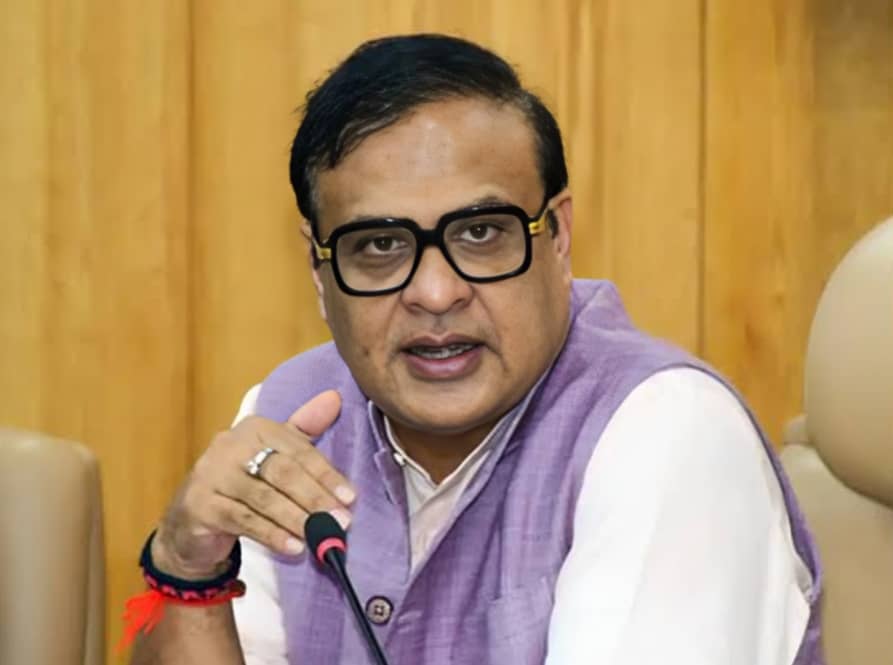
Assam Chief Minister Himanta Biswa Sarma has defended Chief Election Commissioner Gyanesh Kumar amid a recent controversy surrounding reported differences within the Election Commission of India.
Speaking to reporters in Guwahati on September 24, Sarma said the Election Commission is a collective constitutional body and that the Chief Election Commissioner cannot independently take a final decision without the involvement of the other Election Commissioners. He described the criticism directed at Gyanesh Kumar as a political campaign.
Sarma said that differences of opinion can arise during discussions within the Election Commission. However, according to him, a final decision of the poll panel has to be based on consensus or a majority view. He argued that portraying any decision as having been taken unilaterally by the Chief Election Commissioner would not reflect the way the Commission functions.
The comments came after reports of internal objections by Election Commissioners Sukhbir Singh Sandhu and Vivek Joshi regarding several matters connected with electoral rolls and the Special Intensive Revision of electoral rolls.
According to reports published in recent days, the two Election Commissioners had recorded objections on a number of occasions over a period of around ten months. The reported issues included certain procedures related to electoral roll revisions, voter records and the functioning of electoral databases.
The reports led to political criticism of the Election Commission and renewed questions about the functioning of the three member constitutional body. However, the Election Commission has disputed the characterization of these internal discussions as evidence of a division within the Commission.
In a statement issued on September 23, the Election Commission said that written notes, observations, technical suggestions and internal checks and balances are normal parts of the decision making process of a multi member constitutional institution.
The Commission stated that its final decisions, including decisions related to the Special Intensive Revision, had been taken unanimously by the full Commission. It also said that individual views expressed during the deliberative stage should not be treated as final decisions of the Election Commission.
The Election Commission functions under Article 324 of the Constitution of India and operates according to statutory provisions and established institutional procedures. The Commission has three members, comprising the Chief Election Commissioner and two Election Commissioners.
The current controversy has emerged at a time when the Election Commission is undertaking electoral roll related activities in several parts of the country. The Special Intensive Revision process has attracted considerable political and public attention, particularly because electoral roll verification and revision can affect the inclusion or deletion of names from voter lists.
The Election Commission has maintained that electoral roll related decisions are carried out according to established procedures and that statutory officials such as Electoral Registration Officers and District Election Officers exercise their responsibilities under the law.
The Commission also highlighted its recent election related work and said that several major electoral exercises had been carried out during the period under discussion. It said that numerous decisions, initiatives and electoral reforms had involved the participation of the full Commission.
Sarma, while defending Gyanesh Kumar, focused on the collective nature of the Election Commission's decision making process. He said that views expressed before a final decision are different from the final decision formally adopted by the Commission.
His argument was that disagreements or observations during internal discussions should not automatically be interpreted as evidence that the Chief Election Commissioner had acted independently. He said the Commission must ultimately operate through collective decision making.
The Election Commission has made a similar distinction in its own response, stating that individual observations and suggestions are part of institutional deliberations. At the same time, it has maintained that its final decisions over the past year were unanimous.
The controversy therefore involves two related issues. One concerns reports about objections raised by individual Election Commissioners during internal discussions. The other concerns how those objections should be understood in relation to the final decisions of the Commission.
While reports have highlighted differences recorded during the decision making process, the Election Commission has said that such differences are part of normal institutional functioning and do not mean that final decisions were taken without the participation of all members.
Sarma's remarks add a political dimension to the ongoing debate. He has argued that criticism of the Chief Election Commissioner should be viewed in the context of the Commission's collective structure and decision making process.
The Election Commission, meanwhile, has reiterated that it remains committed to carrying out its constitutional responsibilities and conducting electoral processes according to the law.
The issue is likely to remain under public and political discussion as electoral roll revision exercises continue. The distinction between internal deliberations and formally adopted decisions remains central to the debate surrounding the Election Commission and its functioning.