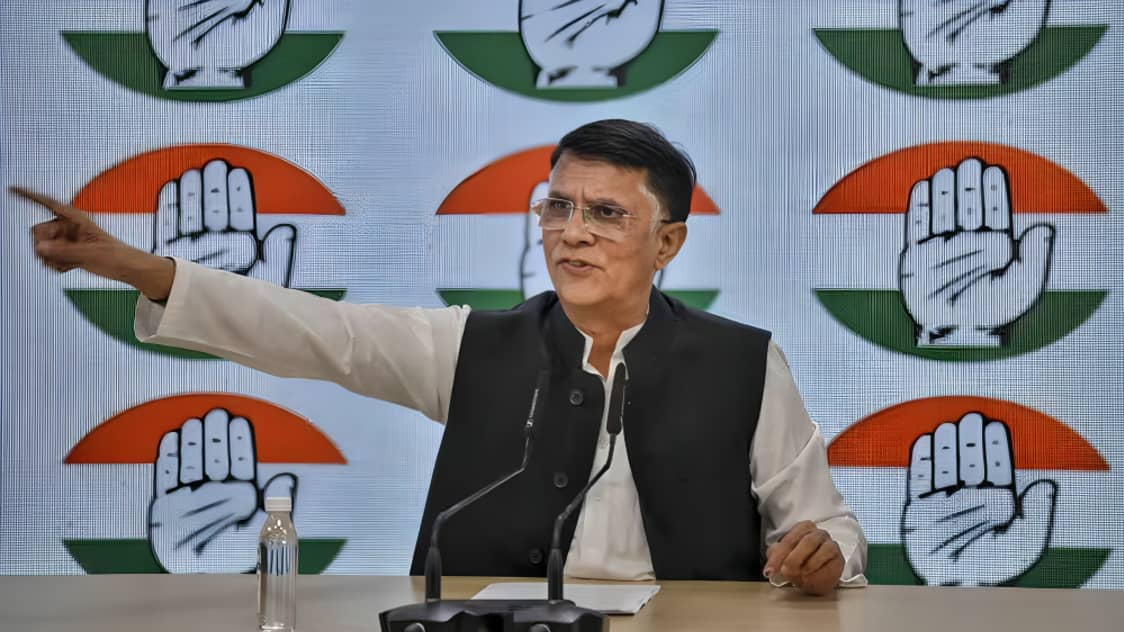
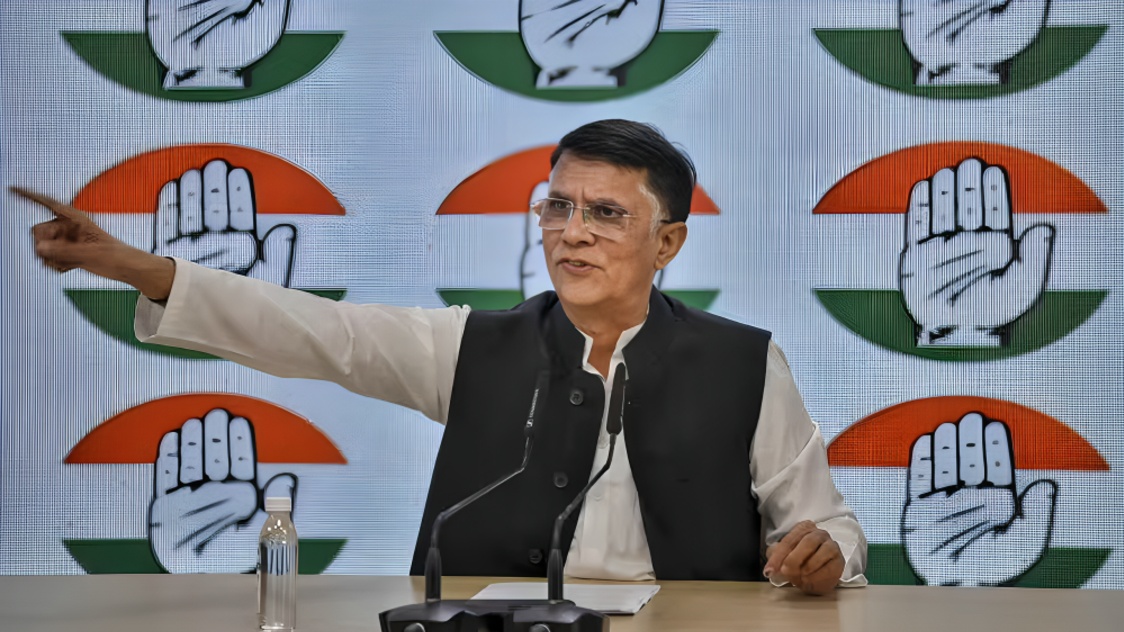
Congress leader Pawan Khera has alleged that more than 13 crore voters have been disenfranchised through the Election Commission’s Special Intensive Revision of electoral rolls. Khera made the allegation during a press conference in Indore on September 25, 2026, amid an intensifying political dispute between the Congress and the Election Commission over the conduct and implementation of the SIR exercise.
Khera accused the Centre of acting against constitutional principles and said that the Constitution guarantees equal value to every vote. He referred to Dr B R Ambedkar and the Constituent Assembly while arguing that voters should not be treated differently in the electoral process. These were political statements made by Khera and represent the Congress position on the ongoing SIR controversy.
The Congress leader linked his allegations to the wider debate over the Special Intensive Revision, an exercise aimed at revising electoral rolls. Khera claimed that more than 13 crore voters across the country had been affected or disenfranchised through the process. The figure has been cited by Congress leaders in their criticism of the electoral-roll revision.
However, the figure should be understood in context. Reports on the SIR process have referred to more than 13 crore names being left out of draft electoral rolls across different phases and states. A draft-roll exclusion does not necessarily mean that every affected name has been permanently deleted from the final electoral roll. The claims and objections process can result in names being restored or corrected.
The distinction between draft exclusions and final deletions is important when reporting on the issue. The Election Commission has maintained that the revision process is intended to identify eligible voters, remove ineligible or duplicate entries and update electoral rolls in accordance with the law. In Uttar Pradesh, for example, the final electoral roll published after the SIR exercise contained more than 84 lakh additional voters compared with the draft roll, demonstrating that changes between draft and final rolls can be significant.
Khera also referred to the recent reports concerning Election Commissioners Sukhbir Singh Sandhu and Vivek Joshi. The Indian Express reported that the two Election Commissioners had recorded objections on at least 14 occasions over a 10 month period concerning decisions and orders connected with electoral-roll management and the SIR process. The reported issues included voter additions and deletions, changes to Form 6 and aspects of electoral database management.
Khera described the developments involving the two Election Commissioners as evidence that what he called a secret operation had become public. He referred to Chief Election Commissioner Gyanesh Kumar and said that the objections raised by Sandhu and Joshi had brought the matter into the public domain. These comments were made as part of the Congress party’s criticism of the Election Commission and should be treated as political allegations rather than established findings.
The Election Commission has rejected the interpretation that the reported objections demonstrate institutional dissent over SIR. According to the Commission, internal observations, administrative suggestions and operational feedback are part of the normal functioning of a multi-member constitutional body. The Commission has maintained that final decisions concerning SIR were unanimous and had the approval of the Chief Election Commissioner and both Election Commissioners.
The dispute has also led to political protests across several states. Congress organised demonstrations on September 25 against the functioning of the Election Commission and demanded the resignation or removal of Chief Election Commissioner Gyanesh Kumar. Protests were reported in places including Assam, Jammu and Kashmir, Uttarakhand, West Bengal, Uttar Pradesh, Chandigarh and Manipur.
In Assam, Congress leader Gaurav Gogoi was detained during a protest, according to reports. Other Congress leaders and workers also marched towards Election Commission offices in different states. The party has linked its protests to concerns about electoral-roll management and what it describes as irregularities in the SIR exercise.
The political dispute has extended beyond the Congress. Other opposition leaders have also questioned the Election Commission’s handling of electoral-roll revisions and called for greater transparency. At the same time, the Election Commission has continued to defend the SIR process and its internal decision-making.
One of the major issues under discussion is the number of names excluded from draft electoral rolls. Reports have indicated that the number of excluded names has crossed 13 crore across the different phases of the SIR process. However, these figures should not automatically be described as 13 crore confirmed disenfranchised voters because the revision process includes procedures through which eligible voters can submit claims and objections.
The Congress has argued that large-scale exclusions could affect eligible voters if their names are not restored before elections. Party leaders have therefore demanded greater transparency and scrutiny of the revision process. The Election Commission, meanwhile, has said that electoral rolls must be kept accurate and that the revision process is intended to ensure that only eligible voters remain on the rolls.
The controversy has also raised questions about the internal functioning of the Election Commission. The reported objections by Sandhu and Joshi have attracted considerable political attention because the Commission is a multi-member constitutional body. The Election Commission has nevertheless stated that the existence of internal observations does not mean that final decisions were divided.
Khera’s remarks came one day after Congress leader Rahul Gandhi held a press conference in which he renewed allegations concerning what he described as vote theft and linked those claims to the SIR process. Congress has made electoral-roll revision a major political issue and has demanded greater accountability from the Election Commission.
The issue is expected to remain politically significant as the SIR process continues in states and Union Territories. The final impact on electoral rolls will depend on the completion of claims, objections, verification and final publication of the relevant voter lists.
For readers, it is important to distinguish between political allegations, reported draft-roll figures and officially finalised electoral data. Pawan Khera’s claim that more than 13 crore voters have been disenfranchised represents the Congress position. The Election Commission has not accepted that characterisation and has maintained that its SIR decisions were unanimous.
The continuing debate therefore involves three separate issues: the number of names excluded at the draft stage, the number of eligible voters ultimately restored or retained in the final rolls, and the administrative and constitutional questions surrounding the Election Commission’s decision-making process. Further official data and the completion of the revision process will be important for establishing the final numbers.