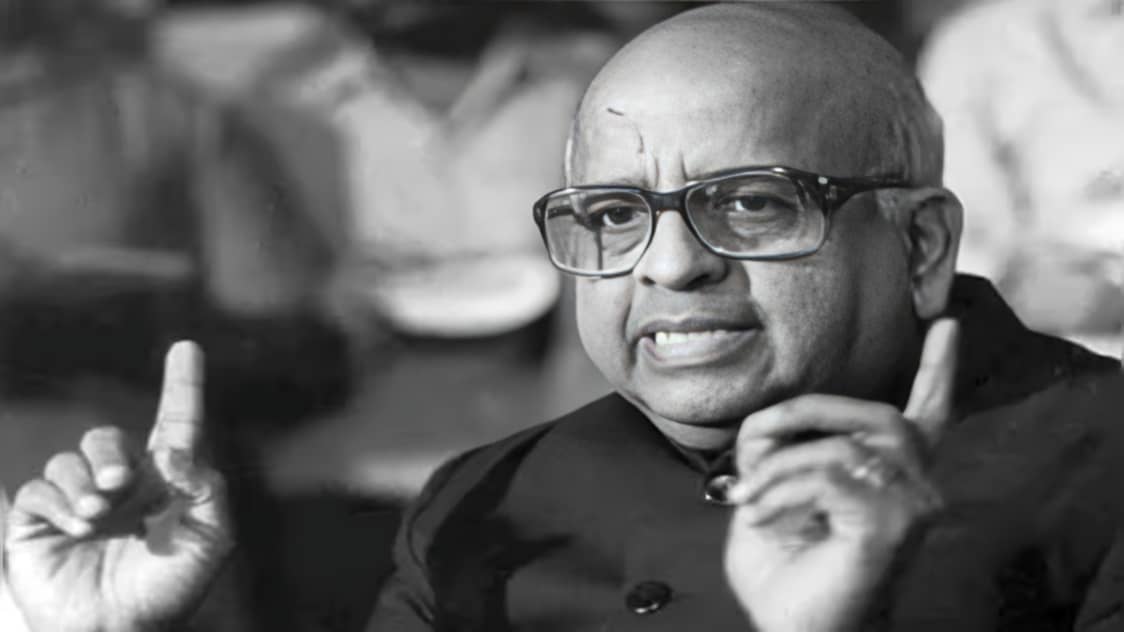
Former Chief Election Commissioner T N Seshan has once again become a point of reference in discussions about the Election Commission of India amid the current controversy surrounding the Special Intensive Revision of electoral rolls. Seshan, who headed the poll panel from December 1990 to December 1996, was known for his strict approach to election rules and for asserting the constitutional powers of the Election Commission.
The renewed attention comes after reports of differences within the present three member Election Commission over decisions connected with the Special Intensive Revision, or SIR, of electoral rolls. The Indian Express reported that Election Commissioners Sukhbir Singh Sandhu and Vivek Joshi recorded objections at least 14 times over a period of 10 months regarding decisions and orders that they said were issued without their knowledge or approval. The reported concerns included voter additions and deletions, changes to Form 6, appeals relating to electoral rolls and the management of voter database systems.
The Election Commission, however, has rejected the suggestion that SIR decisions were taken without the participation of all members. In its response, the Commission said that all decisions, including those concerning SIR, were unanimous and had the approval of the Chief Election Commissioner and both Election Commissioners. It described written notes and differing observations as part of the normal decision making process.
The present controversy has brought back comparisons with earlier periods when differences within the Election Commission became a matter of public and judicial discussion. One of the most prominent examples involved T N Seshan during the 1990s.
T N Seshan became Chief Election Commissioner in December 1990. His tenure is widely associated with stricter enforcement of the Model Code of Conduct and a more assertive interpretation of the Election Commission’s constitutional responsibilities. Historical accounts of his tenure frequently cite his forceful public image and his famous statement, widely reported as “I eat politicians for breakfast”. The phrase became associated with his reputation for confronting political influence during elections.
The major institutional dispute during Seshan’s tenure began in October 1993. Until then, the Election Commission had been headed by the Chief Election Commissioner. On October 1, 1993, the President promulgated an ordinance providing for two additional Election Commissioners. M S Gill and G V G Krishnamurthy were appointed to the two posts on the same day.
Seshan challenged the move before the Supreme Court. His case questioned the legal basis for creating a multi member Election Commission and the appointment of the two additional Election Commissioners. The dispute also raised a larger constitutional question about the relationship between the Chief Election Commissioner and the other members of the Commission.
At the heart of the dispute was whether the Chief Election Commissioner should have a decisive authority over the other Election Commissioners or whether the Commission should function collectively. Seshan argued that the constitutional position of the CEC was distinct and that the creation of additional commissioners could dilute his authority. The government, on the other hand, maintained that the Constitution permitted the Election Commission to function as a multi member body.
The disagreement also extended into the functioning of the Commission. Contemporary accounts and the Supreme Court judgment referred to tensions between the commissioners. The court noted unpleasant exchanges between Seshan and Election Commissioner G V G Krishnamurthy and expressed concern about the lack of teamwork within the Commission.
The legal dispute ultimately reached a five judge Constitution Bench of the Supreme Court. On July 14, 1995, the court delivered its judgment in T N Seshan, Chief Election Commissioner of India versus Union of India and Others.
The Supreme Court upheld the legal framework that allowed the Election Commission to operate as a multi member body and upheld the appointments of M S Gill and G V G Krishnamurthy. The judgment also rejected the idea that the Chief Election Commissioner’s opinion should automatically prevail over the views of the other Election Commissioners.
The judgment became an important reference point for understanding the institutional structure of the Election Commission. The court explained that treating the CEC as superior in the sense that his view was always final would effectively make the other Election Commissioners non functional or merely ornamental. The court instead emphasised collective functioning and mutual confidence among the members.
The Seshan episode is relevant to the current debate because the Election Commission is again facing public attention over differences among its members. However, the two situations are not identical. The Seshan dispute involved the legal creation of a multi member Commission and the authority of the CEC within that structure. The current controversy concerns the administration of electoral rolls and the implementation of SIR, including reported disagreements over procedures and technology.
The present dispute also involves the Election Commission’s digital infrastructure. The Indian Express reported that Sandhu and Joshi raised concerns about what they described as the gradual centralisation of the electoral roll database and restrictions affecting state level officials. The report said the two commissioners separately wrote to Cabinet Secretary T V Somanathan regarding changes to work allocation related to the technology infrastructure used for electoral rolls. These are reported allegations and concerns raised by the commissioners, rather than findings established by a court.
Another reported issue concerns Form 6, which is used for new voter registration. The Indian Express reported that the two commissioners objected to changes made to the form in connection with SIR. According to the report, Election Commissioner Vivek Joshi had recorded that the statutory form could not be changed in that manner without amendment of the relevant rules, while Sukhbir Singh Sandhu later described the changes as unauthorised and illegal.
The Election Commission has presented a different interpretation of the internal exchanges. Its response said that differing views, observations and technical suggestions are part of institutional deliberation and described the decisions of the Commission as unanimous. The Commission did not dispute the existence of the written notes referenced in the Indian Express investigation but characterised them as part of the decision making process.
Another earlier example of disagreement within the Election Commission came during the 2019 Lok Sabha elections. Election Commissioner Ashok Lavasa dissented from the majority view on several complaints concerning alleged Model Code of Conduct violations by senior political leaders. Lavasa sought to have his minority views recorded in the Commission’s orders. The issue became public and generated a wider discussion about how dissent should be handled within a multi member constitutional body.
The 2019 episode and the Seshan dispute demonstrate that differences within the Election Commission have occurred at different points in its history. However, each episode involved its own legal and institutional circumstances. The 1995 Supreme Court judgment remains particularly significant because it established that the Chief Election Commissioner does not function as an authority whose view automatically overrides the other Election Commissioners in a multi member Commission.
The current SIR controversy has therefore brought renewed public attention to the institutional design of the Election Commission and the question of how differences among its members are handled. The Election Commission remains a constitutional body established under Article 324 of the Constitution, while the current three member structure operates under the legal framework governing the appointment and functioning of the CEC and Election Commissioners.
For readers following the SIR debate, it is important to distinguish historical facts from current allegations and responses. T N Seshan’s 1990s legal battle was decided by the Supreme Court in 1995. The present SIR-related disagreements are part of an ongoing public and institutional debate, with the Election Commission maintaining that its decisions have been unanimous while reports have highlighted objections recorded by two commissioners.
The renewed discussion of Seshan’s legacy therefore reflects the broader history of disagreements over the powers, procedures and internal functioning of India’s election authority. His tenure and the 1995 Supreme Court judgment continue to provide historical context for understanding how the role of the Chief Election Commissioner and the other Election Commissioners has evolved over time.