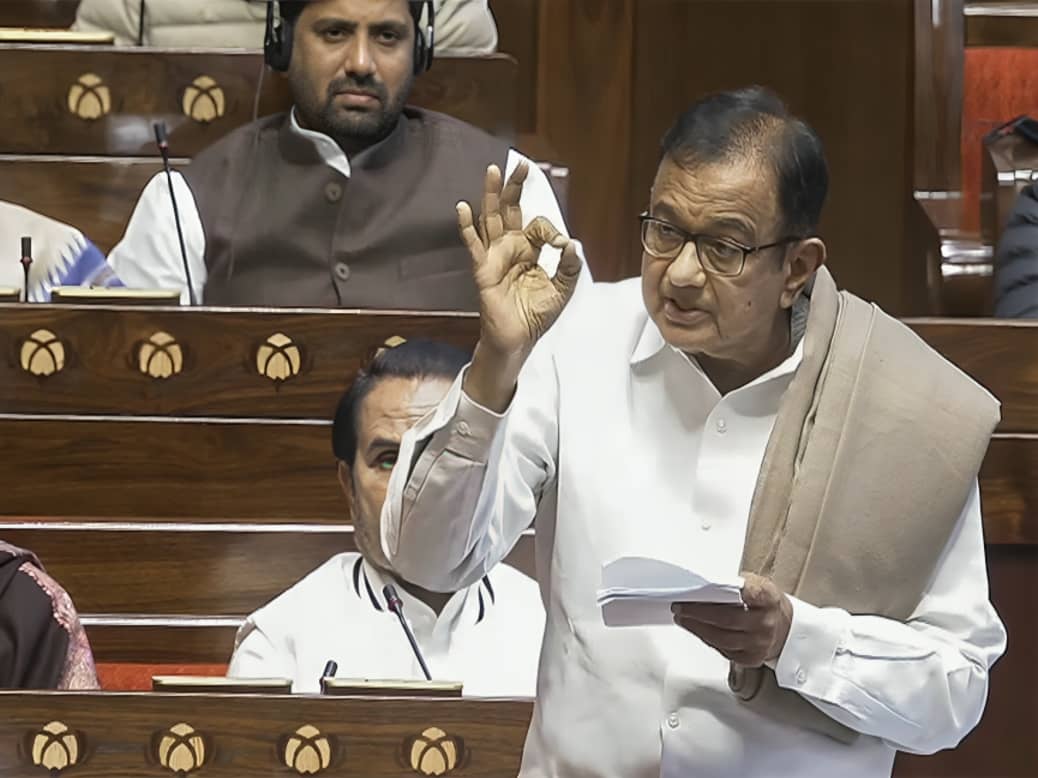
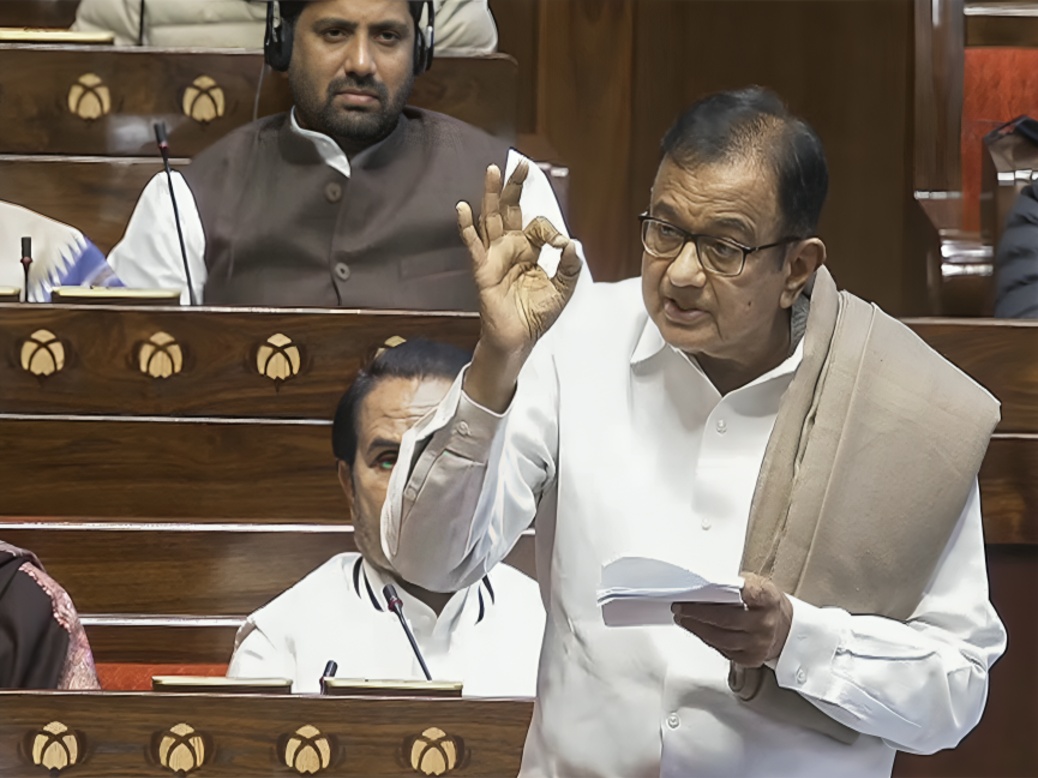
India’s position in the latest Electoral Democracy Index has become a subject of political discussion after senior Congress leader and Rajya Sabha MP P Chidambaram highlighted the country’s ranking in the latest assessment by the V-Dem Institute.
According to the V-Dem Democracy Report 2026, India ranked 106th among 179 countries in the Electoral Democracy Index for the year 2025. India received a score of 0.38 on the index. P Chidambaram highlighted the figure in a post on social media and described the score as India’s lowest level since 1975.
The V-Dem assessment has attracted attention because it examines democracy through several dimensions rather than looking only at whether elections are held. The Electoral Democracy Index considers whether political leaders are elected through comprehensive voting rights and whether elections are free and fair. It also takes into account freedoms of expression and association and the broader political environment in which elections take place.
V-Dem stands for Varieties of Democracy. The institute is based at the University of Gothenburg in Sweden and produces large-scale datasets that measure different aspects of democracy across countries. Its methodology includes several major principles, including electoral, liberal, participatory, deliberative and egalitarian dimensions of democracy.
The 2026 V-Dem report is based on data covering 2025. The institute’s latest dataset contains scores for 179 countries for that year. V-Dem states that the scores represent the situation in each country as of December 31, 2025.
Along with India’s 106th position on the Electoral Democracy Index, the country ranked 105th on V-Dem’s Liberal Democracy Index, with a score of 0.26. The Liberal Democracy Index includes additional dimensions such as individual liberties, rule of law and constraints on executive power.
V-Dem has classified India as an electoral autocracy in its latest assessment. This is a classification used by the V-Dem Institute based on its own methodology and should not be interpreted as an official classification issued by the Indian government or the Election Commission of India.
The distinction is important because democracy rankings produced by international research organisations are based on their respective methodologies. Different organisations may use different indicators and assessment methods, and their rankings can therefore differ.
The Electoral Democracy Index is measured on a scale ranging from 0 to 1, with higher values representing stronger performance under the index’s methodology. The index looks at the quality of elections as well as the political freedoms and conditions surrounding the electoral process.
V-Dem’s assessment has also become part of a wider political debate in India. Chidambaram’s latest comments come amid continuing discussions between the Congress and the Bharatiya Janata Party over democratic institutions, elections and political freedoms.
In his social media post, Chidambaram drew attention to India’s 106th position and the country’s 0.38 score. He did not provide an extended political argument in the post, instead highlighting the figures reported by V-Dem.
The report also places India within a broader regional context. V-Dem’s assessment identifies several countries in South and Central Asia under different regime classifications. India is listed alongside countries including Pakistan and Kazakhstan in the electoral autocracy category in the report.
The V-Dem report further discusses changes in democratic conditions across countries over time. According to the report, the global political environment has experienced significant democratic changes, with electoral autocracy becoming the most populous regime category in 2025. V-Dem estimates that 46 percent of the world’s population lived under electoral autocracy in that year.
For India, the latest figures are particularly significant because the Electoral Democracy Index score of 0.38 is being compared with the country’s historical scores. Chidambaram has described the current level as the lowest since 1975. This historical comparison is based on V-Dem’s dataset and methodology.
It is also important to distinguish between a ranking and an absolute assessment of a country’s entire democratic system. A position such as 106th reflects India’s relative position among the countries measured by V-Dem. It does not, by itself, provide a complete assessment of every institution or aspect of democracy in India.
V-Dem uses assessments from country experts and scholars as part of its methodology. The institute says its democracy dataset contains millions of data points and measures hundreds of attributes related to democratic governance. These measurements are combined to produce different democracy indices.
The latest ranking has therefore generated discussion not only about India’s position but also about how international democracy indices measure democratic performance. Supporters of such indices argue that they provide comparative data that can help identify long-term trends. Critics of particular rankings may question methodology, expert assessments or the interpretation of individual scores.
India’s 106th position on the Electoral Democracy Index should consequently be understood specifically as V-Dem’s assessment for 2025. The figure should not be presented as an official ranking issued by an Indian constitutional authority.
The report also provides separate measurements for different components of democracy. India’s Liberal Democracy Index score was 0.26, while other component indices measure areas such as liberal, egalitarian, participatory and deliberative aspects. These separate measurements are intended to provide a broader picture of the factors that contribute to democratic governance.
The issue is likely to remain part of political discussions in India, particularly as opposition parties continue to raise questions about elections, political freedoms and democratic institutions. At the same time, the government and ruling party have rejected several political allegations made by opposition leaders regarding the electoral process.
For readers, the most important facts from the latest assessment are clear. V-Dem’s 2026 Democracy Report gives India a score of 0.38 on its Electoral Democracy Index for 2025 and places the country 106th among 179 countries. V-Dem also classifies India as an electoral autocracy under its own framework. P Chidambaram has highlighted these findings and described the score as the lowest for India since 1975.
The findings are therefore best reported with attribution to V-Dem and Chidambaram rather than presenting the classification as an independently established fact. This distinction provides readers with the necessary context and ensures that the report clearly separates the research organisation’s assessment from the political response to it.