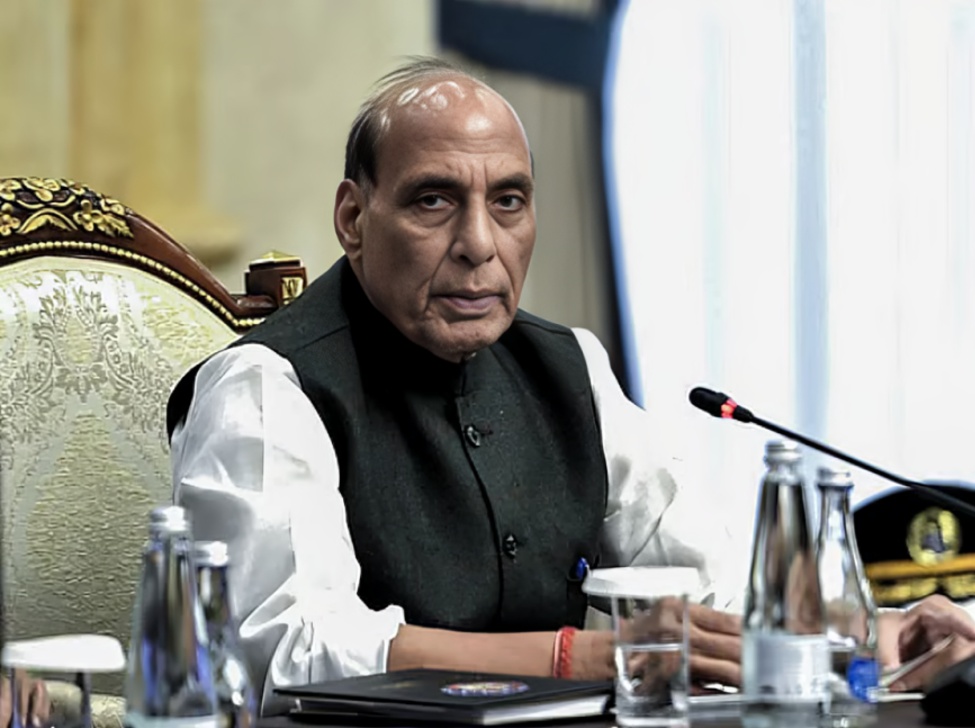
Rajnath Singh Accuses Congress and Allies of Seeking Bangladesh-Style Regime Change
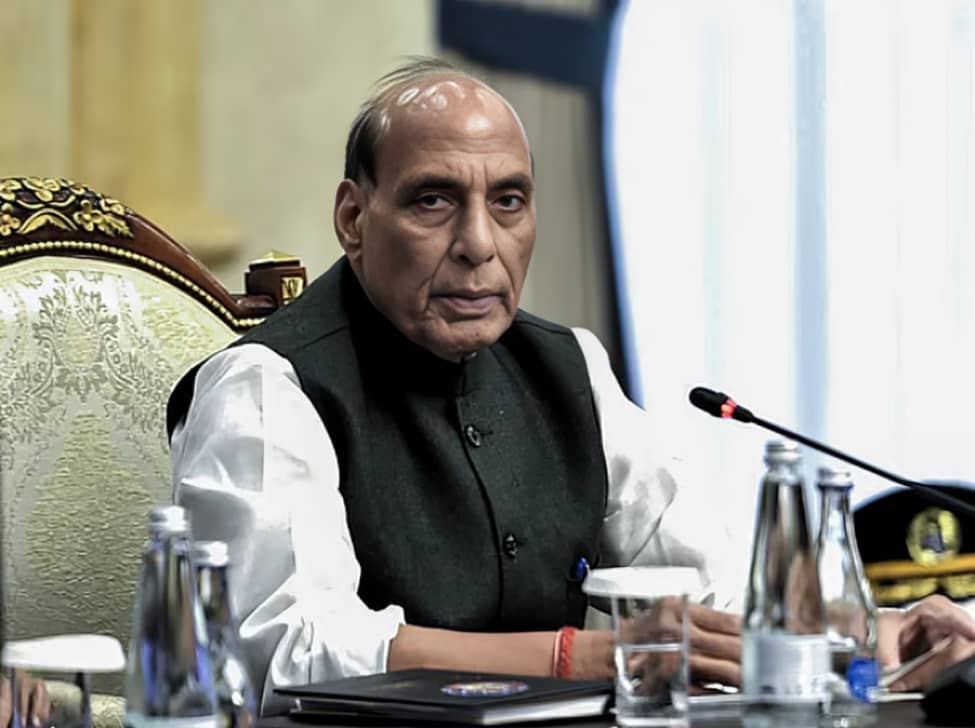
Lucknow, October 16, 2026: Union Defence Minister Rajnath Singh on Friday accused the Congress and its political allies of attempting to bring about a change of government in India along the lines of the political upheaval witnessed in Bangladesh. Speaking at a press conference in Lucknow, Singh alleged that opposition parties were using protests and youth participation to fuel political confrontation rather than pursue constructive initiatives.
Singh's remarks come amid an ongoing political dispute over protests against the Election Commission of India and its Special Intensive Revision (SIR) of electoral rolls. Opposition parties have raised concerns about the transparency of the exercise and the possibility that eligible voters could be left off electoral rolls. They have also demanded accountability from Chief Election Commissioner Gyanesh Kumar.
Rajnath Singh alleges a plan to destabilise the government
Addressing reporters, Singh claimed that the Congress and its allies were attempting to channel the energy of young people towards political unrest. He alleged that references to Bangladesh by some opposition figures indicated an effort to pursue a change of government through mass agitation.
The Defence Minister argued that democratic rights should not be used as a justification for creating disorder or undermining constitutional institutions. He said political parties had a responsibility to respect the law and preserve public order, even when they disagreed with decisions taken by government bodies.
Singh also criticised Congress leader Rahul Gandhi, urging him to respect the electoral mandate and reconsider the opposition's approach. He described the protests as politically motivated and alleged that the campaign went beyond concerns about electoral reforms.
These statements represent Singh's allegations against the opposition. The claim that Congress and its allies are pursuing a Bangladesh-style regime change has not, by itself, established that such a plan exists.
Election Commission protests at the centre of the dispute
The political confrontation is linked to the Special Intensive Revision of electoral rolls, an exercise associated with reviewing and updating voter lists. Opposition parties and civil society groups have raised concerns about how the revision is being conducted and whether eligible voters could face exclusion.
The protests have included demands for the resignation of Chief Election Commissioner Gyanesh Kumar. Opposition leaders have argued that the electoral process should be transparent and that concerns about voter eligibility and the independence of election authorities must be addressed.
Singh rejected the opposition's interpretation of the protests. He alleged that the campaign was being used to undermine public confidence in constitutional institutions and create political instability. He maintained that democratic disagreements should be addressed through lawful and institutional processes.
The dispute highlights the competing positions of the government and the opposition. While Singh has framed the protests as an attempt to destabilise the government, opposition parties have presented their campaign as a demand for transparency and accountability in the electoral process.
Singh invokes India's political history
During his remarks, Singh also referred to major episodes in India's political history, including the Emergency imposed in 1975 and the anti-Sikh violence of 1984. He used these events to criticise the Congress and argue that the party had a history of undermining democratic values.
He further referred to the 1990 firing on kar sevaks in Uttar Pradesh. Singh described the opposition's current confrontation with constitutional institutions as another example of what he considers an irresponsible political approach.
His comments formed part of a broader criticism of Rahul Gandhi and the Congress leadership. Singh alleged that political leaders should not use public anger to weaken institutions that operate under the Constitution.
Call for law, dialogue and public responsibility
Singh urged political leaders to respect the rule of law and avoid actions that could disrupt public order. He said the country's youth should be encouraged to contribute to constructive work, social development and nation-building rather than become involved in confrontational politics.
He also argued that democratic institutions should not be weakened for political advantage. According to Singh, disagreements over elections and governance should be addressed through dialogue, legal processes and established democratic mechanisms.
The opposition's concerns over electoral-roll revision remain part of the wider debate. The credibility of the process, the protection of eligible voters and the independence of election authorities are issues that require clear information and transparent procedures.
Political tensions continue
Singh's remarks are likely to intensify the political exchange between the ruling Bharatiya Janata Party and opposition parties. The government and the opposition continue to differ sharply over the purpose of the protests and the handling of electoral-roll revision.
The key issues remain the transparency of the voter-list process, public confidence in the Election Commission and the right of political groups to raise concerns through lawful protest. Any allegations of a plan to destabilise the government should be assessed separately from the opposition's stated demands for electoral accountability.
As the debate continues, the political parties involved face pressure to explain their positions clearly and engage with the public's concerns. The broader challenge will be to ensure that political disagreement does not undermine public trust in democratic processes and constitutional institutions.