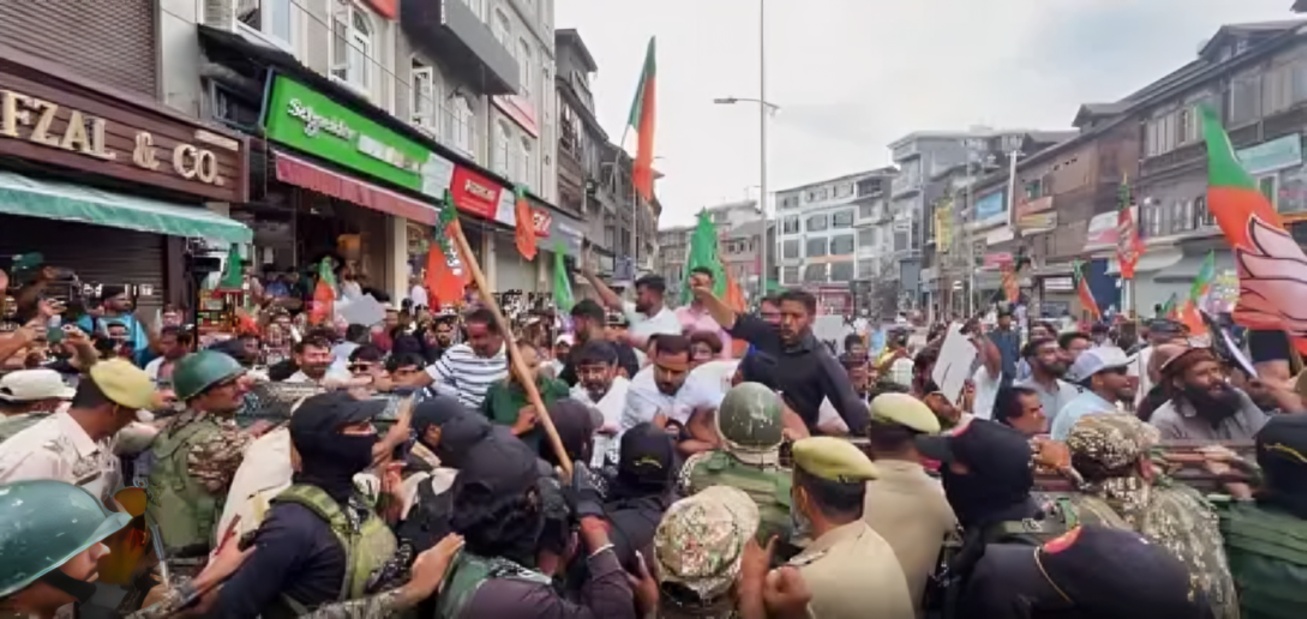
Srinagar witnessed a day of rival political demonstrations on September 2, as the ruling National Conference and the opposition Bharatiya Janata Party organised separate protests in the Jammu and Kashmir capital. The two parties raised different political issues and accused each other of failing to fulfil commitments made to the people of Jammu and Kashmir.
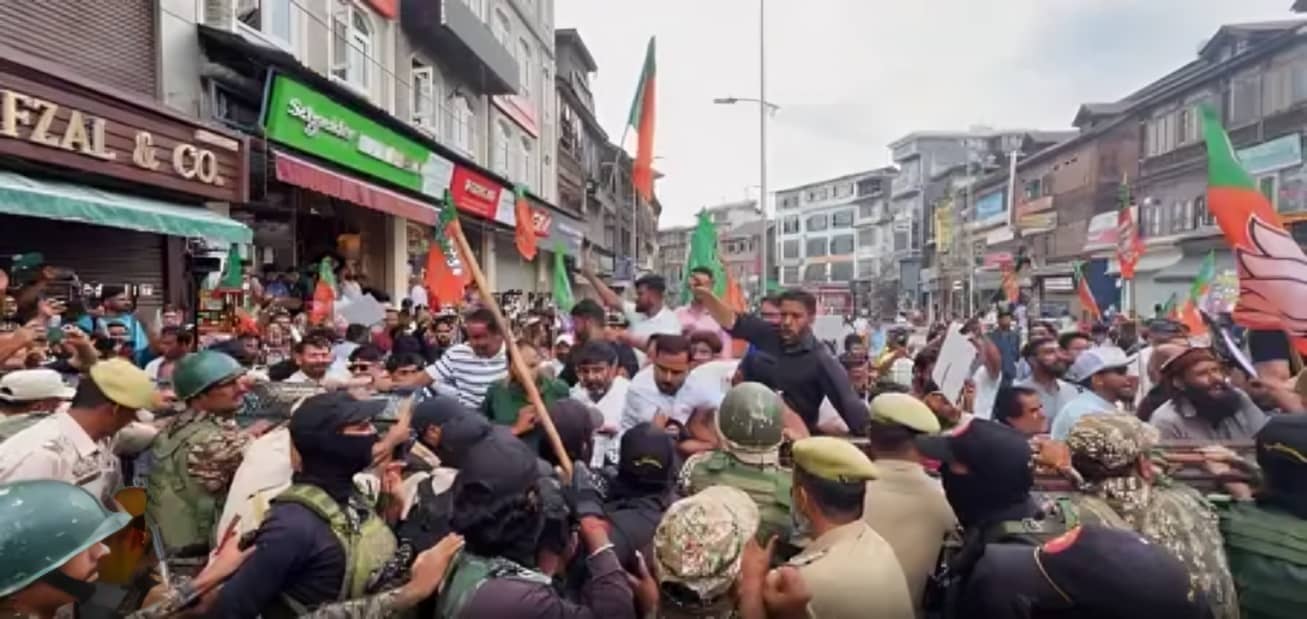
The BJP organised a protest rally in the Lal Chowk area, led by party state president Sat Sharma and Leader of Opposition in the Jammu and Kashmir Assembly Sunil Sharma. BJP leaders and workers raised concerns relating to unemployment, alleged corruption, governance and other issues concerning the Union Territory. The party had planned to proceed towards the Civil Secretariat as part of a gherao programme.
However, the police prevented the BJP protesters from reaching the Civil Secretariat. Security personnel placed barricades and concertina wire at several locations to restrict the movement of the protesters. The heavy security deployment was aimed at preventing the demonstrations from escalating and maintaining public order in central Srinagar.
The National Conference subsequently organised a counter demonstration. Senior party leaders, including ministers and legislators, participated in a march towards the BJP office in the Jawahar Nagar area. The National Conference accused the BJP and the Centre of failing to fulfil commitments related to Jammu and Kashmir, particularly the demand for restoration of statehood. Party members also raised broader political and constitutional issues concerning the region.
Police stopped the National Conference procession near the Rajbagh police station before it could reach the BJP office. Several party leaders and members were temporarily detained during the operation. Reports said the police and security forces had deployed personnel at key locations in Srinagar because both demonstrations were expected to take place on the same day.
The simultaneous protests resulted in an unusual political confrontation in Srinagar. The National Conference, which leads the Jammu and Kashmir government, used the occasion to highlight its demand for the restoration of statehood and other political assurances. The BJP, meanwhile, used its demonstration to criticise the Omar Abdullah government over governance and public issues.
The competing demonstrations also reflected the wider political tensions surrounding Jammu and Kashmir. Statehood restoration remains a significant issue for regional political parties, while the BJP has continued to challenge the National Conference government on matters including governance, employment and alleged administrative failures.
The National Conference has maintained that the Centre has not fulfilled commitments regarding the restoration of statehood. The BJP, on the other hand, has criticised the Union Territory government over issues affecting residents and has sought greater accountability from the administration.
The protests also attracted attention because both political parties attempted marches targeting institutions or offices associated with their political opponents. The BJP sought to reach the Civil Secretariat, while the National Conference attempted to march towards the BJP office. In both cases, the police intervened and stopped the protesters from reaching their intended destinations.
The law and order arrangements included barricading roads and deploying security personnel at sensitive locations. The police action prevented the rival demonstrations from moving further and helped contain the situation in different parts of Srinagar.
The events demonstrate the increasingly competitive political environment in Jammu and Kashmir, where the National Conference and BJP continue to present sharply different positions on governance and the region's political future. The protests also provided both parties with an opportunity to mobilise supporters and communicate their political demands.
For residents and authorities, maintaining public order remains an important consideration whenever rival political groups organise demonstrations in the same city. The September 2 protests were therefore closely monitored by security personnel, with police restricting the movement of both groups.
The competing demonstrations ended without either side reaching the location it had planned to target. The National Conference was stopped before reaching the BJP office, while the BJP was prevented from proceeding to the Civil Secretariat. Several National Conference members were temporarily detained during the police action.
The developments underline the continuing political contest between the ruling National Conference and the opposition BJP in Jammu and Kashmir. While both parties accuse the other of failing the people, their competing protests also highlight the importance of peaceful political expression, public order and continued political dialogue in the Union Territory.