
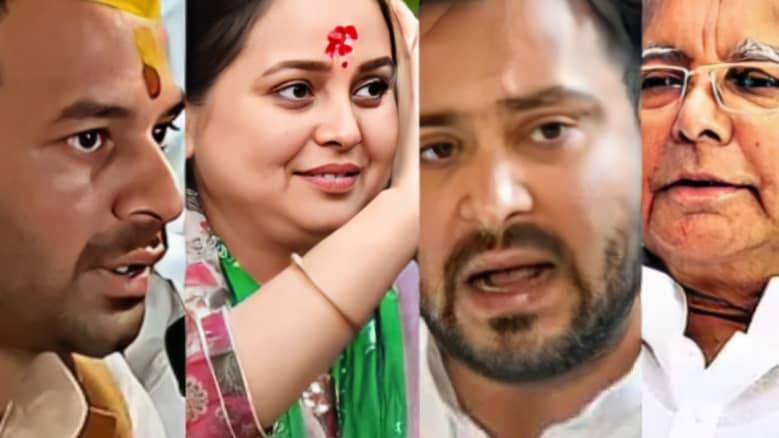
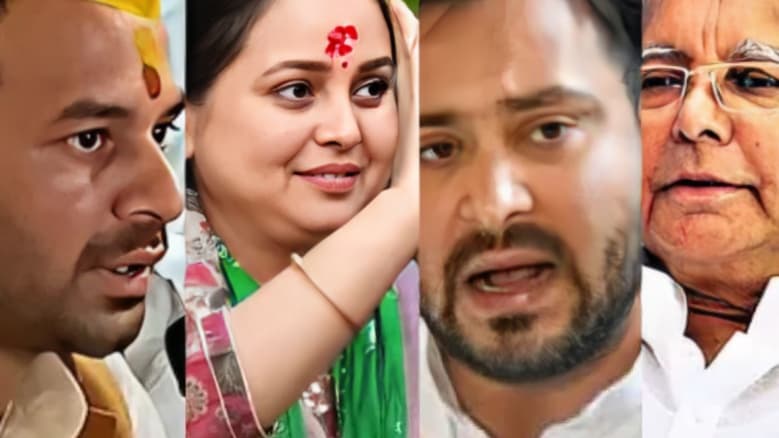
The Lalu Yadav family, one of Bihar’s most prominent political dynasties, is currently embroiled in a public dispute involving his nine siblings. The disagreement revolves around inheritance, family properties, and influence over political and business interests connected to the family. As the patriarch of the Yadav family, Lalu’s decisions and legacy have significant implications, both personally and politically, leading to clashes among his children and other close relatives.
Key players in the ongoing conflict include Lalu’s sons and daughters, who are contesting for control over family assets and political leverage. Reports suggest that differences have arisen over the management of properties, distribution of wealth, and roles in political parties associated with the Yadav legacy. Analysts observe that such disputes are common in high-profile political families, where personal ambitions intersect with public influence.
The family feud has garnered widespread media attention due to the political significance of the Yadavs in Bihar. Lalu Yadav, former Chief Minister of Bihar and leader of the Rashtriya Janata Dal (RJD), has cultivated a powerful political network over decades. His family members often occupy key roles in regional politics, making internal conflicts more than just personal matters—they have the potential to influence party dynamics, voter perception, and election outcomes.
Observers note that the dispute reflects broader challenges of managing dynastic politics, inheritance, and personal interests within influential families. Balancing family unity with political and financial ambitions can create tensions, particularly when multiple siblings and relatives have stakes in both governance and private holdings. In the Yadav family, differing visions for political strategy and personal gain appear to be at the core of the disagreements.
The family tree is complex, with Lalu Yadav’s children and siblings each holding distinct positions in politics, business, or public life. This intricate network means that conflicts over inheritance and influence can have ripple effects across the broader political and social landscape of Bihar. Some family members have sought legal recourse, while others are attempting to mediate through private negotiations, illustrating the mix of personal, legal, and political dimensions involved.
In conclusion, the ongoing disputes within the Lalu Yadav family highlight the intersection of politics, wealth, and personal relationships in high-profile dynasties. With nine siblings involved, the feud illustrates how inheritance and influence can strain family bonds, attract public scrutiny, and affect political stability. Analysts emphasize that the outcome of this dispute will not only shape the future of the Yadav family but also have broader implications for Bihar’s political landscape, party alignments, and voter perceptions in the coming years.


