
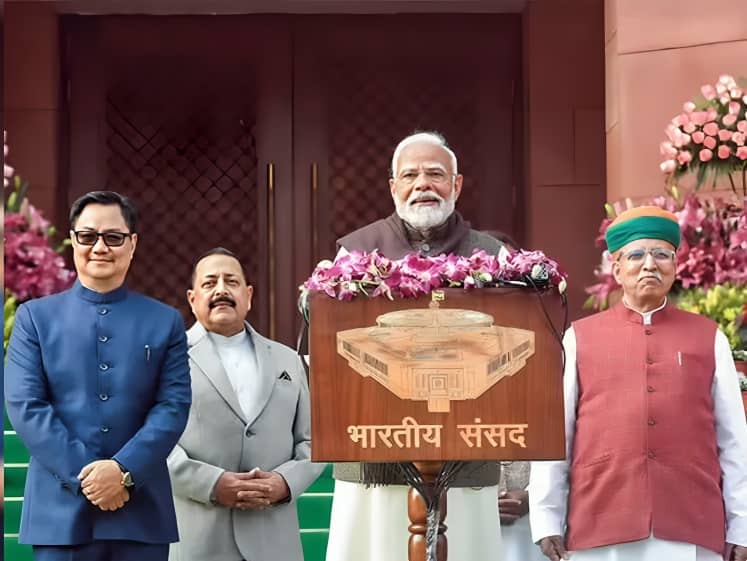
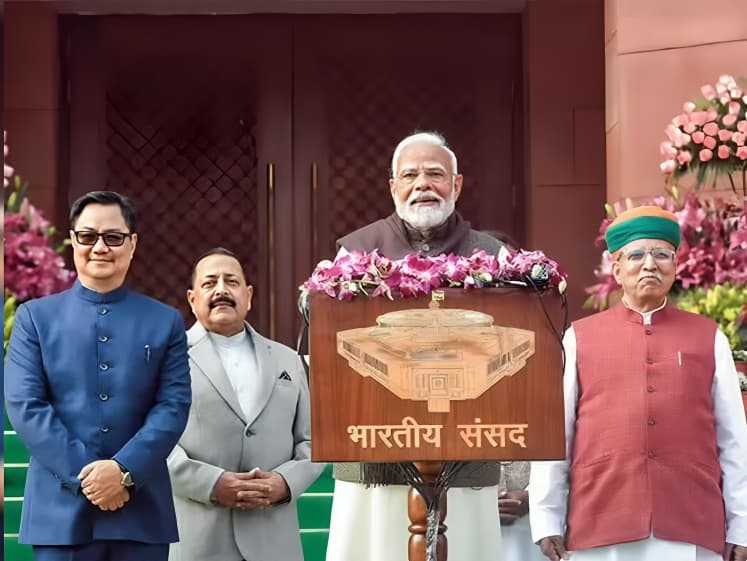
The Lok Sabha on Thursday passed the Motion of Thanks to the President’s Address through a voice vote, even as parliamentary proceedings continued to face disruptions. Prime Minister Narendra Modi did not speak during the debate in the Lower House, with the government indicating that he would address the issues raised by members in the Rajya Sabha instead.
The Motion of Thanks is a formal expression of gratitude by Parliament following the President’s Address at the start of a new session. Traditionally, the debate allows members to discuss a wide range of policy matters, after which the Prime Minister replies to the points raised. However, in this instance, the debate in the Lok Sabha was marked by repeated protests from opposition members, leading to interruptions and adjournments.
According to parliamentary sources, the government decided that the Prime Minister would respond to the discussion in the Rajya Sabha, where a similar debate on the President’s Address is scheduled. This decision drew criticism from opposition parties, which accused the government of avoiding accountability in the Lok Sabha.
Opposition members raised slogans and demanded detailed discussions on various national issues, including governance, economic challenges, and institutional functioning. They objected to the manner in which the Motion of Thanks was put to vote without a comprehensive reply from the Prime Minister in the Lower House.
Despite the protests, the presiding officer proceeded with the voice vote, and the Motion of Thanks was declared passed. Treasury bench members defended the decision, stating that parliamentary rules permit the Prime Minister to respond in either House and that the ongoing disruptions made it difficult to conduct a full debate.
Government representatives argued that the focus should remain on ensuring the smooth functioning of Parliament and completing legislative business. They maintained that the Prime Minister’s response in the Rajya Sabha would address concerns raised by members across party lines.
The opposition, however, expressed dissatisfaction, claiming that the Lok Sabha, as the directly elected House, deserved a response from the Prime Minister. They also accused the government of using procedural decisions to limit debate and scrutiny.
The passage of the Motion of Thanks without the Prime Minister’s speech in the Lok Sabha has added to the broader deadlock between the government and opposition parties. In recent sessions, Parliament has witnessed frequent disruptions over procedural disputes and political disagreements.
As the session continues, attention will now turn to the debate in the Rajya Sabha, where the Prime Minister is expected to respond. The outcome of that discussion may play a key role in determining whether the ongoing tensions in Parliament ease or escalate further in the coming days.


