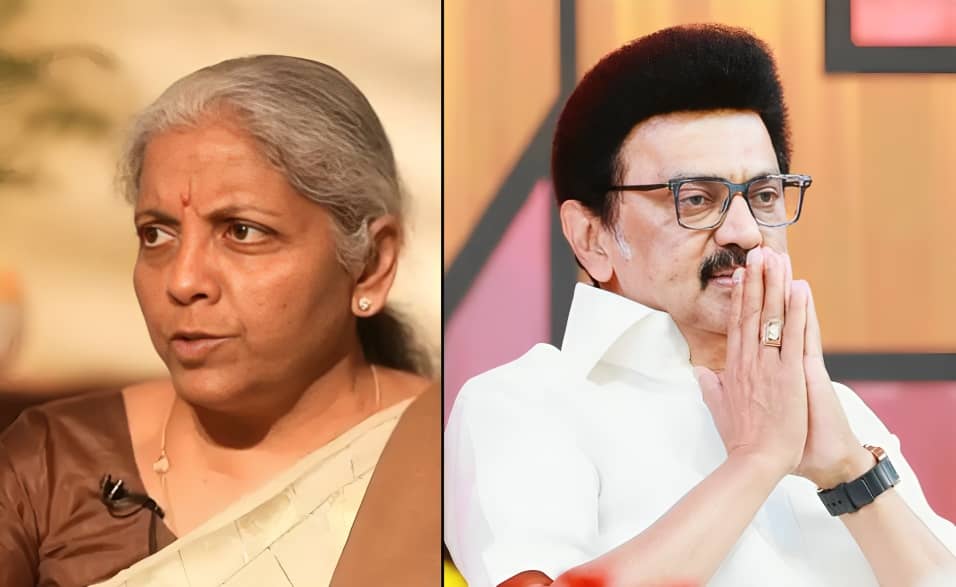
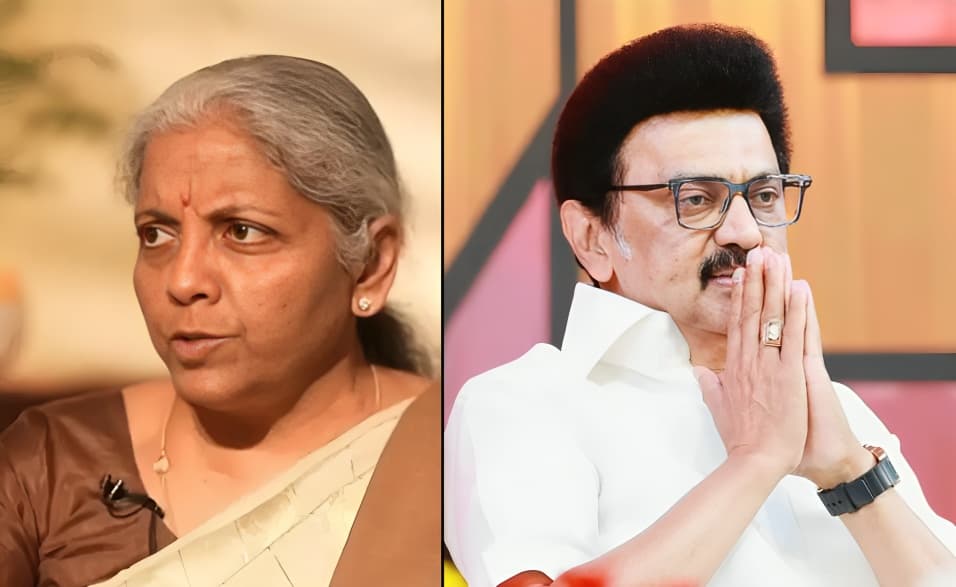
The political exchange between Tamil Nadu Chief Minister MK Stalin and Union Finance Minister Nirmala Sitharaman has intensified over the issue of paddy bonus and related policy decisions. Stalin has publicly questioned the Finance Minister, asking whether the Centre is willing to release a letter concerning the reported discontinuation of the paddy bonus into the public domain.
The issue revolves around claims and counterclaims regarding support provided to farmers, particularly those involved in paddy cultivation. The paddy bonus has been an important component of agricultural support in Tamil Nadu, aimed at providing additional financial assistance to farmers beyond the minimum support price. Any discussion about its discontinuation has therefore generated significant attention and concern among stakeholders.
Stalin’s remarks come in response to statements attributed to the Union Finance Minister regarding the policy framework surrounding the paddy bonus. By asking for the letter to be made public, the Chief Minister has emphasised the need for transparency in communication between the Centre and the state. He suggested that placing the document in the public domain would help clarify the facts and allow people to better understand the issue.
The debate reflects broader tensions between the state and the Centre on matters related to agriculture and financial support. State governments often rely on central policies and funding mechanisms to implement schemes for farmers, and differences in interpretation or execution can lead to political disagreements. In this case, the discussion has brought attention to how agricultural incentives are structured and communicated.
The Union Finance Ministry has not yet provided a detailed response to Stalin’s latest query, but officials have indicated that policy decisions are taken after careful consideration of multiple factors including budgetary constraints and long term sustainability. The Centre has also emphasised its commitment to supporting farmers through various schemes and initiatives.
Political observers note that such exchanges are not uncommon in India’s federal system where states and the Centre share responsibilities across several sectors. However, issues related to agriculture often carry added significance due to their direct impact on livelihoods and rural economies. As a result, debates on policies like the paddy bonus tend to attract considerable public and political attention.
Farmer organisations and experts have also been closely watching the developments. Many have called for clear communication and coordination between different levels of government to ensure that policies are effectively implemented and that farmers receive the intended benefits without confusion.
The ongoing debate between Stalin and Sitharaman is likely to continue as both sides present their positions. The demand for making the letter public highlights the importance of transparency in governance and the role of open communication in resolving policy disputes.
As discussions progress, the focus remains on ensuring that agricultural policies serve the interests of farmers while maintaining clarity and accountability in decision making. The outcome of this exchange could influence how similar issues are addressed in the future and may have implications for Centre state relations in the agricultural sector.