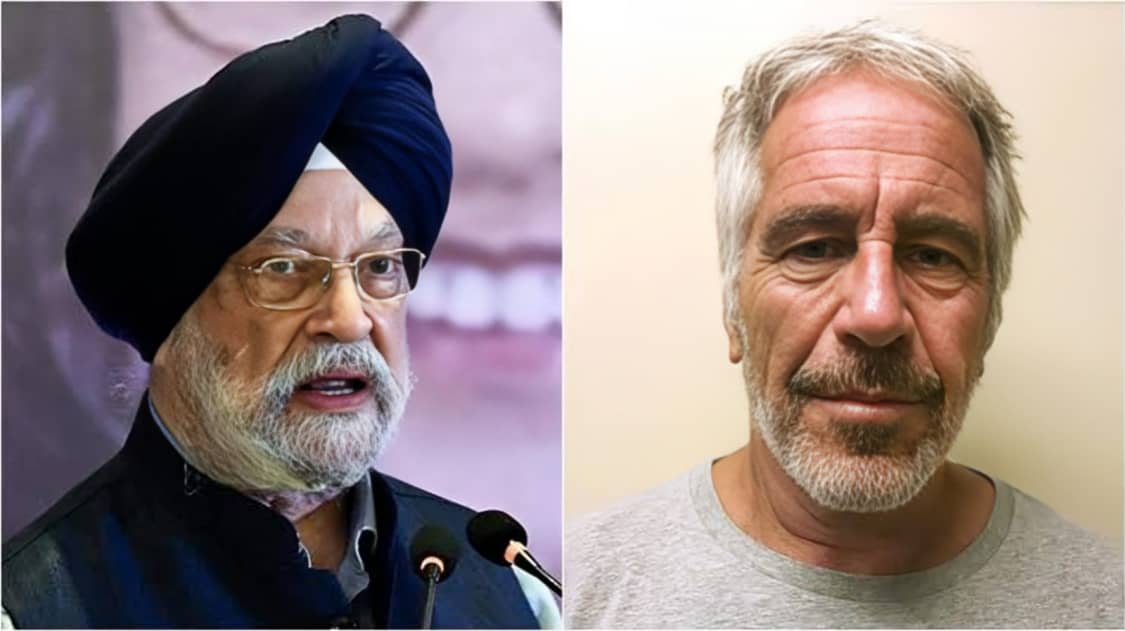
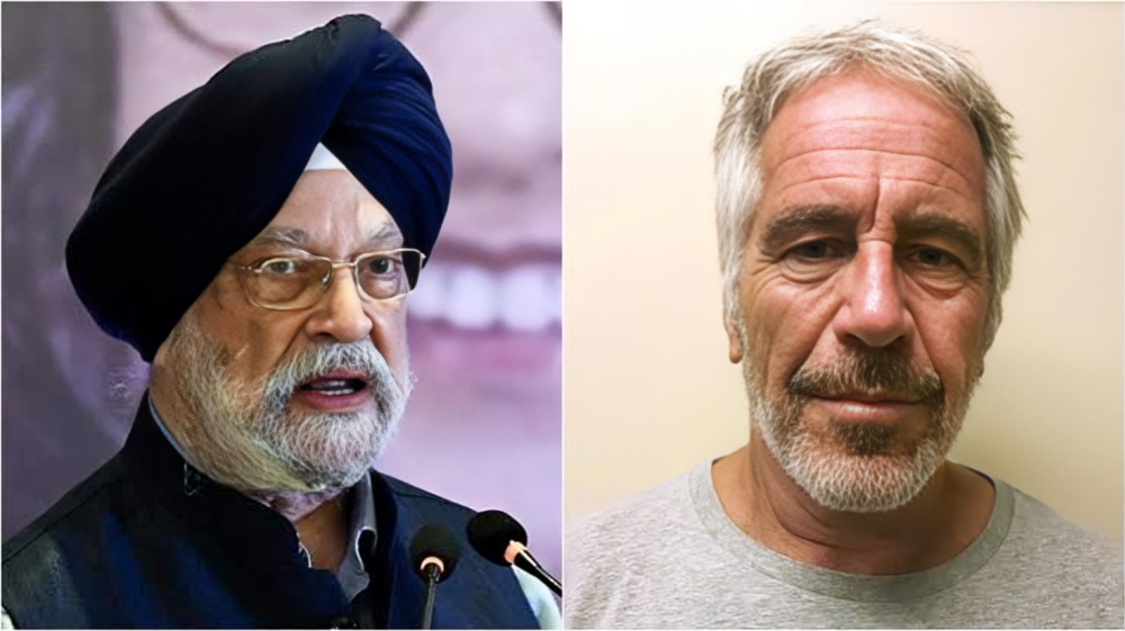
A political controversy has emerged over Union Minister Hardeep Singh Puri’s past interactions with Jeffrey Epstein after a purported photograph of the two circulated on social media. Opposition leaders have questioned the circumstances surrounding the reported meeting and called for greater clarity regarding Puri’s association with the late American financier.
Shiv Sena UBT leader Sanjay Raut raised the issue publicly, questioning the purpose of the reported interaction and whether it had any political significance. His remarks have added to the debate surrounding the release of documents associated with Epstein and the public scrutiny of individuals whose names or interactions appear in related records.
In comments reported on October 21, 2026, Raut questioned why Puri had interacted with Epstein and suggested that further developments could follow. He also raised questions about whether the meeting had any connection to Prime Minister Narendra Modi or the Union government. These remarks represent the opposition leader’s allegations and questions rather than established findings about the purpose of the interaction.
Congress leader Srinivas BV also commented on the controversy. He referred to the circulation of the photograph and connected its timing to the recent visit of the United States Secretary of State to Mumbai and discussions surrounding India US trade relations. His comments added a diplomatic dimension to the political debate. However, the reported timing alone does not establish a connection between the photograph, diplomatic discussions and trade negotiations.
Hardeep Singh Puri’s Earlier Explanation
Puri has previously addressed questions about his interactions with Epstein. In February 2026, he acknowledged meeting Epstein approximately three or four times over several years while he was associated with the International Peace Institute in New York. Puri said the interactions took place in a professional context and were connected to international policy discussions and his work with the organisation.
Puri served as India’s ambassador to the United Nations in New York from 2009 to 2013 before retiring from the Indian Foreign Service. He later became associated with the International Peace Institute and entered the Union Cabinet in 2017.
Responding to the controversy earlier this year, Puri denied any involvement in Epstein’s criminal activities. He maintained that his interactions with Epstein were limited and professional. He also rejected allegations suggesting that his association with Epstein established any wrongdoing on his part.
His explanation is an important part of the public record and should be considered alongside the questions raised by opposition leaders. The existence of correspondence, a photograph or a reported meeting does not, by itself, establish participation in criminal conduct.
Why the Epstein Files Have Drawn Attention
Epstein became the subject of extensive international scrutiny because of criminal cases and allegations involving sexual exploitation and abuse. Following the release of documents associated with him, public attention has focused on his contacts with prominent figures in politics, business and international affairs.
The appearance of a person's name in documents related to Epstein does not automatically establish criminal involvement. The significance of any particular reference depends on its context, the nature of the communication and any supporting evidence. For this reason, claims concerning individuals mentioned in the records require careful examination and independent verification.
In Puri’s case, opposition leaders have questioned the nature and circumstances of his past interactions with Epstein. Puri, meanwhile, has offered an explanation and denied wrongdoing. The latest political statements have brought the issue back into public discussion, but the allegations and political questions should not be presented as proof of criminal conduct.
Political and Diplomatic Questions
The controversy has also prompted questions about transparency and public accountability. Opposition leaders have called attention to the issue, while references to diplomatic visits and trade negotiations have widened the political discussion.
However, any claim that the controversy is connected to official negotiations or government decisions would require supporting evidence. The available statements establish that opposition leaders have raised questions, but they do not independently prove that the reported interaction influenced diplomatic relations or trade policy.
As the debate continues, the key issues remain the context of Puri’s past interactions with Epstein, the accuracy and interpretation of publicly circulated material, and the explanations already provided by the minister. Any further conclusions should be based on verified documents, credible reporting and relevant evidence rather than speculation.
The issue highlights the importance of distinguishing political allegations from verified facts when reporting on public figures. While opposition leaders have demanded answers, Puri has denied wrongdoing and described his interactions with Epstein as professional. Readers should consider both the questions raised and the minister’s response when assessing the developing controversy.