
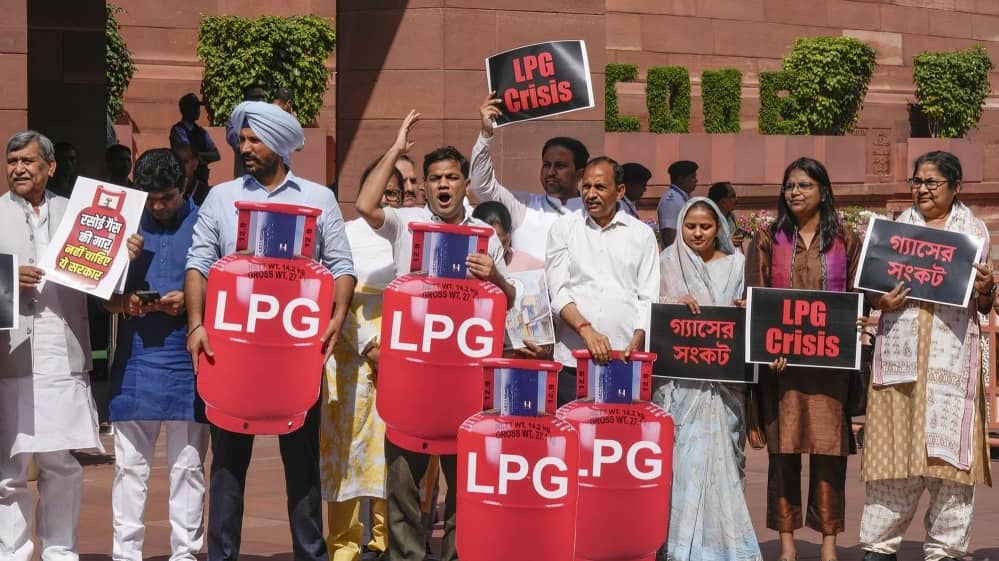
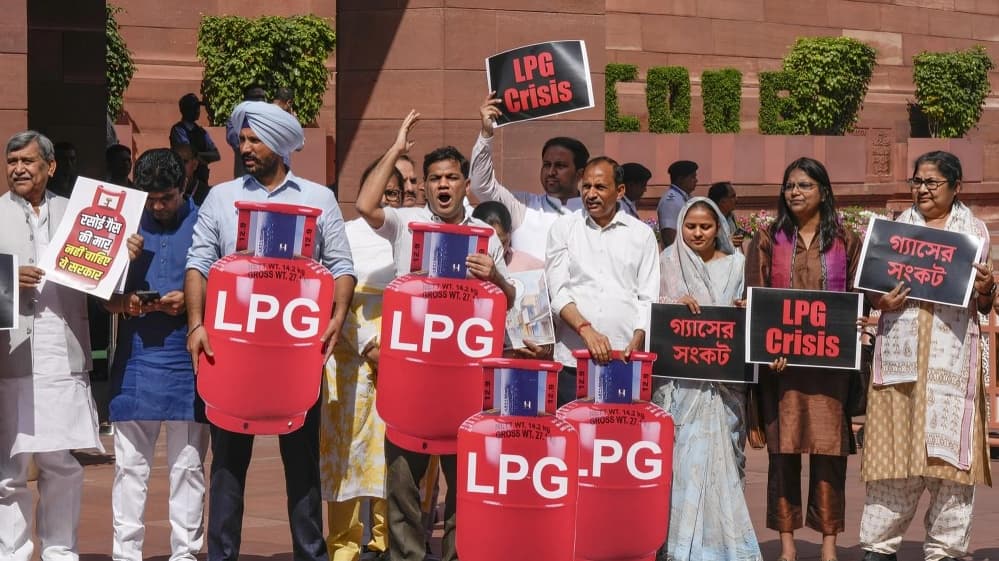
The Lok Sabha witnessed repeated disruptions on Friday as opposition members staged protests over the shortage of LPG cylinders affecting citizens across the country. Demonstrations took place both inside the House and outside the Parliament complex, reflecting growing public concern regarding access to essential cooking fuel.
Opposition leaders raised the issue during the session, urging the government to take immediate steps to ensure the availability of LPG cylinders for households. They argued that the official position on supply levels does not align with the reality faced by citizens, particularly in semi-urban and rural areas where deliveries are often delayed or inconsistent. Lawmakers emphasized that reliable access to cooking fuel is a fundamental requirement for millions of families and must be addressed as a matter of priority.
The protests included vocal interventions, placards, and physical demonstrations within the Lok Sabha chamber, causing multiple adjournments. Opposition parties demanded a detailed discussion on the supply chain, pricing, and distribution mechanisms of LPG cylinders. They also requested that the government clarify measures being taken to prevent shortages, especially in areas with limited access to commercial LPG distribution points.
Government representatives responded by asserting that efforts are underway to maintain steady supply and that the majority of households have adequate access to cylinders. However, opposition members countered that the measures do not fully address the local disparities and challenges encountered by consumers in remote regions. They called for greater transparency in reporting supply levels and for timely intervention to prevent further inconvenience to citizens.
The protests also highlighted the broader issue of essential commodity management and public welfare. Lawmakers stressed that access to cooking fuel is critical not only for daily household needs but also for public health and economic stability. Disruptions in supply can have cascading effects, particularly for vulnerable populations dependent on subsidized LPG connections.
Political analysts note that such demonstrations in Parliament are a reflection of growing public scrutiny of government policies and the need for accountable governance. Opposition protests serve as a tool to draw attention to issues affecting citizens and to press the government for concrete solutions.
Despite repeated disruptions, Parliament resumed its proceedings after each adjournment, with discussions expected to continue on measures to ensure uninterrupted LPG supply. Both opposition and ruling party members agreed on the importance of addressing the issue promptly, although differences remain regarding the evaluation of current policies and distribution effectiveness.
Overall, the LPG shortage debate in Lok Sabha underscores the importance of timely government intervention, transparent communication, and sustained dialogue between lawmakers to ensure essential services reach all citizens effectively.


