

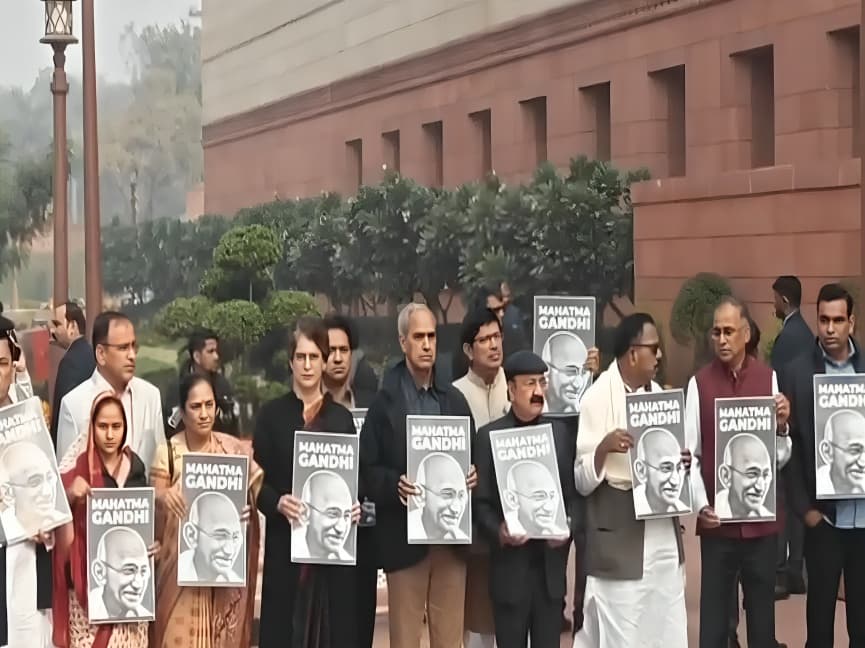
The parliamentary standing committee on rural development and panchayati raj has revised its agenda for its upcoming meeting on December 29, removing direct references to the VB-G RAM G Bill. The committee, headed by a Congress MP, initially planned to receive a briefing from the rural development department on the new bill and its comparison with the Mahatma Gandhi National Rural Employment Guarantee Scheme (MGNREGS).
The inclusion of the bill in the original agenda had sparked objections from BJP members of the panel, who raised concerns about the comparison with MGNREGS. The BJP members argued that discussing the new law in a comparative framework could create political controversy and potentially compromise the objectivity of the briefing. In response to these concerns, the committee revised the agenda to exclude the explicit mention of the bill while keeping the session focused on rural development initiatives and employment schemes.
Despite the omission, the committee chairperson emphasized that the VB-G RAM G Bill would still be discussed during the meeting. According to the chairperson, the aim is to ensure a constructive discussion on rural development policies without getting caught in partisan disputes. The committee plans to examine the bill’s provisions, its implementation framework, and its potential impact on employment and livelihood schemes in rural areas.
The VB-G RAM G Bill is designed to enhance rural employment and livelihood opportunities, building on the framework of existing schemes like MGNREGS. The bill proposes structured guarantees and mechanisms to improve transparency, fund utilization, and job creation in rural areas. Lawmakers and experts have debated its provisions, comparing them to MGNREGS, which guarantees 100 days of wage employment per year to rural households.
The standing committee’s deliberations are expected to provide clarity on the bill’s objectives, challenges in implementation, and its compatibility with existing rural development programs. Officials from the rural development department will present data, policy insights, and impact assessments to help committee members evaluate the new scheme. The discussions will also address concerns raised by various stakeholders, including political representatives, civil society organizations, and experts on rural employment.
Observers note that revising the agenda reflects the committee’s effort to balance legislative scrutiny with political sensitivities. By focusing on broader rural development and employment issues, the panel aims to ensure that its recommendations are constructive and based on evidence. The discussions may shape the parliamentary review of the VB-G RAM G Bill and guide its implementation strategy in rural areas.
As the December 29 session approaches, both opposition and ruling party members are expected to participate actively, examining the merits and implications of the bill. The committee’s findings could influence future policy decisions on rural livelihoods, employment guarantees, and the overall design of development programs in India.


