
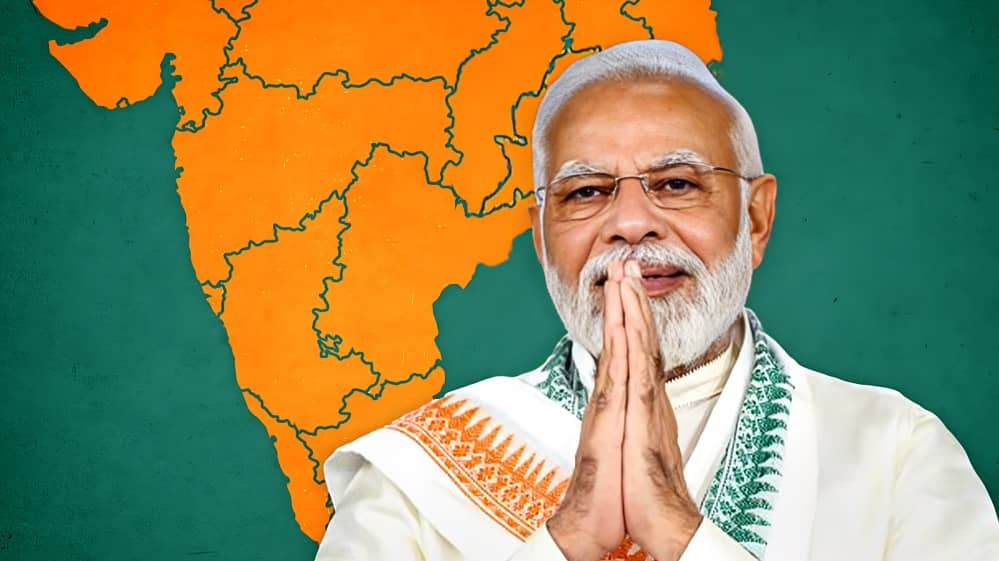
Prime Minister Narendra Modi’s whirlwind visit to Kerala and Tamil Nadu this week has drawn attention to the Bharatiya Janata Party’s evolving political strategy in southern India. More than routine campaigning, the visit is widely viewed as an attempt to consolidate recent gains and lay the groundwork for a broader political breakthrough in two states where the BJP has historically struggled to establish a strong presence.
During his public addresses, the Prime Minister delivered pointed criticism of the incumbent state governments, framing them as obstacles to development, effective governance, and cultural values. Allegations of corruption featured prominently in his speeches, forming a central pillar of the BJP’s attack strategy. By highlighting governance issues, the party sought to contrast its national leadership record with what it described as administrative failures at the state level.
Cultural and ideological themes also played a key role in the Prime Minister’s messaging. References to regional traditions and historical figures were used to connect with local sentiments and underline the BJP’s effort to position itself as respectful of regional identities. Analysts note that this approach reflects a shift from earlier strategies that struggled to resonate with voters in the south.
Alliance-building emerged as another important element of the visit. The BJP has been exploring partnerships with smaller regional parties to strengthen its electoral prospects. Political observers say such alliances could help the party overcome structural disadvantages in states dominated by strong regional forces and long-established political narratives.
In Tamil Nadu, where Dravidian parties have traditionally dominated politics, the BJP has focused on expanding its organisational base and increasing visibility through high-profile visits and issue-based campaigns. In Kerala, the party has been attempting to convert its vote share growth into tangible electoral gains by targeting dissatisfaction over governance and economic issues.
The Prime Minister’s speeches conveyed a clear message that the BJP no longer views itself as a fringe player in the southern states. Instead, the party is positioning itself as a viable alternative capable of challenging entrenched political establishments. This marks a shift from symbolic participation to a more assertive and sustained engagement with southern electorates.
Political analysts suggest that while immediate electoral gains may be limited, the long-term strategy appears focused on reshaping voter perceptions and building momentum over successive election cycles. The BJP’s leadership believes that consistent engagement, coupled with targeted messaging and alliances, could gradually alter the political landscape in the south.
As national and state elections approach in the coming years, the outcomes of this strategy will be closely watched. The Prime Minister’s visit has underscored the BJP’s intent to expand its influence beyond its traditional strongholds and play a more competitive role in Kerala and Tamil Nadu’s political future.


