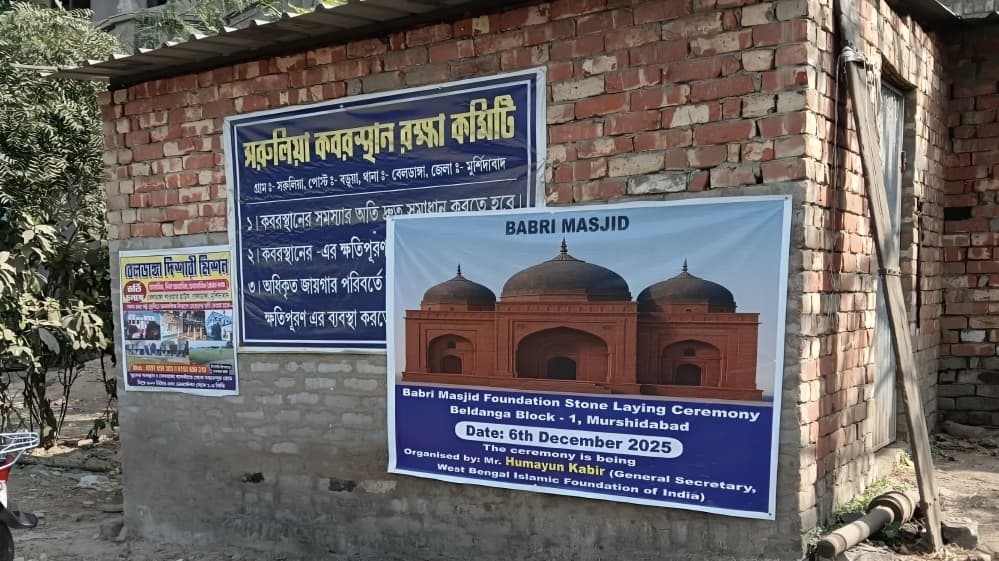
A proposed mosque construction project in Rejinagar, located in West Bengal’s Murshidabad district, has emerged as a significant political issue ahead of the 2026 state assembly elections. The development is drawing attention across three key constituencies Bharatpur, Rejinagar and Beldanga and is expected to influence voter behaviour and party strategies in the region.
Murshidabad has long been considered politically sensitive due to its demographic composition and historical context. The proposed mosque has added a new dimension to the evolving political landscape, with parties carefully assessing its potential impact on both Muslim and Hindu voters. The issue is not only about religious infrastructure but also about identity, representation and political mobilisation.
The ruling Trinamool Congress, which has traditionally enjoyed strong support in the region, is closely monitoring the situation. Political observers suggest that the mosque project could influence sections of its voter base, depending on how the issue is perceived at the grassroots level. Opposition parties are also actively engaging with the narrative, seeking to position themselves strategically in response to the development.
In the Bharatpur constituency, local discussions have increasingly centred around the proposed project and its implications. Community leaders and residents have expressed varied opinions, reflecting the diversity of views within the electorate. Similarly, in Rejinagar, where the mosque is proposed to be built, the issue has become a focal point of political conversations and public discourse.
Beldanga, another important constituency in the district, is also witnessing heightened political activity linked to the issue. Parties are assessing how the development might influence voter turnout and alignment. Campaign strategies are being shaped with careful consideration of local sentiments and broader electoral calculations.
The situation has drawn comparisons with past events where religious issues played a role in electoral politics. However, analysts note that each context is unique and outcomes depend on multiple factors including local leadership, development concerns and community engagement.
Political parties are expected to approach the issue with caution, as it involves sensitive aspects of religion and identity. Efforts are being made to balance political messaging with the need to maintain social harmony in the region. Authorities are also keeping a close watch to ensure that law and order is maintained.
As the 2026 West Bengal assembly elections approach, the proposed mosque in Rejinagar is likely to remain a key talking point. It highlights how local developments can influence broader political narratives and voter perceptions.
Ultimately, the impact of this issue will depend on how effectively political parties address the concerns of the electorate and communicate their positions. The coming months are expected to witness increased engagement from all stakeholders as they navigate the complex interplay of religion, politics and public sentiment in Murshidabad district.