The political landscape in Punjab is witnessing renewed discussions between the Bharatiya Janata Party and the Shiromani Akali Dal ahead of the 2027 Assembly elections. While the BJP has publicly maintained that it is preparing to contest all 117 Assembly constituencies on its own, reports indicate that discussions with the SAD over a possible pre poll alliance are continuing behind the scenes.
The two parties were long time political allies in Punjab before their relationship ended in 2021. Since then, both parties have contested elections separately. The possibility of bringing the former allies together has now returned to political discussions as preparations for the next Assembly election gather pace.
According to reports, at least one round of discussions on seat sharing has already taken place between senior leaders of the BJP and the SAD. Further meetings are expected as both sides attempt to resolve differences over the terms of a possible alliance. The discussions are reportedly focused on three major areas, namely the number of seats each party would contest, the constituencies to be allocated to each side and the leadership arrangement after the election.
Seat sharing is expected to be one of the most difficult issues in the negotiations. The SAD has traditionally had a stronger organisational presence in rural Punjab, while the BJP has historically been more prominent in several urban constituencies. Under their earlier alliance arrangement, the BJP contested a smaller number of seats, with the SAD contesting the majority.
However, the BJP's position has changed considerably in recent years. Party leaders have argued that its organisational presence and electoral performance have improved and that any new alliance should reflect the party's current political strength. Reports have indicated that different formulas are being discussed, although no final seat sharing agreement has been officially announced.
Another important issue is the allocation of individual constituencies. Even if the two parties agree on the overall number of seats, deciding which constituencies each party will contest could require further negotiations. Candidate strength, previous electoral performance and organisational presence are likely to be considered while determining the constituency wise arrangement.
Leadership is another issue reportedly being discussed. In the previous BJP and SAD alliance, the chief ministerial position was generally associated with the Akali Dal. However, the BJP's stronger political ambitions in Punjab could influence discussions over the leadership structure of a possible new alliance.
Reports indicate that sections of the SAD would prefer Sukhbir Singh Badal to be projected as the chief ministerial face if the alliance is formed. At the same time, there are reports of differences within the BJP over whether a chief ministerial candidate should be formally announced before the election.
The electoral arithmetic from recent elections is also playing a role in the renewed discussions. In the 2024 Lok Sabha elections, the BJP recorded 18.56 percent of the vote in Punjab and led in 23 Assembly segments, while the SAD received 13.42 percent of the vote. Combined, the two parties had a significant share of the vote, although the transferability of votes between alliance partners remains an important question.
The 2022 Punjab Assembly election results also provide context for the discussions. Both the BJP and SAD performed poorly compared with their earlier electoral strength when they had contested as allies. This has encouraged both parties to examine whether joining forces could improve their prospects in the next election.
However, an alliance has not been formally announced. The BJP's public position has at times been that it will contest all 117 Assembly seats independently. Senior BJP leaders have reiterated the party's preparations for a solo contest, while other reports suggest that some leaders continue to keep the possibility of an alliance open.
This difference between the public position and reported internal discussions has added uncertainty to the political situation. The final decision will depend on whether both parties can reach an agreement on seat sharing, leadership and other election related arrangements.
The potential alliance is also significant because Punjab has a competitive multi party political environment. The Aam Aadmi Party, Congress and other political groups are preparing for the next Assembly election. A BJP and SAD alliance could alter the electoral calculations in several constituencies by bringing together sections of their respective support bases.
At the same time, combining two parties does not automatically guarantee that their votes will transfer completely from one party to another. Voter preferences can vary between elections and constituencies, and local factors, candidates and campaign issues can influence electoral outcomes.
The SAD and BJP will therefore have to consider not only the total vote share of their parties but also their ability to work together at the constituency level. Candidate selection and coordination between local organisations could become particularly important if an alliance is finalised.
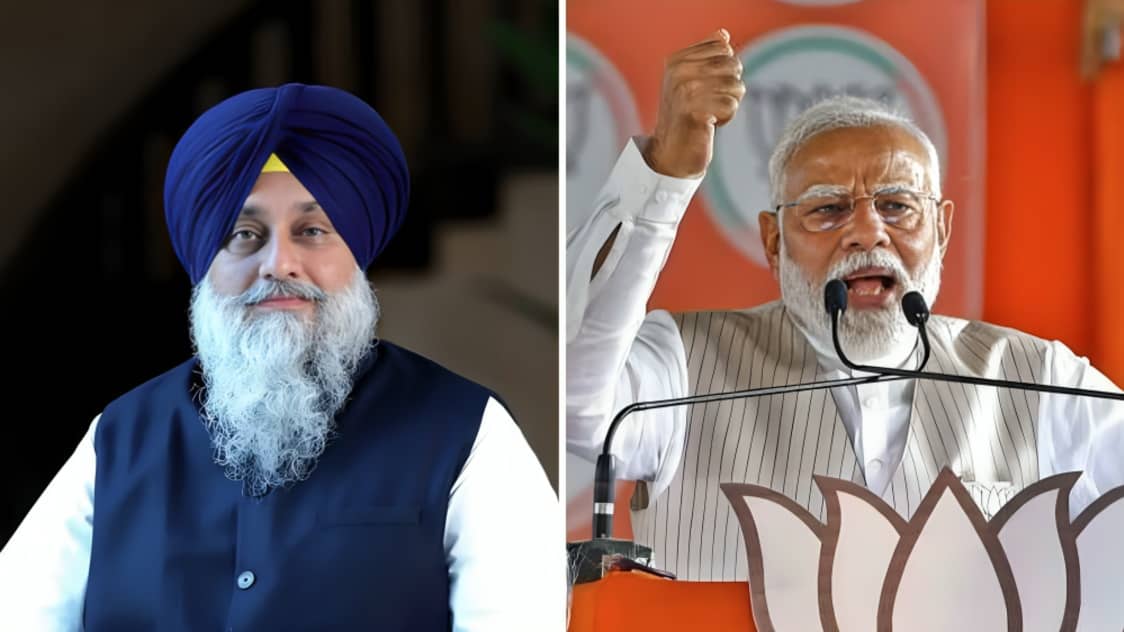
The political developments also follow recent interactions between senior leaders of the two parties. SAD president Sukhbir Singh Badal's meeting with Prime Minister Narendra Modi earlier this month had increased speculation about a possible revival of the alliance. The details of that meeting have not been publicly disclosed in full, but it added to discussions about the political relationship between the two parties.
For the BJP, Punjab represents an opportunity to expand its political base beyond its traditional areas of strength. For the SAD, an alliance could provide a route to combine its established presence in sections of rural Punjab with the BJP's growing organisational network.
However, the two parties still have to resolve significant political and strategic questions before any formal announcement can be made. The seat sharing formula, constituency allocation and leadership arrangement are expected to remain central to future negotiations.
As of now, the BJP continues to publicly prepare for a contest across all 117 Assembly constituencies, while reports indicate that discussions with the SAD have not completely ended. Therefore, the possibility of a pre poll alliance remains under consideration, but it should not yet be described as a formally finalised agreement.
The upcoming months are likely to provide greater clarity on the future of the BJP and SAD relationship. If the parties reach an agreement, the alliance could significantly change the electoral equations in Punjab ahead of the 2027 Assembly elections. If negotiations fail, both parties are expected to continue preparing for an independent contest.
For now, the focus remains on the ongoing discussions and whether the two former allies can overcome differences over seats and leadership to revive their political partnership in Punjab.