The Aam Aadmi Party government in Punjab is facing growing pressure from government employees and pensioners as their agitation over pending Dearness Allowance arrears, the Old Pension Scheme and other service related demands intensifies. With the 2027 Punjab Assembly elections approaching, the expanding protest movement has emerged as an important political and administrative challenge for the state government.
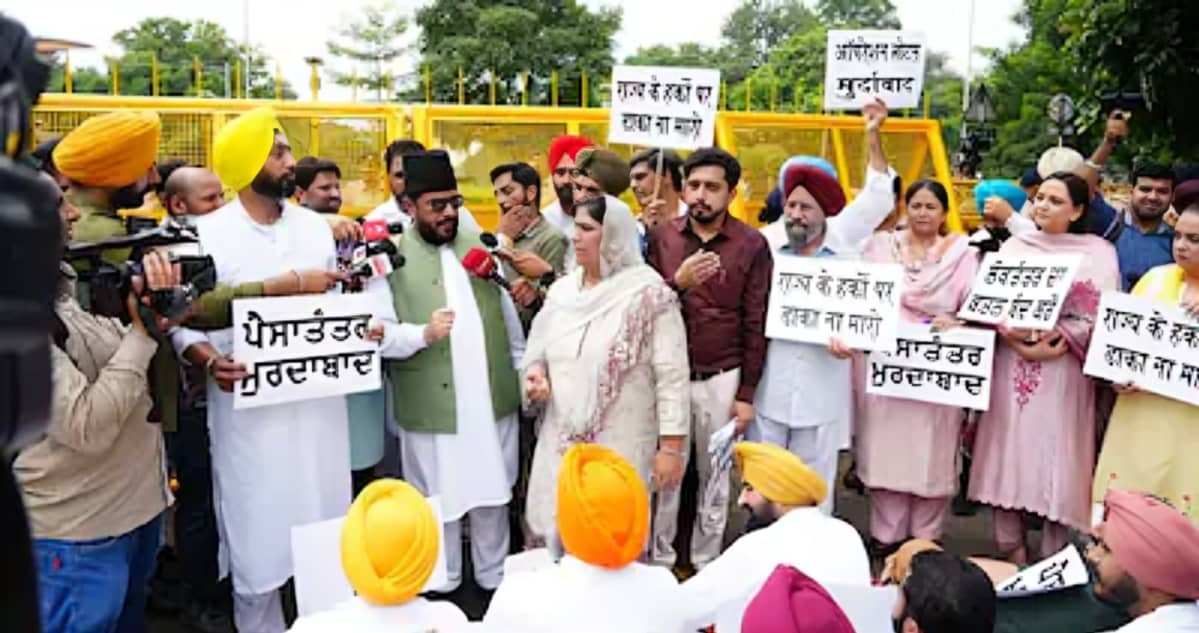
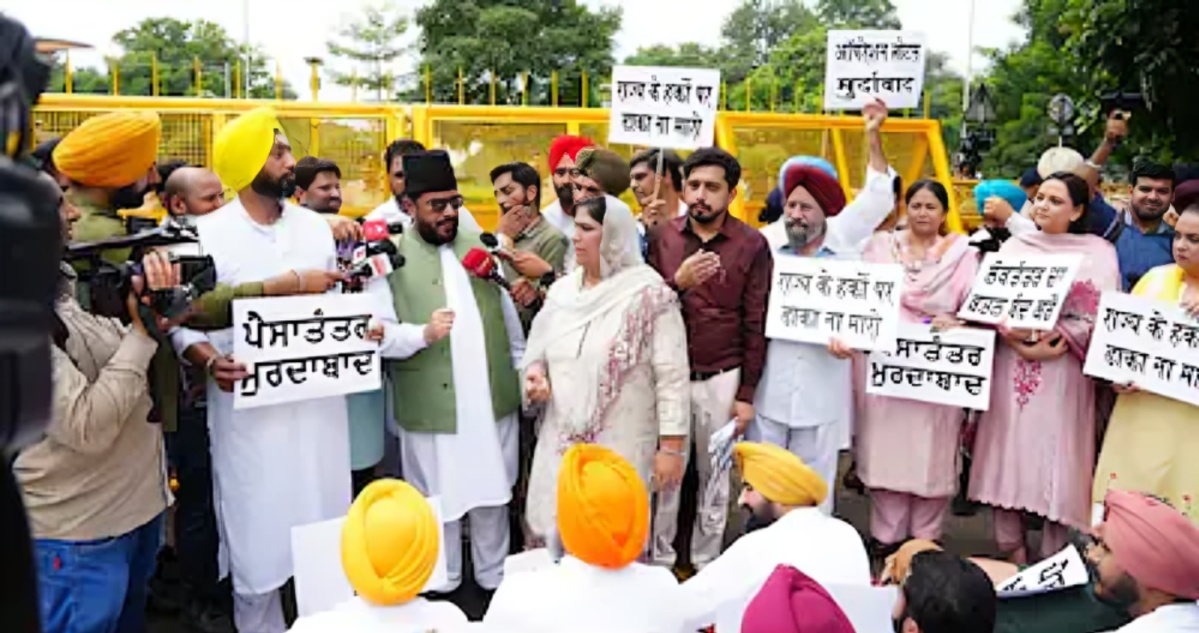
Employee organisations have announced a series of protests over the coming weeks. The Joint Coordination Committee of employees and pensioners has called for demonstrations outside the residences of seven ministers on September 11 and 12. A statewide Maha Rally has also been scheduled for October 10 in Sangrur, the home district of Chief Minister Bhagwant Mann.
The employee unions have further announced a two day mass casual leave on October 21 and 22. If implemented as planned, the action could affect the functioning of government departments across Punjab. Employee organisations had already held a statewide strike on August 27, which disrupted several government services. A fresh one day mass casual leave has also been called for September 8 amid the continuing dispute.
At the centre of the dispute is the demand for payment of pending Dearness Allowance instalments and arrears. Employee organisations have maintained that a significant portion of DA remains unpaid. According to reports, unions are seeking the release of an 18 percent pending DA component. They have also opposed the separate salary structure introduced for employees recruited after July 17, 2020.
The Punjab government recently proposed increasing the DA of around 85,000 employees recruited after July 17, 2020, from 42 percent to 60 percent. The proposal is intended to bring their DA in line with the Central government pay pattern. The proposal would reportedly involve an additional annual financial burden of around Rs 900 crore and is awaiting final approval from Chief Minister Bhagwant Mann.
However, the move has not satisfied the employee organisations. Union leaders have argued that the government's decision addresses only one section of employees while leaving the wider dispute over pending DA instalments and arrears unresolved. They have also demanded the withdrawal of the July 17, 2020 notification that created different pay arrangements for different groups of employees.
Another major issue is the Old Pension Scheme. The AAP government had notified the restoration of the scheme in November 2022. However, employee organisations continue to demand actual implementation, arguing that the notification has not translated into the complete restoration of the scheme for eligible employees. The issue has remained politically sensitive for several years.
The dispute over DA payments has also entered the legal arena. The Punjab and Haryana High Court had issued directions concerning the payment of pending DA arrears. The Punjab government has challenged the matter before the Supreme Court, arguing that it would not be financially and administratively possible to release the entire amount within the period ordered by the High Court. The state has cited its financial position while seeking relief.
The Supreme Court proceedings have added another layer to the dispute. A recent report said that the Supreme Court registry had identified technical defects in the special leave petition filed by the Punjab government against the High Court order. The procedural issue could require the state government to rectify the defects before the petition progresses.
Employee organisations have criticised what they describe as delays in resolving their demands. They argue that government employees and pensioners should receive their legally and administratively due benefits without prolonged uncertainty. Union leaders have also warned that continued delays could lead to further protests and disruptions in government functioning.
For the AAP government, the agitation carries political significance because government employees and pensioners form a large and organised section of the electorate. According to the Economic Times, around 750,000 employees and pensioners are involved in the broader agitation, with their families potentially representing nearly 3.8 million voters.
The employee movement therefore extends beyond an ordinary service dispute. With the next Punjab Assembly election due in 2027, dissatisfaction among government employees could become an important political issue. Employee unions have the ability to mobilise workers across departments and communicate their grievances through wider family and community networks.
The AAP government won a large majority in the 2022 Punjab Assembly election, securing 92 of the 117 seats. As the party prepares for the next election, the growing employee agitation could add to the political challenges it faces. However, the electoral impact of the protests will depend on how the government responds and whether a settlement is reached before the election campaign intensifies.
The agitation has also attracted opposition attention. Political parties have criticised the state government's handling of the employee demands, while employee leaders have maintained that their movement is focused on service conditions and financial rights rather than being aligned with any particular political party.
The government, meanwhile, has taken some steps to address specific employee concerns. The proposed increase in DA for 85,000 employees recruited after July 2020 is one such measure. However, unions have described the move as insufficient because their larger demands include the release of pending DA arrears, restoration of the previous pay structure and implementation of the Old Pension Scheme.
The financial condition of Punjab is another important factor in the dispute. The state government has argued that paying a large amount of accumulated DA arrears at once would place considerable pressure on government finances. The dispute therefore involves both employee demands and the state's ability to meet the financial obligations associated with those demands.
The planned protests could also affect ordinary citizens if government departments experience prolonged disruptions. Services involving administrative offices, certificates, public records and other government functions could face delays if large numbers of employees participate in mass leave.
The coming weeks are therefore expected to be important for both the Punjab government and employee organisations. The September protests, the October Maha Rally and the planned October 21 and 22 mass leave could determine the next phase of the confrontation.
The AAP government may seek negotiations to prevent further disruption, while employee organisations are likely to continue pressing for a comprehensive settlement covering DA arrears, pay structure, pension benefits and other service related demands.
For now, the employee agitation has become one of the significant political and administrative challenges facing the Punjab government ahead of the 2027 Assembly elections. Whether the dispute results in a negotiated settlement or develops into a prolonged confrontation will depend on the government's next steps and the response of employee organisations.