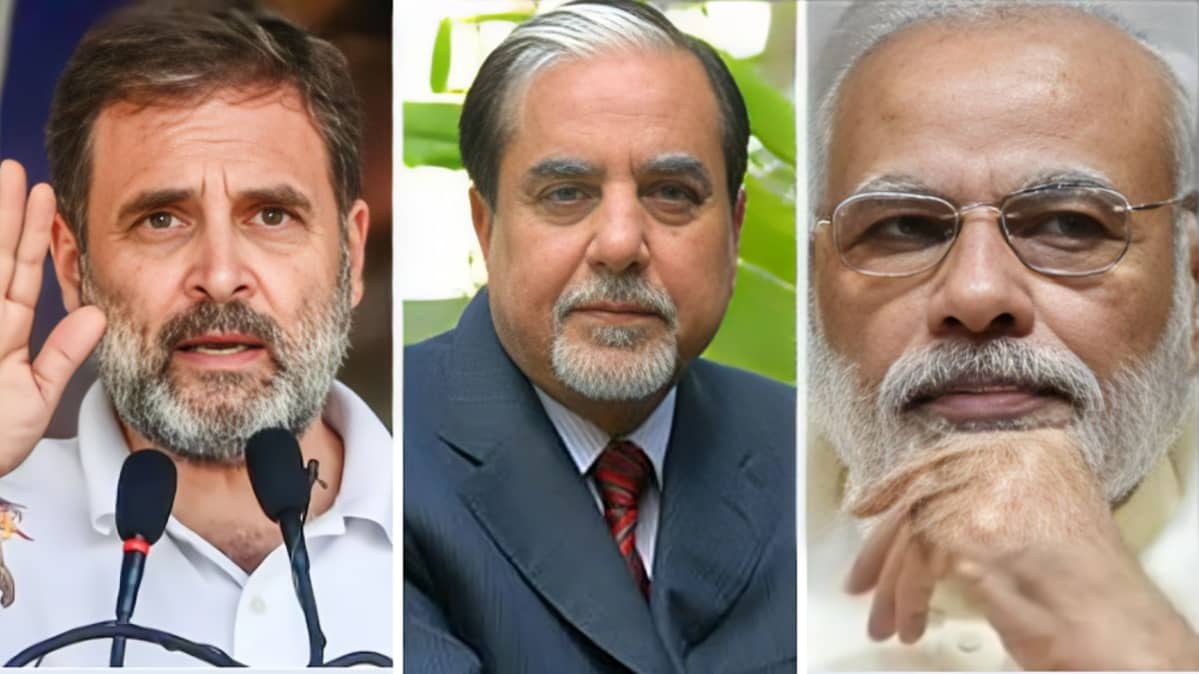
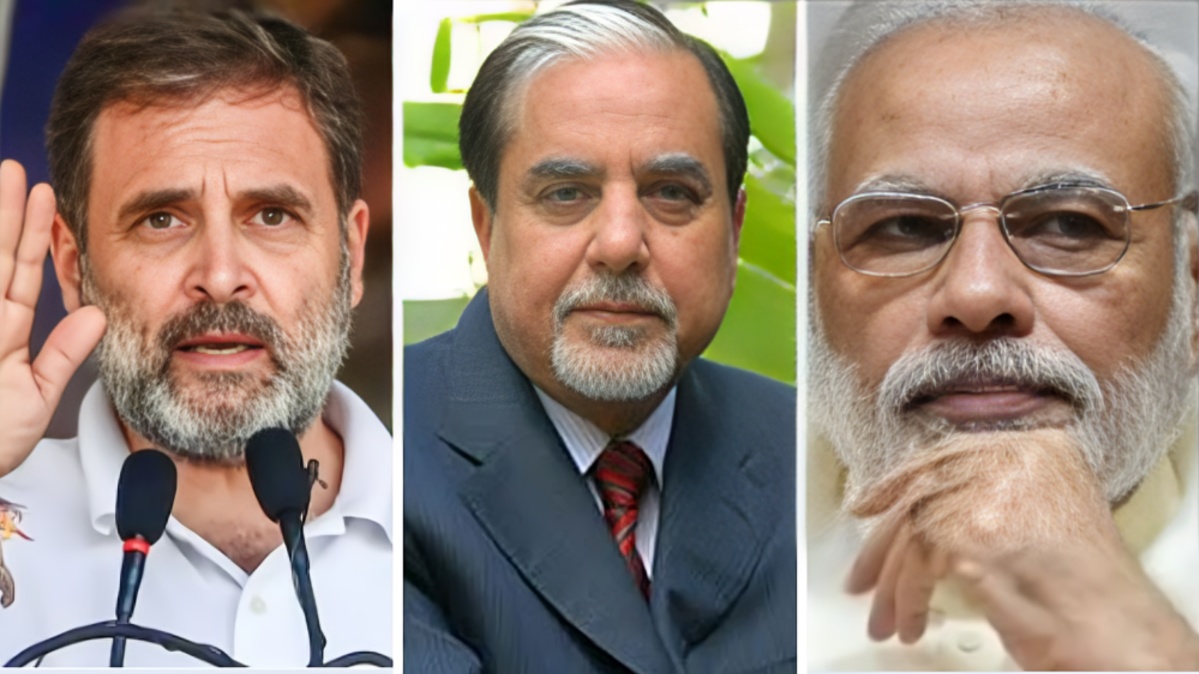
Leader of Opposition in the Lok Sabha and Congress leader Rahul Gandhi has criticised the Narendra Modi government over the functioning of the National Company Law Tribunal, alleging that the country has developed what he described as two different financial systems.
Gandhi made the remarks in a post on X while referring to an insolvency resolution involving businessman and Essel Group chairman Subhash Chandra. The Congress leader alleged that ordinary citizens face significant consequences when they are unable to repay loans, while certain wealthy and influential borrowers can receive substantial relief through financial and legal processes.
Gandhi questioned the functioning of the National Company Law Tribunal and used the phrase Leader Company Loot Tribunal while criticising the institution. His comments were directed at what he described as unequal treatment between ordinary borrowers and influential businesspersons.
The controversy follows an NCLT decision involving Chandra's personal insolvency resolution process. According to reports, the tribunal approved a resolution plan under which creditors would receive around Rs 6.5 crore against admitted claims of approximately Rs 22,006.57 crore. The proposed recovery represents a very substantial reduction from the admitted claims.
The decision prompted criticism from the Congress party, which argued that the settlement raised questions about the effectiveness of the insolvency resolution framework and the protection of creditors.
Gandhi contrasted the treatment of ordinary citizens with the resolution involving Chandra. He referred to farmers who may face action against their assets when they fail to repay loans, salaried individuals who can face recovery action after missing loan instalments and students who may experience difficulties obtaining education loans.
Based on these comparisons, Gandhi alleged that the financial system operates differently for ordinary citizens and a select group of wealthy individuals.
He said the Modi government had created two systems in the country, one for a small number of billionaires and another for everyone else. The statement was part of his broader political criticism of the Central government and its approach to economic and financial policy.
The NCLT, or National Company Law Tribunal, is a statutory body that deals with matters involving companies, corporate disputes and insolvency proceedings. Its role includes adjudicating cases under the Insolvency and Bankruptcy Code and other corporate laws.
The tribunal's decision in the Chandra case has attracted attention because of the difference between the admitted creditor claims and the amount proposed to be paid under the resolution plan.
Congress general secretary Jairam Ramesh also criticised the decision. He argued that the scale of the reduction in creditor recovery went beyond what is normally described as a haircut and accused the process of undermining the Insolvency and Bankruptcy Code.
However, Chandra has disputed the way the figures have been presented publicly. In a statement issued by his office, he said that he had not personally borrowed money from the lenders involved in the case and was acting as a personal guarantor for loans taken by companies.
Chandra also said that the total claims filed by lenders should not be directly equated with the amount that he personally owed. His office stated that claims against him in the personal insolvency proceedings amounted to around Rs 3,992 crore, rather than the approximately Rs 22,006 crore figure being discussed in the broader proceedings.
According to the statement, around Rs 620 crore had already been settled, while other borrower entities had made repayment proposals. These details form an important part of Chandra's response to the criticism surrounding the NCLT proceedings.
The dispute therefore involves two different perspectives. The Congress has focused on the large difference between the admitted claims and the proposed recovery and has questioned whether the insolvency process provides adequate protection for creditors. Chandra, meanwhile, has argued that the figures being cited do not accurately represent his personal borrowing or liability.
The case has also revived a wider political debate over how financial distress is handled in India. Opposition leaders have repeatedly argued that ordinary borrowers face aggressive recovery measures when they default on loans, while large corporate borrowers can sometimes access restructuring and insolvency mechanisms.
Supporters of the insolvency framework, however, argue that corporate insolvency proceedings are intended to provide a structured legal mechanism for resolving financial distress. Under the Insolvency and Bankruptcy Code, resolution plans are evaluated through a defined process involving creditors and the adjudicating authority.
An important aspect of such proceedings is that creditors may receive less than the original amount claimed if a resolution plan is approved. The objective is generally to maximise recovery within the legal framework while allowing financially distressed entities or individuals to reach a resolution.
The Chandra case has nevertheless attracted political attention because of the size of the claims and the amount proposed under the resolution plan.
Rahul Gandhi's remarks place the issue within a broader political argument about economic inequality. He has argued that financial rules should be applied fairly across different sections of society and that ordinary citizens should not face significantly harsher consequences than wealthy borrowers.
The Congress has used the case to question the government's economic policies and its relationship with major corporate interests. Similar allegations have been made by the opposition on several occasions, while the government and the BJP have rejected accusations that their policies favour particular business groups.
The NCLT decision itself is part of a legal process, and political allegations surrounding the case should be distinguished from the tribunal's findings and the legal provisions governing insolvency proceedings.
The controversy has also highlighted the importance of transparency in insolvency cases. Creditors, borrowers and the public closely follow such proceedings because they can involve large amounts of money and have implications for the banking and financial system.
For banks and other lenders, recovery from distressed borrowers is an important issue because unpaid loans can affect their financial position. At the same time, insolvency laws provide mechanisms through which distressed borrowers can seek resolution rather than facing an indefinite cycle of legal proceedings.
The debate over the NCLT decision therefore extends beyond the individual case. It raises broader questions about how India handles financial defaults, corporate insolvency, creditor recovery and economic fairness.
Gandhi's criticism has brought the issue into the political spotlight, particularly through his comparison between the experiences of ordinary borrowers and wealthy businesspersons.
The government has not accepted the allegation that it has created separate systems for different groups. The Congress, however, continues to use the NCLT case as an example in its wider criticism of the government's economic policies.
As the controversy continues, attention is likely to remain focused on the implementation of the approved resolution plan, the recovery available to creditors and the legal arguments surrounding the personal insolvency proceedings.
The case also demonstrates the importance of distinguishing between the total claims filed in an insolvency proceeding and the personal liability of an individual guarantor. Chandra's statement specifically sought to make this distinction.
For the wider public, the controversy has renewed discussion about equality in the financial system and the consequences of loan defaults. Whether the NCLT process in this particular case represents preferential treatment, as alleged by the Congress, is a matter of political interpretation and legal scrutiny rather than an established fact.
Rahul Gandhi's statement has nevertheless placed the issue firmly in the national political debate. His allegation that India has two financial systems reflects the Congress party's broader criticism of what it describes as unequal treatment of citizens and powerful business interests.
The NCLT case involving Subhash Chandra is now being closely watched for its implications for creditors, insolvency proceedings and the broader debate over economic fairness in India.