
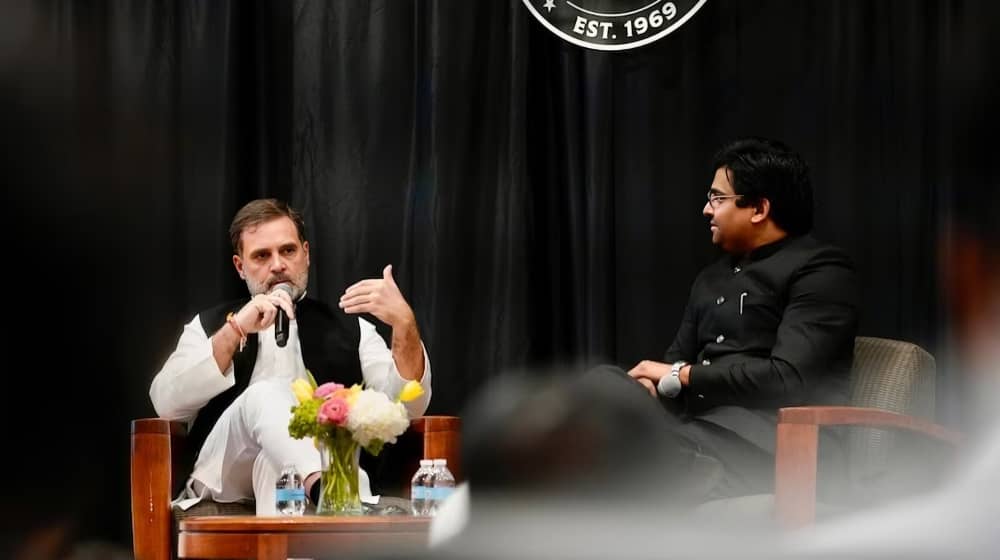
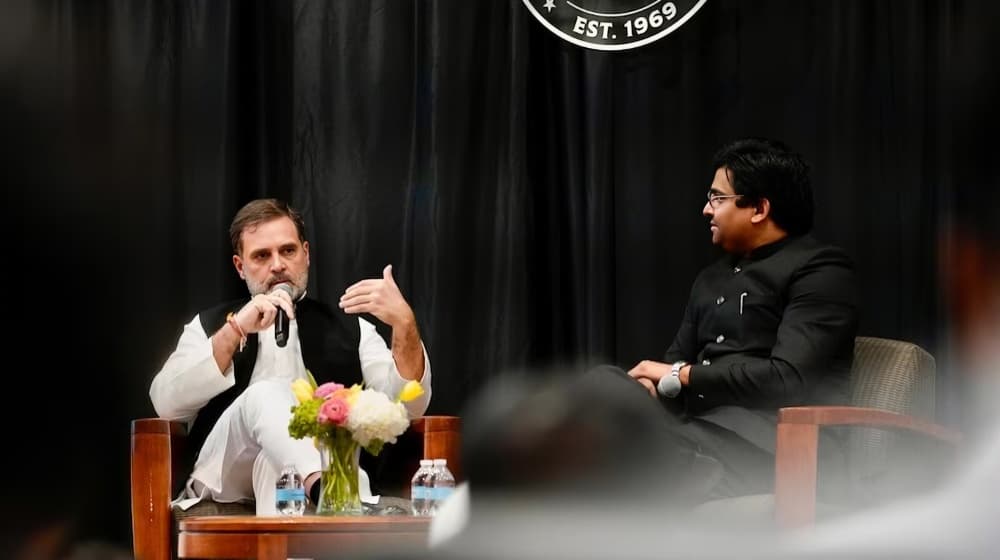
During his ongoing Germany tour, Congress leader Rahul Gandhi raised concerns over India’s heavy reliance on Chinese-manufactured products, highlighting what he perceives as missed opportunities for domestic production. Gandhi pointed out that India has the necessary population, cost structure, and capability to produce goods locally but has failed to do so, allowing China to dominate Indian markets.
He specifically mentioned the prevalence of “Made in China” goods in sectors ranging from electronics to consumer products, arguing that India could instead become self-reliant by promoting domestic manufacturing. Gandhi stressed that fostering local industries would not only strengthen the economy but also generate employment opportunities for millions of Indians.
The Congress leader’s statements came during a discussion on global trade and manufacturing strategies, where he emphasized that India’s potential as a manufacturing hub remains largely untapped. According to Gandhi, India’s demographic advantage, combined with cost efficiency and existing industrial infrastructure, makes the country well-suited to produce goods that are currently imported from China.
Gandhi also criticized Indian policies and business practices that, in his view, have indirectly facilitated dependence on Chinese imports. He urged the government to implement reforms and incentives that encourage local manufacturing, reduce imports, and make Indian products competitive in both domestic and international markets.
His remarks sparked reactions from various political quarters. BJP leaders criticized Gandhi for speaking against India’s policies on foreign soil, calling his statements “misleading” and “harmful to India’s global image.” Meanwhile, Congress supporters argue that highlighting India’s dependence on Chinese imports is essential to promote economic reforms and reduce trade deficits.
Economic analysts weighed in, noting that India’s reliance on China for certain goods is a result of global supply chains, investment patterns, and historical policy decisions. They pointed out that shifting production back to India will require strategic investments, skill development, and infrastructure improvements. Gandhi’s statements have reignited discussions on India’s manufacturing capabilities, import dependency, and “Make in India” initiatives.
The debate underscores the broader challenge India faces in achieving self-reliance in key manufacturing sectors. While political perspectives differ, the issue remains a central theme in economic planning, industrial policy, and international trade strategy. Gandhi’s comments also serve to remind policymakers and the public about the importance of promoting local industries to ensure long-term economic growth and reduce external dependencies.


