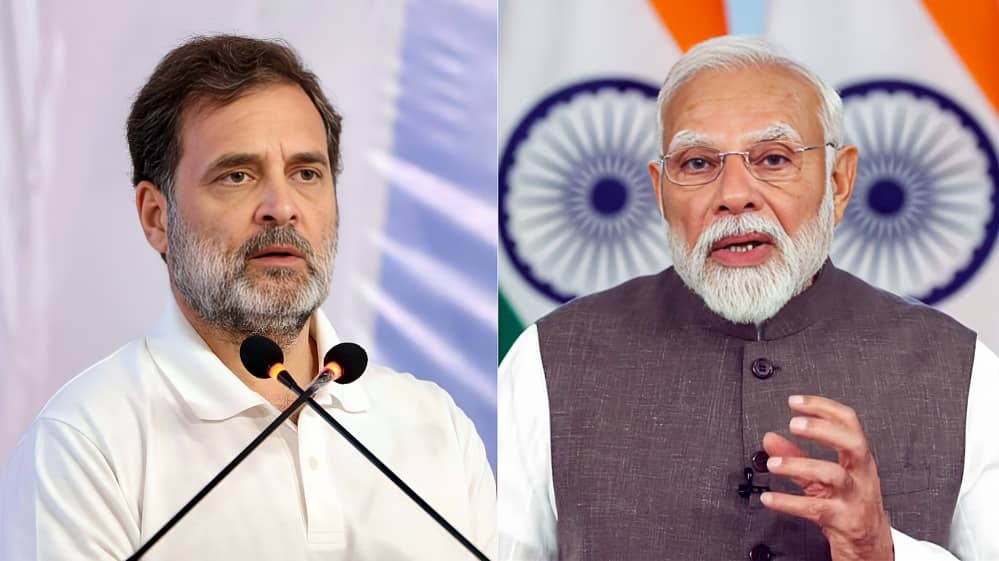
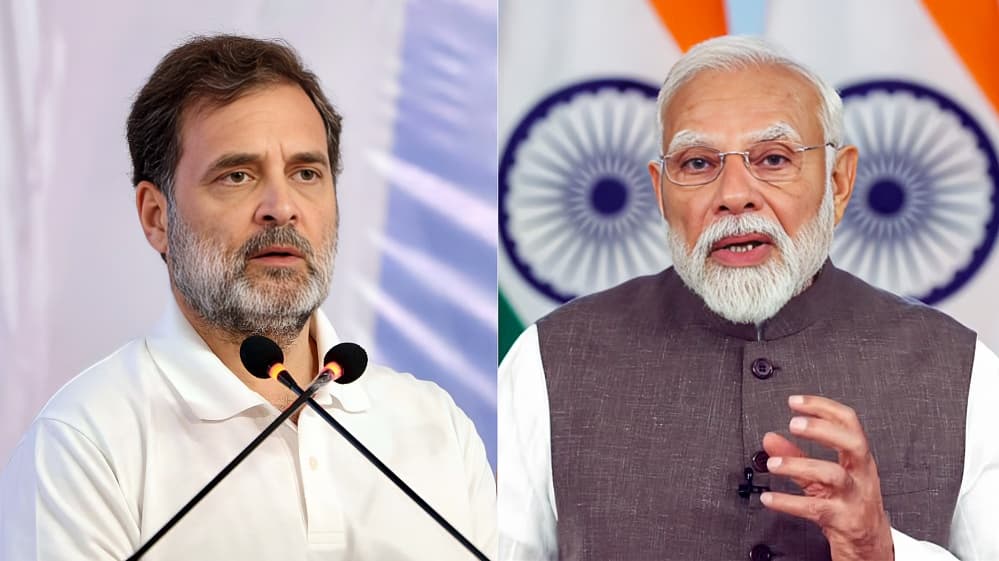
Congress Member of Parliament Rahul Gandhi has launched sharp criticism against the Narendra Modi led central government after comments made by US President Donald Trump about tariffs and his relationship with Prime Minister Modi. The Congress leader attempted to draw a historical comparison to underline his political point.
The issue started when Donald Trump spoke about trade policies and global tariffs affecting several countries including India. During the interaction Trump mentioned that Prime Minister Narendra Modi was unhappy with US tariffs. He also referred to American sanctions on nations buying Russian oil and said that India faces higher costs because of these restrictions. Trump added that Modi is displeased due to the tariffs imposed on Indian imports and purchases linked to Russian energy.
Rahul Gandhi responded strongly to these remarks through social media. He posted an old video clip of former Prime Minister Indira Gandhi and reminded viewers how she resisted US pressure in 1971 when India supported Bangladesh’s liberation war. Gandhi argued that the video shows the difference between standing up to foreign influence and bowing before it. According to him the present government does not have the courage to protect India’s interests in the same manner.
The Congress leader said that Trump’s statement reflects the reality of India’s current trade and foreign policy situation. He alleged that the Modi government is unable to handle international economic challenges effectively. Gandhi expressed concern that tariffs from the United States could hurt Indian exporters and domestic industries. He further claimed that the government’s approach to relations with Washington is based more on image management than on solid negotiation.
Rahul Gandhi also accused the BJP government of engaging in selective nationalism. He said that while the BJP talks about strong leadership at home Trump’s comments prove that India is facing pressure abroad. The Congress has been repeatedly attacking the central government over rising prices unemployment and trade deficits and Gandhi linked this new issue to those concerns.
Union Minister Piyush Goyal and BJP leaders dismissed Rahul Gandhi’s criticism. They said that India and the United States share a mature strategic partnership and occasional trade disagreements are normal. BJP spokespersons called Gandhi’s post an attempt to insult the Prime Minister using foreign statements.
Political analysts believe the controversy comes at a sensitive time for India’s global energy purchases. India has been importing discounted Russian oil since the Ukraine conflict but US tariff and sanction policies have complicated the process. The central government maintains that it makes decisions based on national energy security and economic benefit.
The Trump remark has nevertheless provided fresh ammunition to the opposition. Rahul Gandhi’s reference to Indira Gandhi was meant to appeal to Congress supporters and portray his party as historically strong on foreign policy. He urged the public to understand the difference between governments that he said defended India fearlessly and those that did not.
As the debate continues Congress leaders are demanding that the government clarify its strategy to deal with US tariffs and sanctions. The BJP insists that India is capable of handling global pressures through diplomacy and economic strength. The issue is likely to remain part of political discussions in Parliament and in public platforms in the coming days.