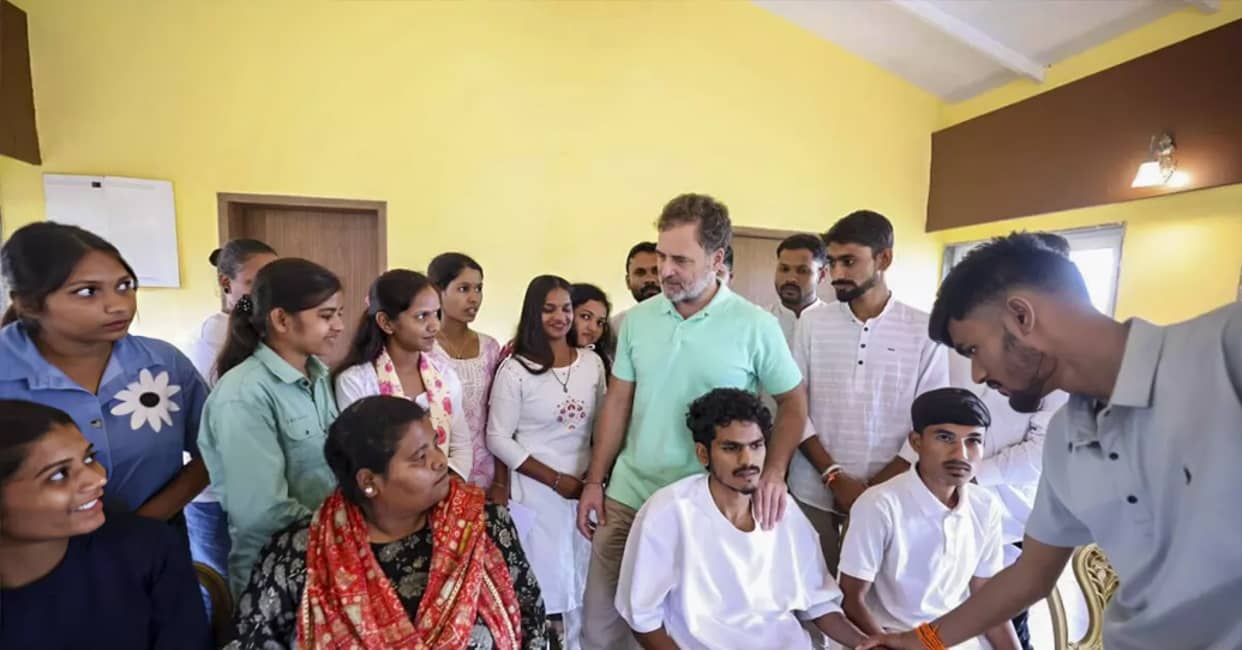
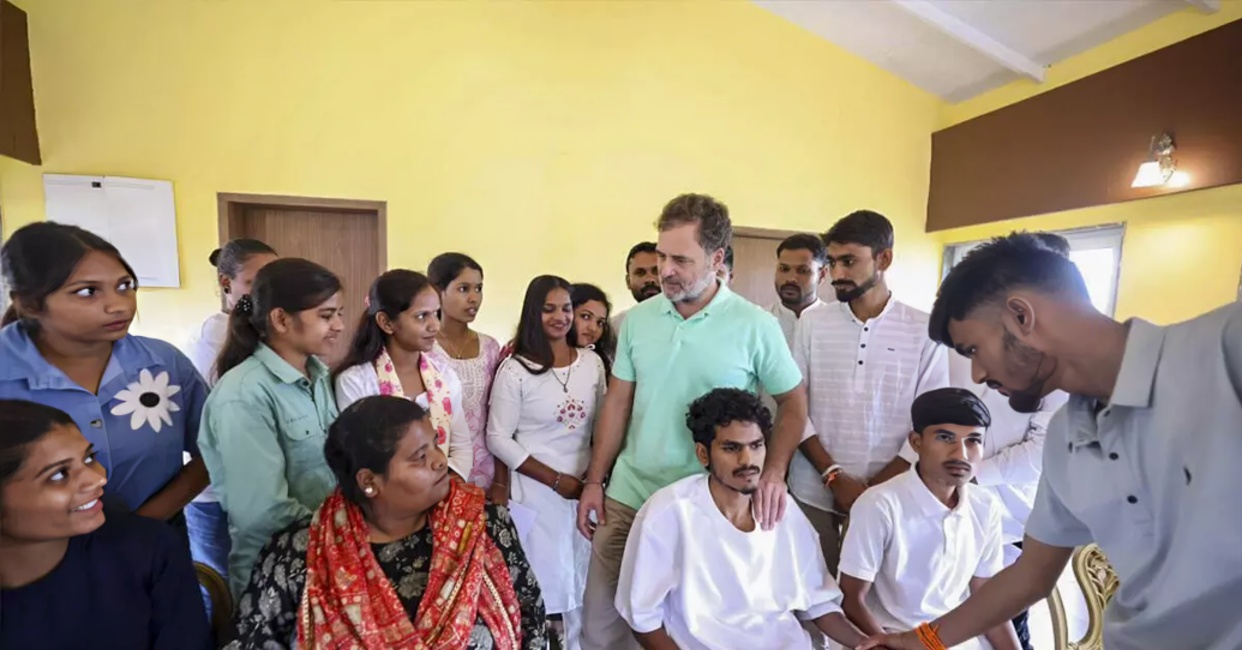
Congress MP and Leader of Opposition in the Lok Sabha Rahul Gandhi met a delegation of tribal students during his visit to Nashik and discussed their concerns about education, hostel facilities and conditions in ashram schools. The interaction comes amid ongoing protests by tribal students in Maharashtra over issues related to education, accommodation, safety and welfare facilities.
During the meeting, the students reportedly explained the difficulties they face while pursuing their education. According to reports, representatives of the students raised concerns about sanitation, safety, medical facilities and other basic requirements in tribal hostels and ashram schools. The students have been seeking greater attention from the state authorities to improve their living and learning conditions.
Rahul Gandhi said education should not be viewed as a privilege available only to certain sections of society. He stressed that education is a right and that students from marginalised communities should receive the necessary support from the system. His comments focused on the importance of ensuring that economic and social disadvantages do not prevent students from accessing quality education.
The meeting took place against the backdrop of an ongoing tribal student movement in Nashik. Reports said students had been protesting over several demands concerning tribal education and welfare. Some students have also raised concerns about the functioning of hostels and ashram schools and have called for improvements in basic facilities. The students have sought government intervention and action on their grievances.
Reports from Maharashtra indicate that tribal students have been conducting protests in Nashik and other parts of the state. Their demands have included improvements in hostel facilities, better educational support and action on issues they say affect students from tribal communities. The protests have drawn attention to the broader question of access to education and welfare services for students from remote and economically disadvantaged areas.
Rahul Gandhi's interaction with the students provided an opportunity for the delegation to directly present its concerns. He indicated that the issues should be taken up at the state level and that the concerns of tribal students require political and institutional attention. His position was that government systems should provide adequate assistance so that students are able to continue their education without facing avoidable barriers.
The Nashik visit was also linked to the Congress party's organisational activities in Maharashtra. Gandhi interacted with state Congress leaders and workers as part of efforts to strengthen the party organisation. He urged leaders to remain committed to the party's ideology and work more actively at the grassroots level.
Gandhi's visit therefore combined discussions on social issues with internal party meetings. The interaction with tribal students highlighted education and welfare concerns, while his meetings with Congress leaders focused on organisational strengthening and political priorities in Maharashtra.
The issue of tribal education has wider significance because many students from remote areas depend on government-supported hostels, schools and welfare schemes to continue their studies. Any gaps in accommodation, healthcare, food, sanitation or academic support can create additional challenges for students who already face geographical and economic disadvantages.
The concerns raised by the students will now remain a matter for the Maharashtra government and relevant departments to address. While Gandhi has expressed support for their demands, the implementation of any administrative measures will depend on decisions by the state authorities.
The Nashik interaction also comes at a time when political parties in Maharashtra are closely engaging with social and educational issues. For tribal students and their families, the central concern remains access to safe accommodation, quality education and essential welfare support.
Rahul Gandhi's statement that education is a right rather than a privilege has brought renewed political attention to the concerns raised by tribal students. The students are seeking concrete action on their grievances, while the government will be expected to respond through appropriate administrative measures.
The developments in Nashik are likely to keep the focus on tribal education, hostel facilities and welfare policies in Maharashtra. The outcome of discussions between student representatives and government authorities will be important in determining whether the concerns raised during the protests lead to further administrative action.