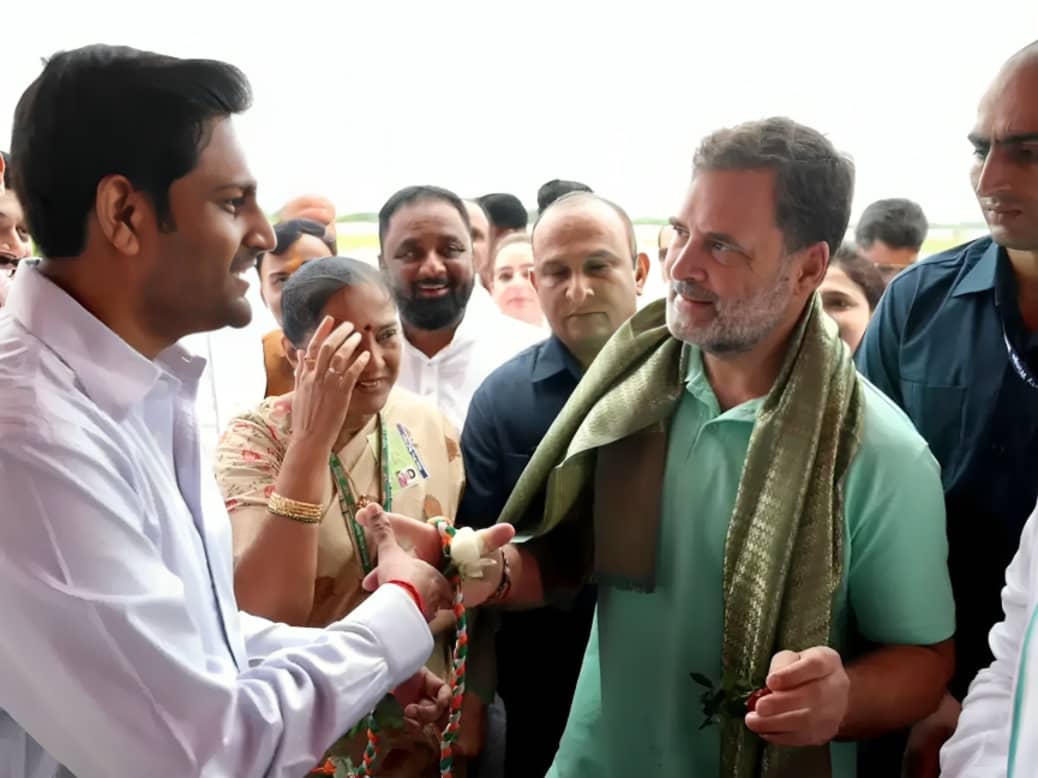
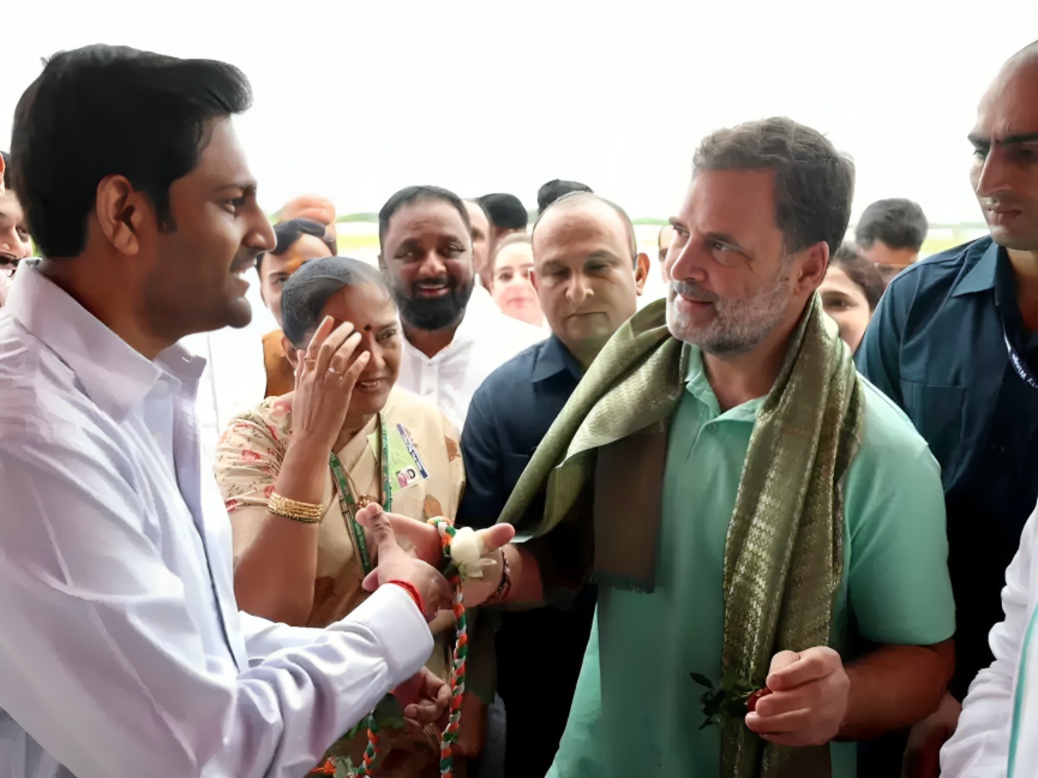
Congress leader and Leader of Opposition in the Lok Sabha Rahul Gandhi visited Nashik on September 2, where he met Maharashtra Congress leaders and discussed a range of political, social and organisational issues concerning the state.
The visit came as part of the Maharashtra Congress's 10 day organisational training programme for newly appointed district presidents. Gandhi attended the concluding session of the programme and interacted with party leaders about the challenges facing the organisation as well as issues that could become important in Maharashtra's political discourse.
Among the major subjects discussed during the visit were preparations for the 2027 Nashik Trimbakeshwar Kumbh Mela, farmer distress, the Special Intensive Revision of electoral rolls and the proposed Shaktipeeth Expressway.
Congress leaders reportedly raised questions about the expenditure and planning associated with the upcoming Kumbh Mela. According to reports, former Maharashtra Chief Minister Prithviraj Chavan briefed Gandhi about works reportedly being undertaken without detailed project reports and raised concerns regarding transparency in the implementation of major projects.
One report stated that projects worth around Rs 34,000 crore connected with the Kumbh preparations were discussed. Gandhi was reportedly informed about the planning process and asked questions about the nature and scale of the proposed works. He subsequently indicated that Congress leaders should examine the matter closely if projects were being undertaken without appropriate detailed project reports.
The allegations concerning Kumbh-related spending remain political claims and have not been established as proven corruption. Maharashtra Chief Minister Devendra Fadnavis has previously rejected allegations that the government is attempting to hide information about Kumbh-related projects. He said details of the projects had been made available publicly and accused the Congress of attempting to damage the reputation of the forthcoming event.
Farmer distress was another major issue discussed during Gandhi's meeting with Maharashtra Congress leaders. Party representatives reportedly highlighted farmer suicides and agricultural difficulties in different parts of the state. The issue has remained politically significant in Maharashtra, where agricultural communities have repeatedly raised concerns about debt, crop losses, prices and other economic pressures.
The proposed Shaktipeeth Expressway was also discussed during the meeting. Congress leaders raised concerns about land acquisition and opposition from farmers affected by the proposed highway project. The project has generated debate over its economic benefits, route and impact on agricultural land.
The Shaktipeeth Expressway is a major proposed infrastructure project in Maharashtra. While the government has promoted large infrastructure projects as a means of improving connectivity and economic activity, sections of the farming community and political opposition have raised concerns about land acquisition and its potential impact on agricultural livelihoods.
Another important issue discussed during Gandhi's visit was the Special Intensive Revision of electoral rolls. The revision process has become a significant political issue in Maharashtra, with Congress raising concerns about the removal or exclusion of voters from electoral lists.
Gandhi has previously alleged irregularities in the electoral roll revision process and has criticised what he describes as the removal of eligible voters. The Congress leadership has asked its workers to closely monitor the revision process and assist eligible voters in checking their details.
Reports from Gandhi's Nashik meeting said he urged district Congress leaders and workers to pay particular attention to the electoral roll revision and ensure that eligible voters are not excluded because of procedural or technical issues.
The electoral roll issue is politically sensitive because changes to voter lists can directly affect the participation of citizens in elections. However, allegations of deliberate manipulation remain contested, and claims concerning voter deletions should be distinguished from verified findings by election authorities.
The Nashik meeting also had an important organisational objective. Gandhi was addressing Congress district presidents and senior leaders as part of the party's Sangathan Srijan Abhiyan. The programme was designed to strengthen the party's organisational structure and improve its connection with voters at the grassroots level.
Gandhi reportedly urged Congress leaders to remain committed to the party's ideology while developing a stronger relationship with ordinary citizens. He emphasised the importance of understanding local problems and communicating directly with people rather than relying only on organisational structures.
The meeting also comes at a time when the Congress is attempting to strengthen its position in Maharashtra. State leaders are seeking to build greater coordination among district-level organisations and address local issues that could influence future elections.
The BJP, meanwhile, staged a protest in Nashik during Gandhi's visit. BJP leaders criticised the Congress over its position on women's reservation and questioned Gandhi's political stance on the issue. The protest added a political dimension to his visit.
The BJP's opposition demonstrates the continuing political rivalry between the two parties in Maharashtra. While Congress leaders used Gandhi's visit to highlight issues such as farmers' concerns, voter rolls and Kumbh preparations, BJP leaders focused on challenging the Congress leadership and its positions on national and state issues.
The Kumbh Mela preparations are likely to remain a major issue in Nashik over the coming months because the event is expected to involve substantial public infrastructure and expenditure. Roads, transport facilities, sanitation, accommodation, crowd management and other civic works are among the areas requiring extensive planning.
Congress leaders have indicated that they will scrutinise government spending and project implementation. The government, on the other hand, has maintained that Kumbh-related projects are being planned and executed through established procedures and that project information is publicly available.
The farmer issue is similarly expected to remain politically significant. Any decisions involving land acquisition for infrastructure projects can affect agricultural communities and may lead to further discussions between farmers, government authorities and political parties.
The SIR process is another issue likely to attract attention as electoral authorities continue reviewing voter records. Political parties are expected to encourage citizens to verify their names and details in the electoral rolls and submit claims or objections wherever required.
Rahul Gandhi's Nashik visit therefore brought together several issues that have both local and wider political significance. The meeting was not limited to party organisation but also included discussions on public expenditure, agriculture, infrastructure and electoral processes.
The Congress is seeking to use these issues to strengthen its political narrative in Maharashtra, while the BJP and the state government have disputed several of the opposition's claims.
For now, the allegations concerning Kumbh spending, voter-list irregularities and the impact of the Shaktipeeth Expressway remain subjects of political debate. Further scrutiny, official responses and administrative action will determine how these issues develop.
Gandhi's visit also reinforced the Congress's focus on organisational strengthening in Maharashtra. With district-level leaders being asked to engage more closely with the public, the party is attempting to combine internal restructuring with a wider campaign around issues affecting farmers, voters and local communities.
The coming months are likely to see continued political debate over the 2027 Kumbh preparations, agricultural distress, the Shaktipeeth Expressway and electoral roll revision. Gandhi's Nashik visit has brought these issues into sharper political focus while giving Maharashtra Congress leaders an opportunity to present their concerns directly to the national leadership.